Visiting Santa Cruz Island, the Largest of the Eight Channel Islands of California

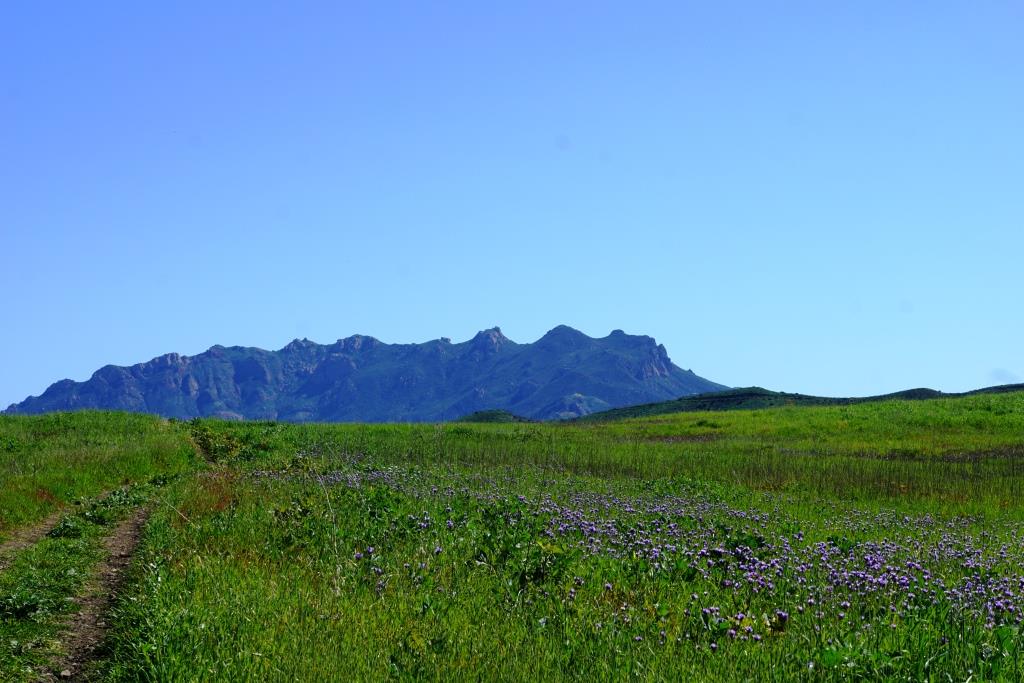
East Santa Cruz Island Scorpion Anchorage, viewed from the Cavern Point trail.

East Santa Cruz Island Scorpion Anchorage, viewed from the Cavern Point trail.

Santa Cruz Island is 22 miles long and ranges from two to six miles wide, making it the largest of the eight Channel Islands at nearly 62,000 acres. It is one of four islands that are located in Santa Barbara County (the others are San Miguel, Santa Cruz and the smallest of the eight islands, Santa Barbara Island).

Californian Channel Islands map en

The island has been occupied for over 9,000 years, including thousands of years by the Chumash Indians. In 1769, the expedition of Don Gaspar de la Portola reached the island. He and two Fathers traveling with him brought a staff with a cross on it, were well received, but realized they left the staff on the island. The Indians realized this and brought the staff to the ship the next day via canoe. The Spanish were so impressed by this that they called the island, the Island of the Holy Cross (Santa Cruz).

After Mexico became independent of Spain in 1821, the island became Mexican owned, then California became a state in 1950 and the island came with it. Sheep were brought to Santa Cruz Island in the 1850s and by 1864, 24,000 sheep grazed on it. Sheep operations continued on the island until the 1980s. Today, the National Park Service owns and operates 24% of Santa Cruz Island as part of Channel Islands National Park.  The remainder of the land is managed by The Nature Conservancy, the University of California Field Station and the Santa Cruz Island Foundation.
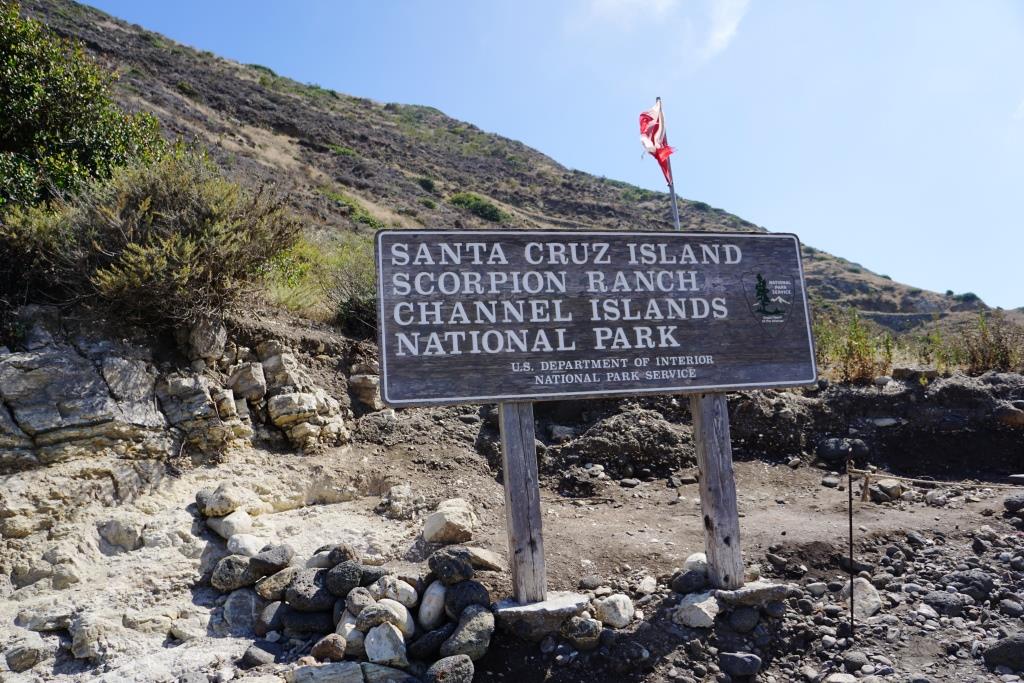
Access to the island is primarily through private concessionaire, Island Packers, from the Ventura Harbor and Channel Islands Harbor. The two island destinations open to the public are East Santa Cruz at Scorpion Ranch (also referred to as Scorpion Anchorage) and Mid Santa Cruz at Prisoners Harbor (so named as a result of a short-lived occupation of the area by convicted Mexican prisoners in 1830).
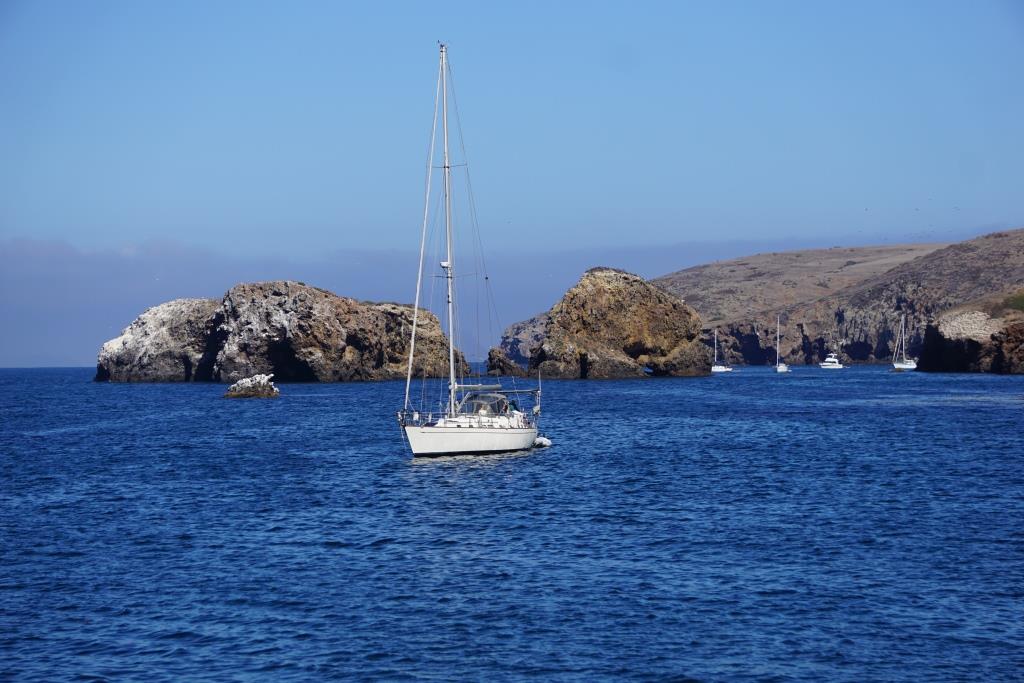
Views of the Scorpion Rock area of Santa Cruz Island

Views of the Scorpion Rock area of Santa Cruz Island

It takes roughly an hour to an hour and a half to get to the island, where activities including hiking, snorkeling, exploring the beach, kayaking and learning about the history of the island. 

Whatever you bring to the island, you must bring back with you. There are no trash receptacles, stores, vending machines, eateries, so be prepared when you visit with food, water, sunscreen, etc. There is also year-round camping available at both locations on Santa Cruz Island, with water available only at the Scorpion Anchorage campground.
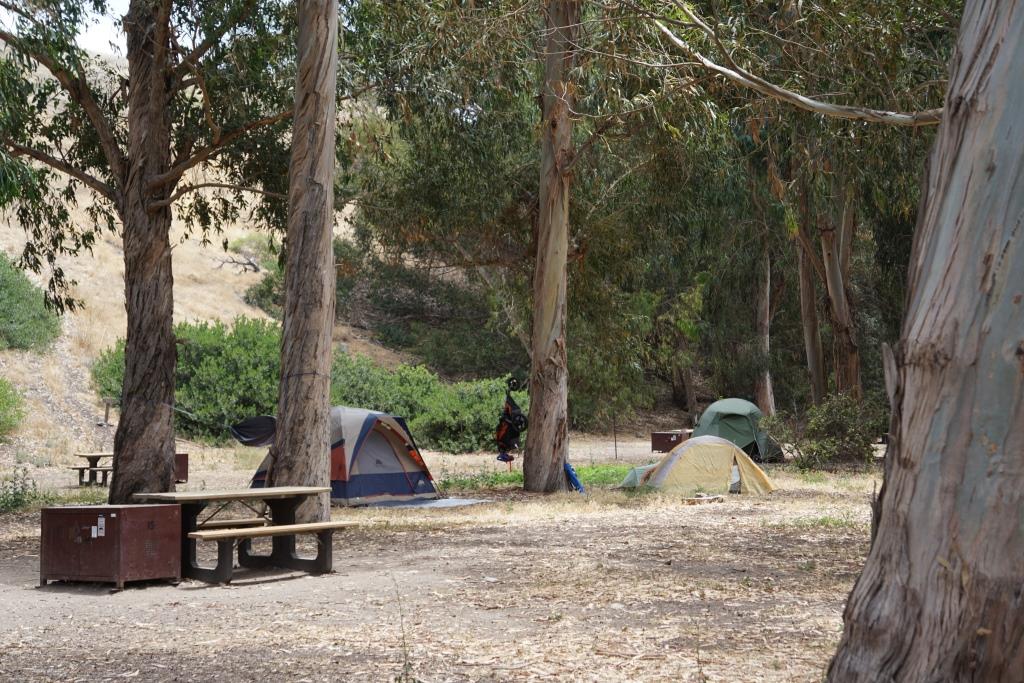
Campground at Scorpion Anchorage

Campground at Scorpion Anchorage

Kayaking is of particular interest at Scorpion Anchorage, as you can explore the nearby sea caves. Guided tours are also available from third parties like the Santa Barbara Adventure Company.

Kayaking is quite popular at Santa Cruz Island

Kayaking is quite popular at Santa Cruz Island

We also saw wildlife at Santa Cruz Scorpion Anchorage including an island fox, otters, all sorts of bird and more. The moderately challenging, two mile Cavern Point Loop hike provided magnificent views of the coast.

There is also a small, yet quite informative visitor center where you can really learn a lot about the history of the island. I was shocked actually to learn that to the south of Santa Cruz Island is a 150 million year old sedimentary rock and that the world's largest collection of sea caves populate the volcanic rocks of the north shore of the island. Also, during the last Ice Age, the sea level was lower and the four northern Channel Islands (San Miguel, Santa Cruz, Santa Rosa, Anacapa), were joined as a single island known as Santa Rosae.

This timid island fox swung by our picnic spot at Scorpion Ranch. National Park Service asks the public not to feed the wildlife for a variety of reasons, and we obliged.

This timid island fox swung by our picnic spot at Scorpion Ranch. National Park Service asks the public not to feed the wildlife for a variety of reasons, and we obliged.

Channel Islands National Park is comprised of five of the eight Channel Islands; San Miguel, Santa Rosa, Santa Cruz, Anacapa and Santa Barbara. Learn more about Channel Islands National Park at www.nps.gov/chis. Learn how to get to the islands via Island Packers at islandpackers.com.

Visit the Robert J. Lagomarsino Visitor Center at Channel Islands National Park, located at near Ventura Harbor Village, for a wealth of information, video and displays regarding the Channel Islands.

Conejo Public Art "Conejo Cottontails" Project "Rabbit at Sunset" in Westlake Village

Conejo Public Art is a community art project organized by Art Trek and the Arts Council of the Conejo Valley.  "Conejo Cottontails" is a public art project where sponsors purchase 5' 6" cottontail rabbit that are painted by local artists and displayed to the community.

Coniglio al Tramonto "Rabbit at Sunset" at The Shoppes at Westlake

Coniglio al Tramonto "Rabbit at Sunset" at The Shoppes at Westlake

Coniglio al Tramonto "Rabbit at Sunset" was painted by Wendy Jann & Jennifer Sutman and is located at The Shoppes at Westlake in Westlake Village, adjacent to the fountain. This art piece premiered in August 2016.

A new Conejo Cottontail, "Art of the Tango," was placed at The Stonehaus in Westlake Village in April 2017.

Learn more about the Conejo Public Art project at www.conejopublicart.org.

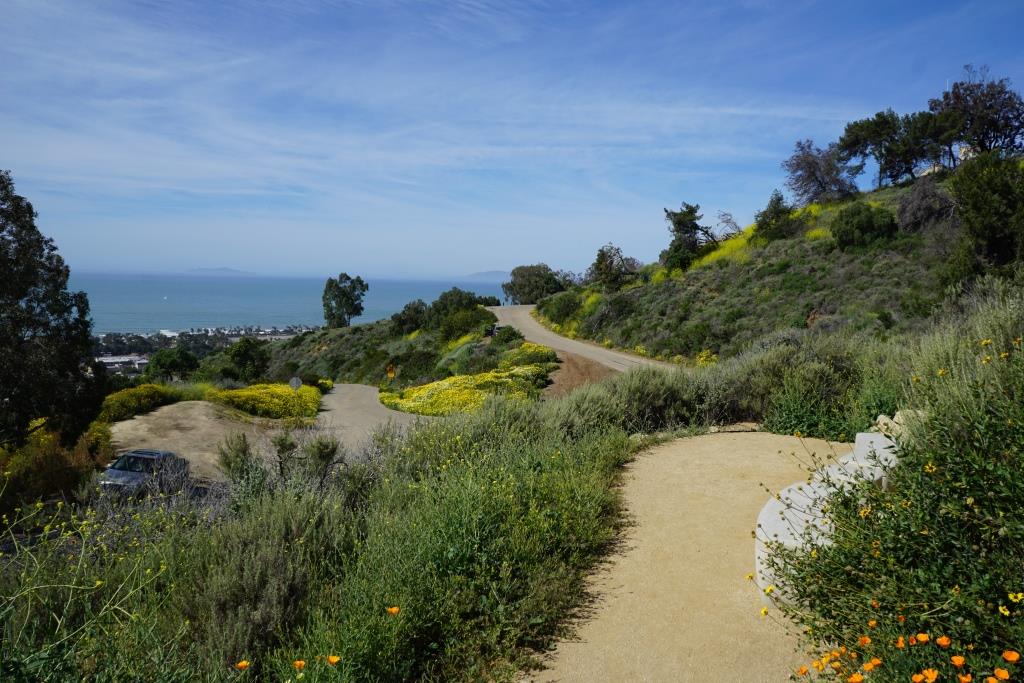
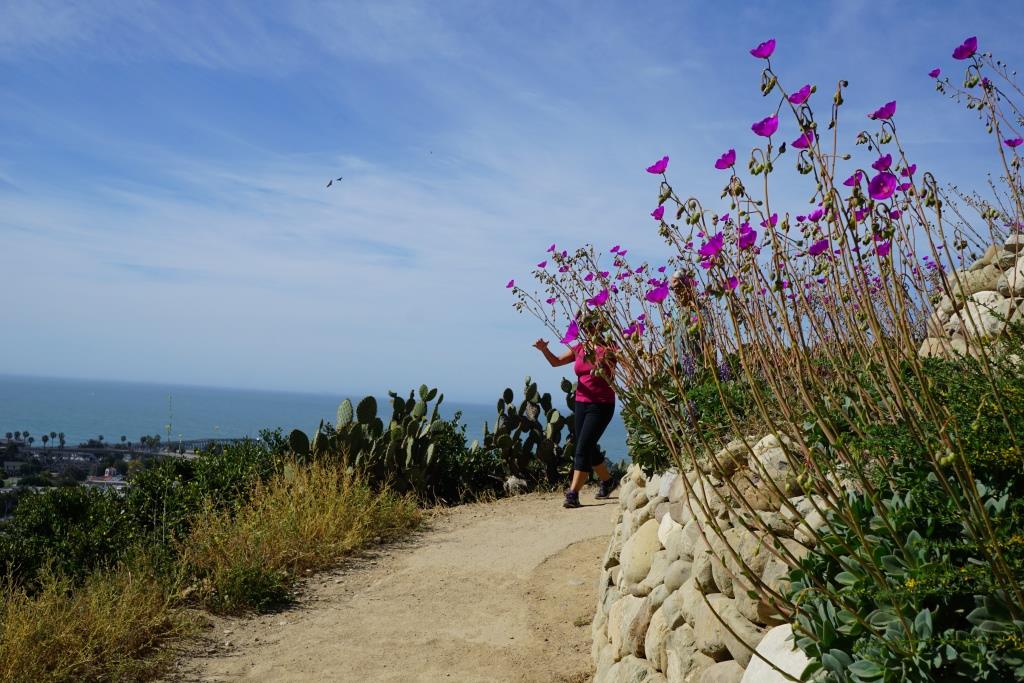
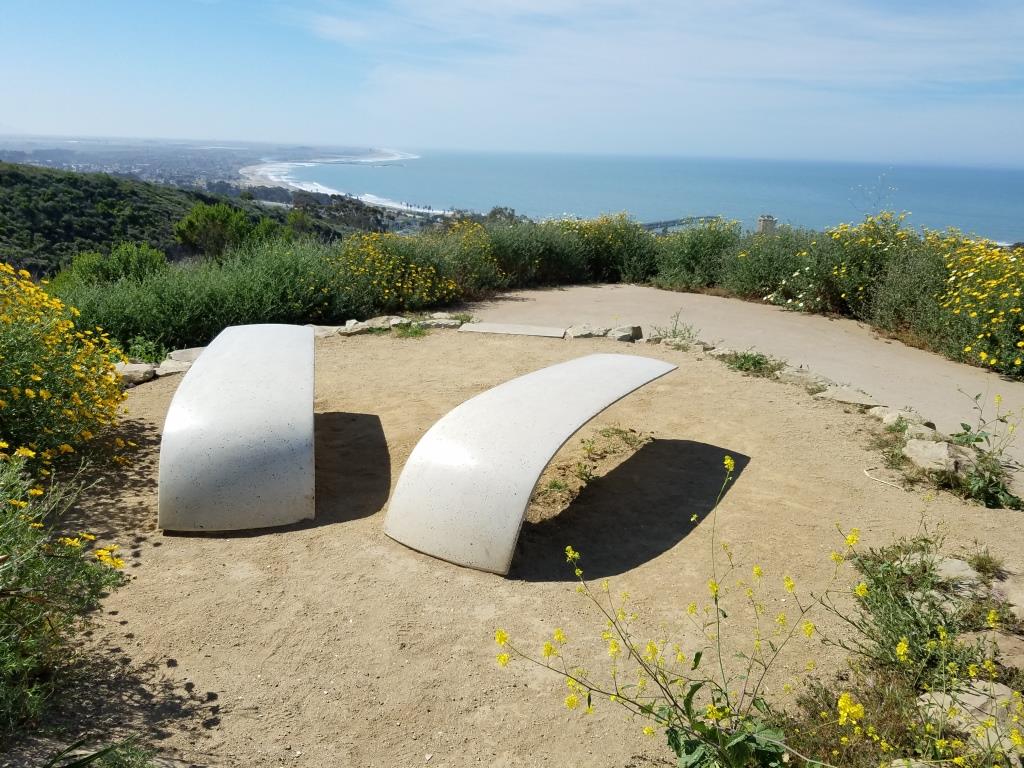
Ventura Botanical Gardens Demonstration Trail is Quite Colorful in Spring 2017

The Ventura Botanical Gardens Demonstration Trail is a nearly 1 mile trail between Ventura City Hall and Grant Park. The trail offers awesome views of Downtown Ventura and the coastline. And this time of year is a great time to go as there are still plenty of beautiful colors on the trail. More on the Gardens at www.venturabotanicalgardens.com.

Views in 1957 Looking East From Lynn and Gainsborough Roads in Thousand Oaks

7254 Thousand Oaks 1957 Venturaviews.jpg

Steve Dibblee provided this shot taken by his father, Walt Dibblee, from the mountain ridge at the northwest corner of what is now Lynn Road and Gainsborough Road in Thousand Oaks sometime in the year 1957, seven years before the city was incorporated. This ridge is just southwest of nearby Tarantula Hill and the shot is facing east. So how about comparing it to a few recent shots looking east from Tarantula Hill.

Taran1.JPG
Taran2.JPG

I see a lot of oak trees and clouds in all of the photos but...just a wee bit more other things, like houses, roads, cars and such in the more recent pictures. :)

See more of Dibblee's photographs from the mid 1950s to the late 1960s at VenturaViews.com where you also have the option of acquiring high-resolution prints of these blasts to the past. Thanks to Steve Dibblee for sharing some of his late father's work with us here on Conejo Valley Guide and at www.facebook.com/ConejoValleyGuide.

Try the Strenuous Fossil Trail Loop in Point Mugu State Park for a Weekend Challenge

If you have two to three hours to spare and are looking to do about six miles of strenuous local hiking, consider trying the Fossil Trail loop in Point Mugu State Park, starting at the adjacent Rancho Sierra Vista/Satwiwa managed by the National Park Service in Newbury Park . If you're looking for a FLAT hike, this one isn't for you!  (But do check out these other great local trails.)

Find your way to the main parking lot at Via Goleta off of Lynn Road (or alternatively park at the Wendy/Potrero Trailhead for an extra few miles of hiking). From there, hike towards the Satwiwa Native American Indian

Read More

Compilation of Conejo Valley Scenes Before and After the 2017 Rains

Here is an updated compilation of scenes around the Conejo Valley from before and after the 2017 winter rainstorms.  More on local hikes and trails throughout Thousand Oaks, Westlake Village, Newbury Park and Greater Ventura County at THIS LINK.

Here are the scenes in this compilation:

  • Dos Vientos towards Boney Peak
  • Mountclef Ridge above Wildwood Park
  • Picnic table near Hawk Canyon Trail
  • Wendy Trail behind Satwiwa Center at Rancho Sierra Vista
  • Boney Peak from Rancho Sierra Vista
  • Wildwood Park towards Lizard Rock
  • Los Robles Trail towards central Thousand Oaks
  • Angel Vista Peak towards Newbury Park
  • Dos Vientos from Potrero Ridge Trail
  • Olympia Farms in Rancho Potrero
  • Western Plateau towards Oxnard Plain
  • On horseback in Rancho Potrero
  • Hawk Canyon/Western Plateau Trail Sign
  • Mountclef Ridge from Tarantula Hill
  • Tarantula Hill from Los Robles Trail East
  • Hidden Valley Overlook in Rancho Sierra Vista
  • Autumn Ridge Trail in Lang Ranch Open Space
  • Los Robles Trail looking east
  • Lone Oak in Rancho Sierra Vista

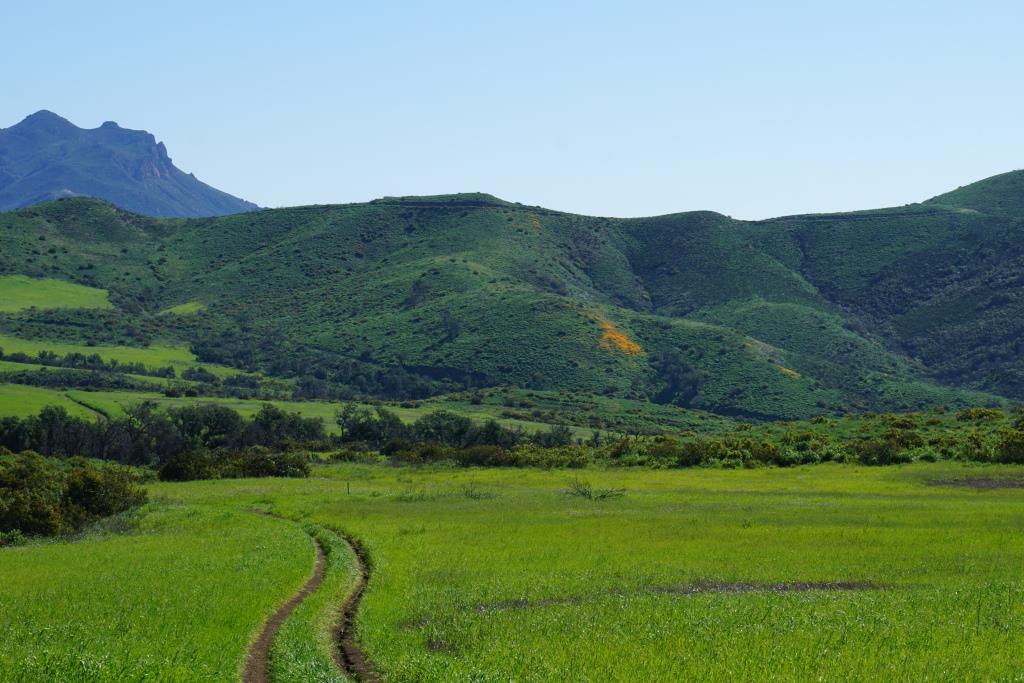
Green Meadows and Hills and Wildflowers on Display in La Jolla Valley, Point Mugu State Park

The La Jolla Valley Natural Preserve is located in Point Mugu State Park, in the west end of the Santa Monica Mountains. The La Jolla Valley was acquired by the State of California in 1966 and was established as a Natural Preserve in 1972.

The area can be accessed via the .7 mile, but very steep Chumash Trail in Point Mugu (strenuous but the quickest approach), via the La Jolla Canyon Trail (which has been closed since January 2015 due to mudslides), or in a roundabout way, via the Ray Miller Trail. Or you can hike there from Rancho Sierra Vista in Newbury Park, which would be something in the neighborhood of 6 to 8 miles, depending on route.

In any case, the area is spectacularly beautiful right now in March 2017 after the winter rainstorms. If you are looking for peace and quiet, green hills and wildflowers, this is the place for you right now.