Ventura Boat Rentals at Ventura Harbor Village

Sailboat.JPG

Ventura Boat Rentals, located at Ventura Harbor Village at 1575 Spinnaker Drive, Ventura rents out electric boats, paddle boats, kayaks, power boats, surf bikes. jet skis and sail boats to the general public.  They also offer narrated harbor tours on weekends and select holidays, public dinner cruises, sunset cocktail cruises, private charters, private parties and public holiday tours. 

Visit www.venturaboatrentals.com or call 805.642.7753 for more information.

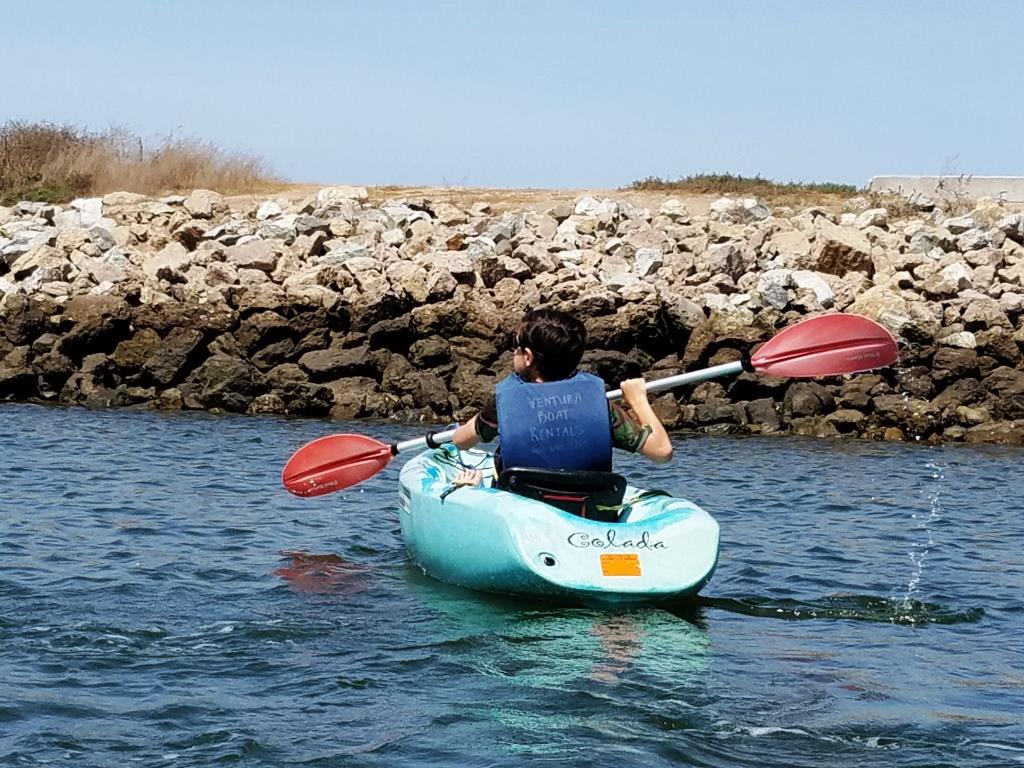
We enjoy exploring the Ventura Harbor, thanks to Ventura Boat Rentals.  Lots of small crabs hang out in these rocks.

We enjoy exploring the Ventura Harbor, thanks to Ventura Boat Rentals.  Lots of small crabs hang out in these rocks.

Bark Park Trail in Calabasas

BarkPark_sign.JPG

The Calabasas "Bark Park" is located at 4232 Las Virgenes Road. To get there from the 101, take Las Virgenes Road south just under a mile. The entrance is on the left (east). If you're going fast, it is easy to miss it. It's a nice, local dog park open sunrise to 9pm with plenty of space for the doggies as well as a separate gated kids' play area and plenty of parking.

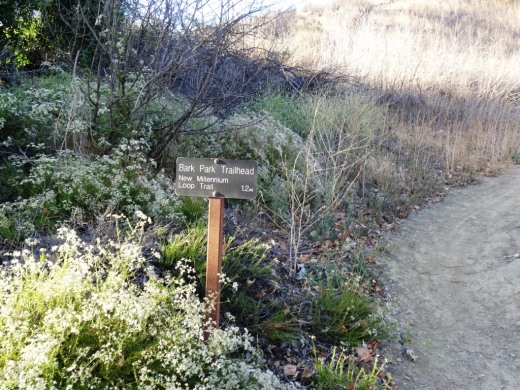
BarkPark_trailhead.JPG

On the north side of the park is the trailhead to the Bark Park Trail, a 1.2 mile climb that links you up with the New Millenium Loop Trail. Round trip you're talking about a 2 1/2 mile hike.

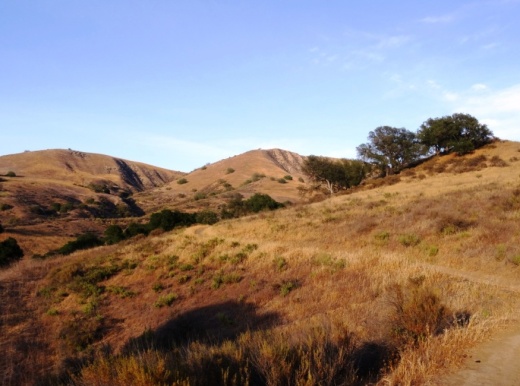
BarkPark_trail.JPG

It is a nicely maintained trail with a steady, uphill climb. I would call it a moderate climb for the most part. A good walk to take the kids on. But it can get a bit hot up here, so bring water and sunscreen on summer days.

Trail sign at the junction of Bark Park Trail and New Millennium Loop Trail.

Trail sign at the junction of Bark Park Trail and New Millennium Loop Trail.

As you can see from the sign, there's a lot more exploring you can do on these nicely maintained trails in Calabasas.

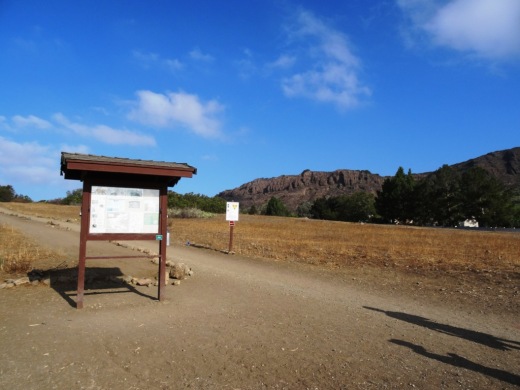
A view of the Bark Park from the trail above.

A view of the Bark Park from the trail above.

Wildwood Park in Thousand Oaks

The main entrance into the 1,765 acre Wildwood Park is at the corner of Avenida de los Arboles and Big Sky Drive in Thousand Oaks. The Chumash Indians lived in Wildwood Park for nearly 8,000 years, until the early 19th century, when the Spanish colonized California. Eventually the park became owned by the Janss Corporation, which sold it to the Conejo Recreation and Park District in 1967.

Main trailhead accessible from the parking lot at Ave de los Arboles and Big Sky.

Main trailhead accessible from the parking lot at Ave de los Arboles and Big Sky.

Wildwood Park is an extremely popular hiking and cycling spot and CRPD frequently hosts nature hikes there. The park has 14 trails covering 17 miles, including two year-round waterfalls, Paradise Falls and Little Falls.  Wildwood is known for its spring wildflower displays from January to June.

The park hosted a number of movie/TV productions in the 1930s to the 1960s, including Spartacus, Wuthering Heights, Wagon Train, The Rifleman and Gunsmoke.

Call the CRPD at 805.495.2163 for more information about the park. But for lots of detailed information about Wildwood Park, including trail maps and pictures, visit the Conejo Open Space Foundation website at cosf.org/trails/wildwood.

As far as facilities in the park, there are drinking fountains at the main parking lot as well as at the Teepee, at Paradise Falls and the two restroom areas in the park. One of the restrooms are located at Meadows Center, a small building located across the bridge that is adjacent to the short trail to Little Cave. CRPD often hosts short hikes from the main parking lot to Meadows Center for fun, games and s'mores.

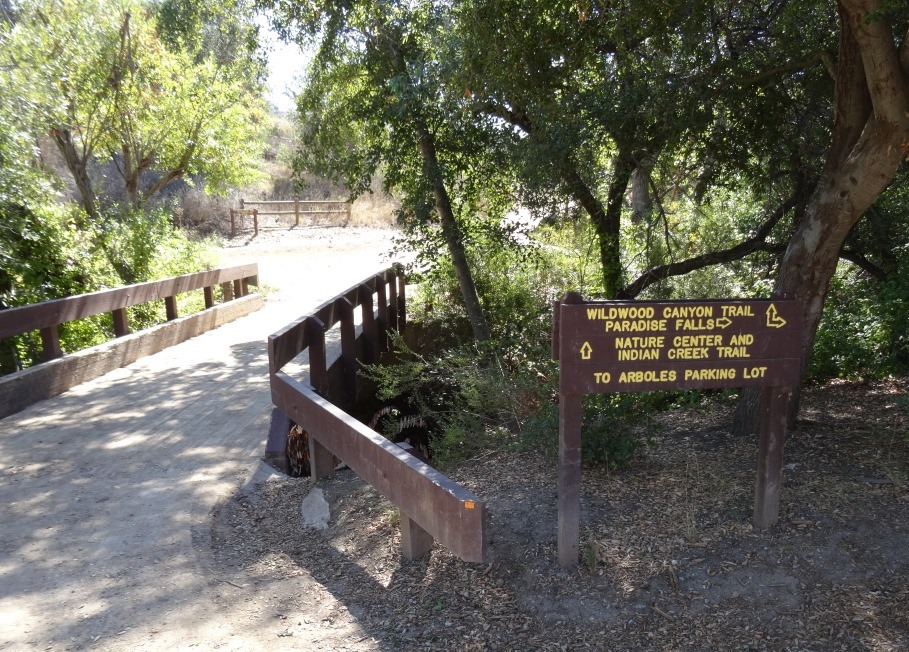
Bridge over creek that connects Wildwood Canyon Trail to Meadows Center, which has restrooms and a drinking fountain.

Bridge over creek that connects Wildwood Canyon Trail to Meadows Center, which has restrooms and a drinking fountain.

The other restrooms are at the bottom of Wildwood Canyon. You can get there by taking the Tepee Trail roughly 1/2 mile to the bottom of the canyon, or alternatively from Paradise Falls about 1/4 mile down the Wildwood Canyon Trail. The Arroyo Conejo Creek runs down from Paradise Falls to here and is fun to explore (keeping in mind still that this is partially urban runoff and thus you don't want to play around in it too much).

Additional restrooms at the bottom of Wildwood Canyon.

Additional restrooms at the bottom of Wildwood Canyon.

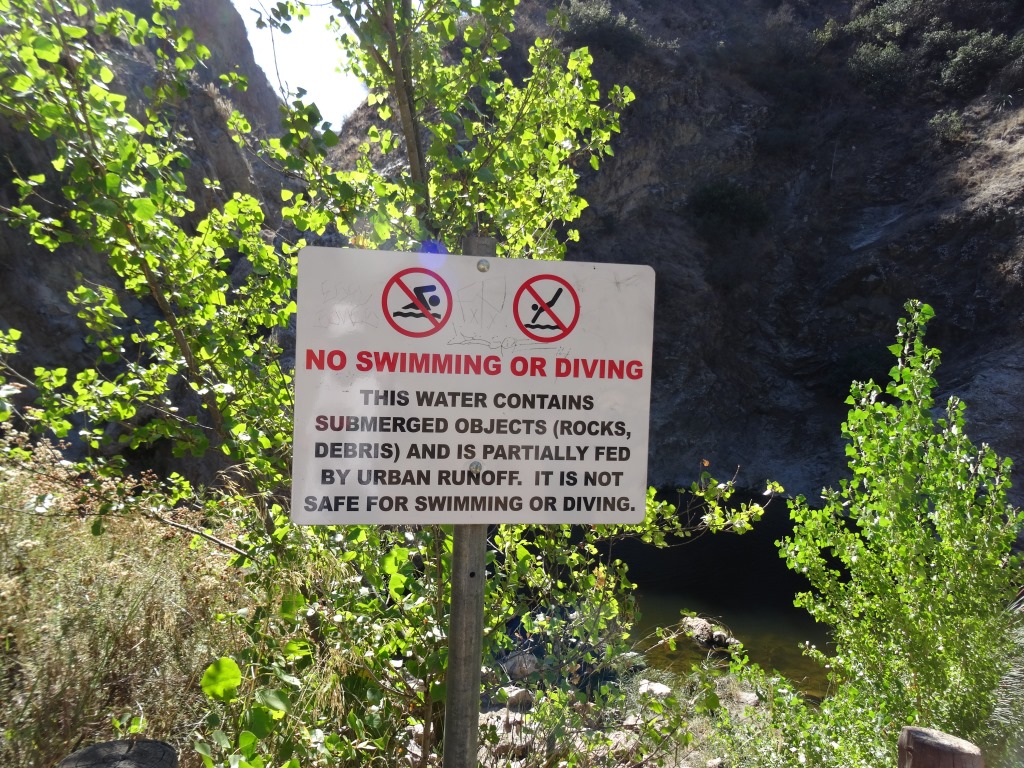
Sign at Paradise Falls indicating this particular water is partially urban runoff and best not to swim in.

Sign at Paradise Falls indicating this particular water is partially urban runoff and best not to swim in.

Wildwood2.JPG
Wildwood4_sign.JPG
Tepee Wildwood.JPG

Leo Carrillo State Park in Malibu

LeoCarilloSign.JPG

Leo Carrillo State Park consists of 1.5 miles of beach for swimming, surfing, windsurfing, surf fishing and beachcombing, as well as tide pools, coastal caves and reefs. Giant sycamores shade the main campgrounds.

Among the many great features of Leo Carrillo, the most engaging activity for me and the kids is the tide pools. They are exposed twice daily at low tide and provide hours of engagement with sea stars, sea anemones, mussels, sea slugs and more.

Nature walks and campfire programs are offered and a small visitor center has interpretive displays.

Trails include Yellow Hill Fire Trail for panoramic views of the beach and the Channel Islands, and the steeper Nicholas Flat Trail, which brings you to a pond.

There are 135 family campsites at Leo Carrillo with restrooms and token-operated showers. Visit ReserveCalifornia.com and search for “Leo Carrillo SP” to make reservations.

The park was named after Leo Carrillo (1880-1961), actor, preservationist and conservationist. Leo Carrillo served on the California Beach and Parks commission for 18 years and was instrumental in the state's acquisition of the Hearst property at San Simeon. Leo's greatest fame came from his portrayal of Pancho, the sidekick to Duncan Renaldo's Cisco Kid, an early 1950's TV series.

Leo Carrillo State Park is located at 35000 W. Pacific Coast Highway in Malibu. The park office phone is 310.457.8143. Visit www.parks.ca.gov/?page_id=616 for more information.

Parking is currently $12 in the parking lot for the day (or $3 per hour)...but free on PCH if you can find a spot. There are plenty of parking spots available in the lot. After you park, you can walk in a tunnel underneath PCH to get to the beach.

The muraled tunnel that takes you underneath PCH to Leo Carrillo Beach.

The muraled tunnel that takes you underneath PCH to Leo Carrillo Beach.

Dogs on a leash are allowed in the Park's day use areas, campground and north beach (north of lifeguard tower 3). Dogs are not allowed on backcountry trails or south beach (south of lifeguard tower 3).

DIRECTIONS

The most direct way of getting to Leo Carrillo from the Conejo Valley is via Westlake Boulevard (CA-23) (aka Decker Canyon) south, which for some is a fun 14 mile drive, but for others, not so much. It is a bit winding, hilly, steep at many junctures. I take this route during daytime hours but coming home I'm not too keen on it. After getting to PCH, turn right and drive 2 1/2 miles to get to Leo Carrillo.

Another more popular, though less direct route is via Kanan Road. Either take Kanan Road straight down to PCH, turn right (west) on PCH about 9 miles to Leo Carrillo, or take Kanan to Encinal Canyon, which is about a 3 mile drive on PCH to Leo Carrillo.

Lastly, if you are in Newbury Park, you can take Potrero Road west to Las Posas down to PCH. In about 11 miles you will reach Leo Carrillo.

Malibu Lagoon State Beach

Malibu Lagoon State Beach is where Malibu Creek meets the Pacific Ocean. To get there, park either at the state lot (corner of Pacific Coast Highway and Cross Creek Road) for a fee, along Pacific Coast Highway or across the street in spots available near Malibu Country Mart and the Malibu Civic Center.

The lagoon is serene, with a sandbar of pelicans enjoying their summer day. This beach extends southeast to Surfrider Beach and the Malibu Pier, which is just a short walk away. While you're there try to check out the Adamson House and Malibu Lagoon Museum.

More information at www.parks.ca.gov/?page_id=835. Dogs are not allowed at Malibu Lagoon State Beach and trails.

MalibuLagoon1.5.JPG
MalibuLagoon2.JPG
MalibuLagoon3.JPG
MalibuLagoon4.JPG

Lizard Rock Trail From Lizard Rock to Wildwood Canyon at Wildwood Park Thousand Oaks

This is one in a series of posts about trails in the 1,765 acre Wildwood Park in Thousand Oaks.

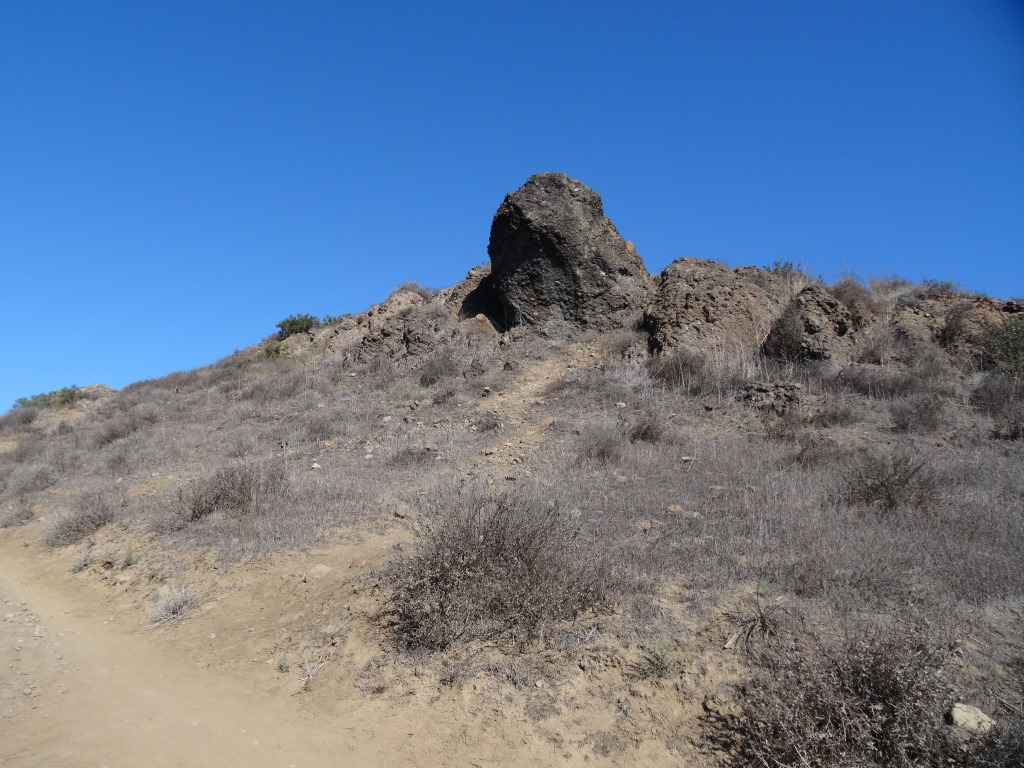
Lizard Rock at Wildwood Park

Lizard Rock at Wildwood Park

Lizard Rock is a popular 2 mile round trip destination for hikers from the main parking area in Wildwood Park, mostly on the Mesa Trail. It is a moderate hike with an elevation gain of about 300 feet to its peak at 931 feet.

Sign just south of Lizard Rock indication direction of Lizard Rock Trail towards Wildwood Canyon

Sign just south of Lizard Rock indication direction of Lizard Rock Trail towards Wildwood Canyon

After reaching Lizard Rock, some folks (hikers and bikers) venture further south on the Lizard Rock Trail about .8 mile of downhill that takes you past the City of Thousand Oaks Hill Canyon Water Treatment Facility to the Wildwood Canyon area, a drop of about 600 feet in elevation.

View of Hill Canyon Waste Treatment Plan from near Lizard Rock

View of Hill Canyon Waste Treatment Plan from near Lizard Rock

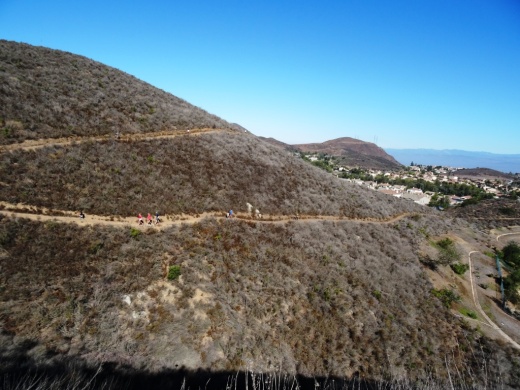
The descent down the Lizard Rock Trail provides nice views into the Santa Rosa Valley as it zigs and zags towards the bottom. You can see Hill Canyon from Lizard Rock but as you move down the hill you will get a much clearer view of this high tech facility that converts wastewater into a reusable water source. You will indeed catch some whiffs of smells that aren't particularly pleasing down there but having been down there myself a number of times, it ain't that bad.

The descent down Lizard Rock Trail

The descent down Lizard Rock Trail

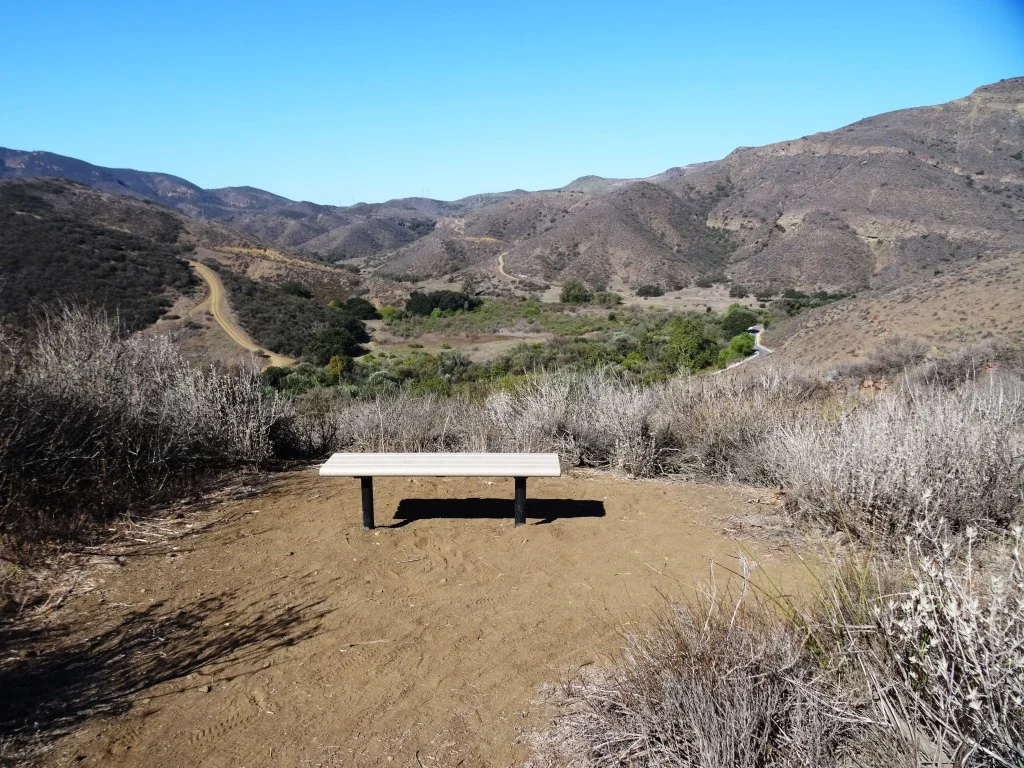
Before you reach the bottom, there are several overlook benches available to take a break as you look towards the Arroyo Conejo, Santa Rosa Valley and beyond.

The first of two overlook benches facing west on the Lizard Rock Trail

The first of two overlook benches facing west on the Lizard Rock Trail

A view of the same bench looking back up (north) towards Lizard Rock (yes, that's the lizard head poking out of the hill on the right).

A view of the same bench looking back up (north) towards Lizard Rock (yes, that's the lizard head poking out of the hill on the right).

And here's the 2nd bench, further down the Lizard Rock Trail. Is that actual green I see up ahead in late September!? Yes it is. Must be drought-tolerant native shrubs!

And here's the 2nd bench, further down the Lizard Rock Trail. Is that actual green I see up ahead in late September!? Yes it is. Must be drought-tolerant native shrubs!

Hill Canyon comes into closer view

Hill Canyon comes into closer view

As you can see, the Lizard Rock Trail starts heading back east as it traverses the Hill Canyon Treatment Plant. Amazing facility. I wouldn't want to go swimming in the green liquid however.

As you can see, the Lizard Rock Trail starts heading back east as it traverses the Hill Canyon Treatment Plant. Amazing facility. I wouldn't want to go swimming in the green liquid however.

At the very bottom of the trail, after you have completely passed the water treatment plant, you see this sign that indicates you are on your way towards Lower Wildwood Canyon.

At the very bottom of the trail, after you have completely passed the water treatment plant, you see this sign that indicates you are on your way towards Lower Wildwood Canyon.

So you've reached the bottom of Wildwood Canyon and other than heading back up that steep Lizard Rock Trail to where you just came from, you can take the more interesting loop route following the Wildwood Canyon Trail to Wildwood Canyon. There are restrooms, drinking fountain and picnic tables in there.

From Wildwood Canyon, either continue onward up the Wildwood Canyon Trail about a third of a mile to Paradise Falls, or the Tepee Trail (yes, this is what it is called on the map), which largely parallels the Wildwood Canyon Trail, up towards, yes, the Tee Pee. Then follow the signs back

There is a great map that covers this Lizard Rock to Paradise Falls to Two Springs (formerly Indian Creek) Trail loop, about 4 1/2 miles in total, on the Conejo Open Space Foundation website at www.cosf.org/website/html/lizard-waterfall-creek.html.

Since we're down at the bottom of the canyon, you will see a sign for "Skunk Hollow." This is a tree-lined area adjacent to the creek with a picnic bench. Kind of nice little area, just around the corner from the waste treatment plant, albeit not within view of the plant. 

And in that area, you will see a sign indicating Eagle Point Trail. Eagle Point Trail is a hilly little 1/3 of a mile alternate route that gets you into Wildwood Canyon. The first section has dozens of steps. The remainder has a few steep sections. Just a small side attraction to check out. 

Eagle Point Trail Wildwood Park

El Rincon, El Cerro and Las Brisas Trails in Dos Vientos Section of Newbury Park

In the heart of Dos Vientos (Spanish for Two Winds), there are three trails that are accessible from multiple spots by walkers, hikers, runners and bikers. These are the El Rincon, El Cerro and Las Brisas trails. These trails are all nicely maintained, single track and provide great views of the surrounding areas. Other trails surrounding Dos Vientos include the Vista Del Mar Trail, Sierra Vista Trail, Sumac Trail (kind of parallels Sierra Vista Trail), El Encanto Trail and Powerline (Edison Road) Trail, as well as the Potrero Ridge Trail.

ElRincon_trailhead.JPG

Access to the El Rincon Trail is near the corner of Via Rincon and Rancho Dos Vientos. The trail is about 4/10ths of a mile and connects with the El Cerro and Las Brisas trails.

ElRinconTrail1.JPG
ElRinconTrail2.JPG

Access to El Cerro and Las Brisas trails is at the juncture of Via Las Brisas and Calle Del Prado and several other points. Visit https://cosf.org/files/maps/dos_vientos_trail_map.pdf for a trail map on the Conejo Open Space Foundation website.

ElCerroLasBrisas_sign.JPG

Point Dume State Beach

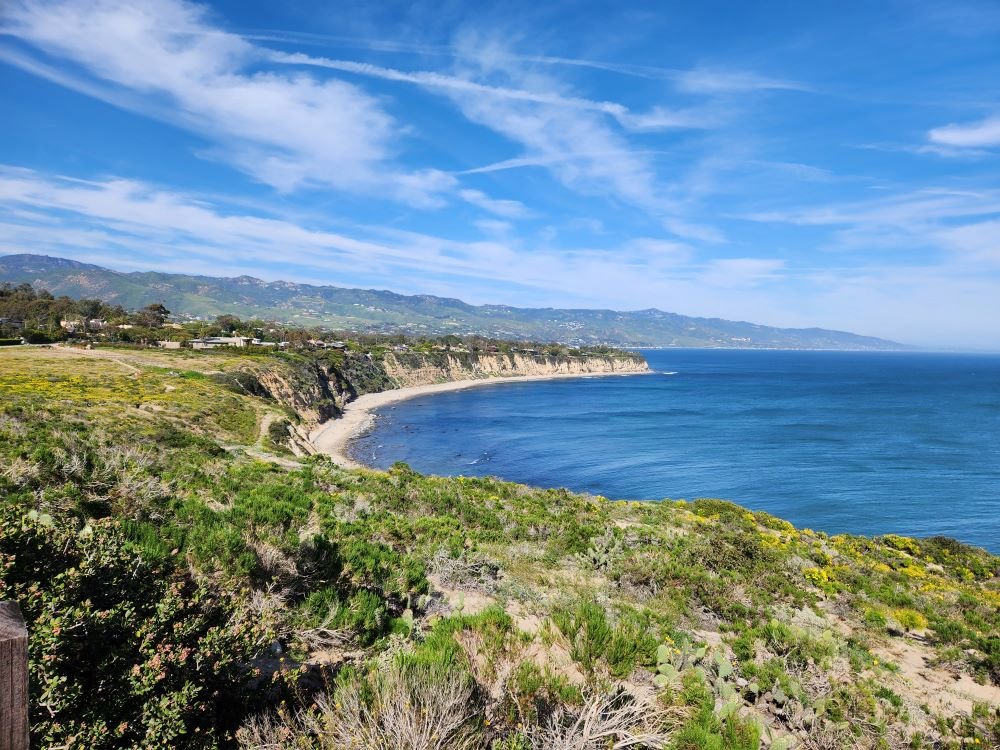
On November 24, 1793, English explorer George Vancouver named the rocky promontory Point Dume after his friend, Father Francisco Dumetz. Point Dume is the western terminus of Santa Monica Bay and was named California Registered Historical Landmark No. 965.

PointDumeBeach.JPG

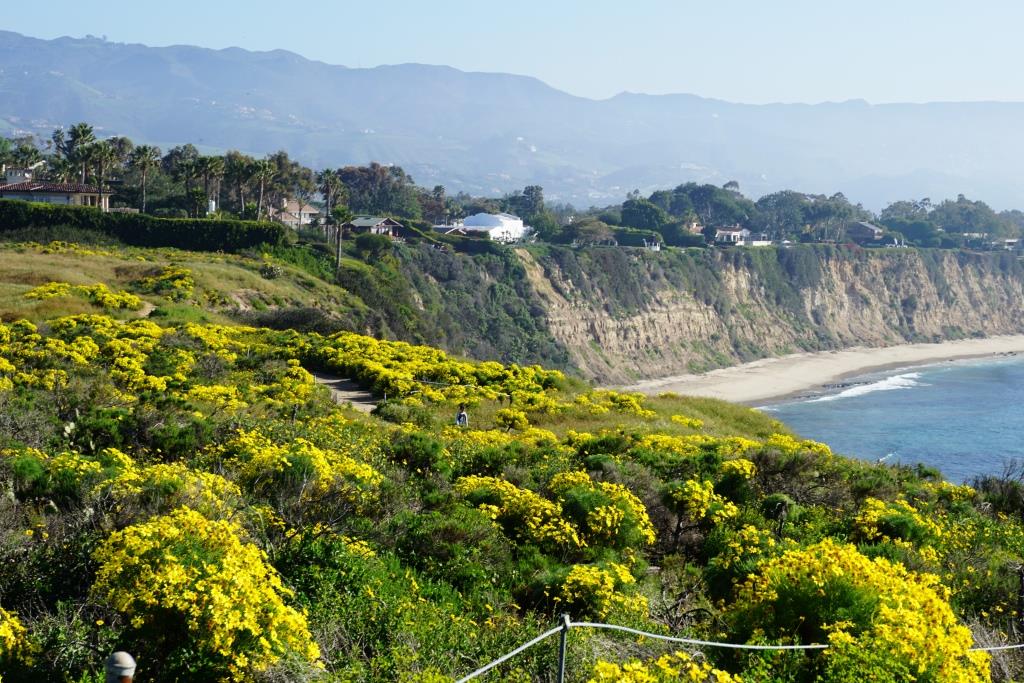
View in the spring of 2023

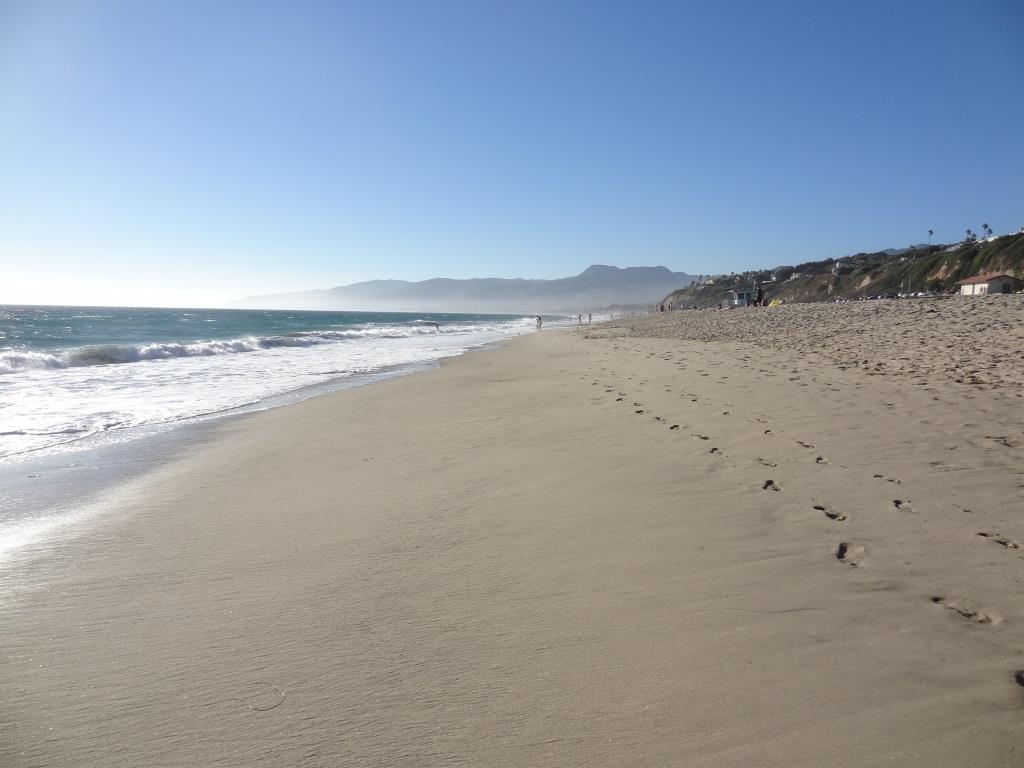
Point Dume State Beach is a 63 acre promontory that juts out into the Pacific and features headlands, cliffs, rocky coves and vast beach access for swimming, surfing and scuba diving.

To get to Point Dume State Beach, take Westward Beach Road southeast from PCH near Zuma Beach's south side to the paid parking area, or park on Westward Beach Road, which parallels Westward Beach.

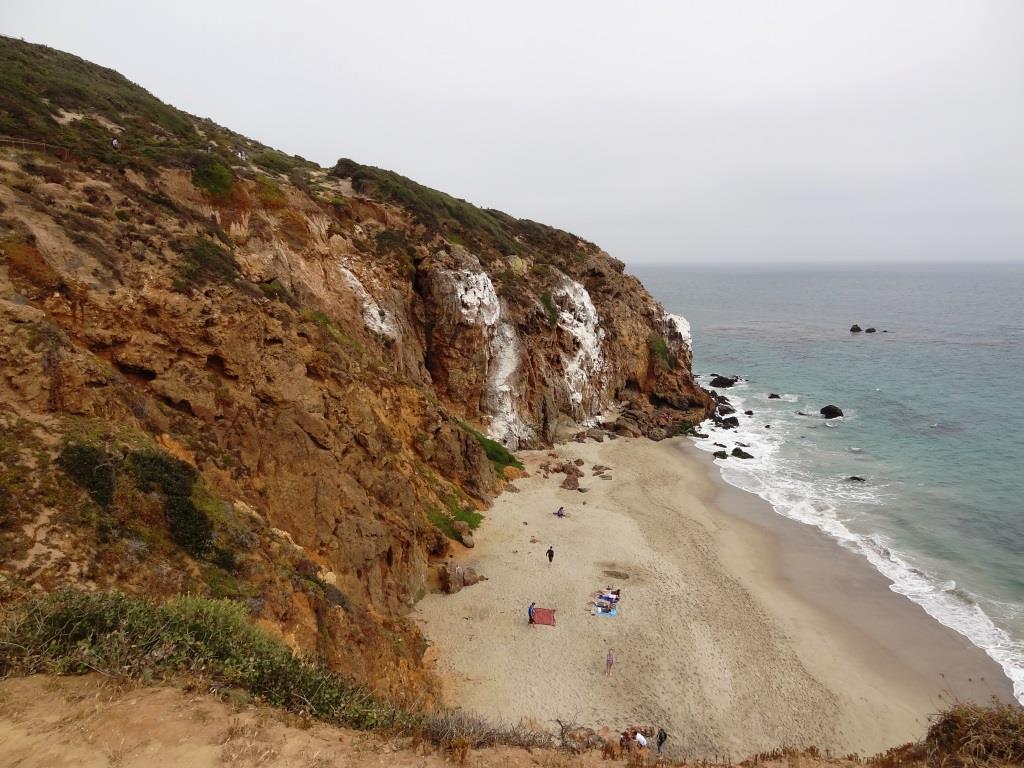
To the southeast of Westward Beach is a small 300 foot or so beachfront area called Pirate's Cove Beach (which due to its seclusion was once used as a nude beach).

Pirate's Cove beach seen from the top of the promontory. You can climb down there and when the tide is moderate to low, walk around to it.

Pirate's Cove beach seen from the top of the promontory. You can climb down there and when the tide is moderate to low, walk around to it.

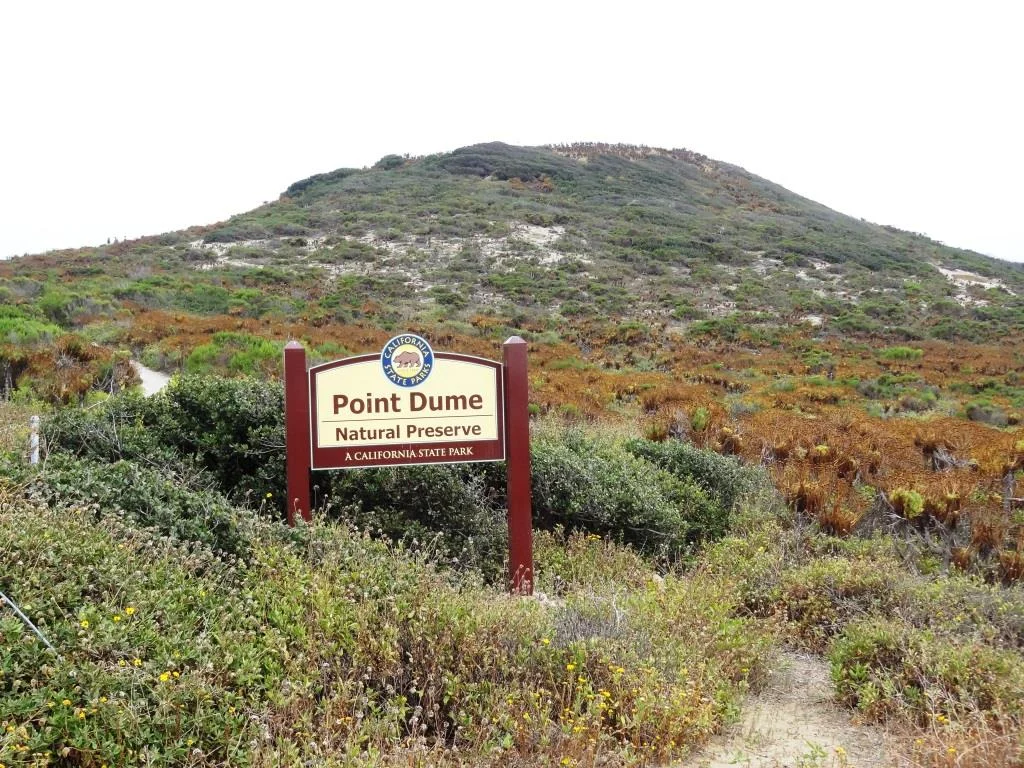
The 34-acre Point Dume Natural Preserve also begins from the cul-de-sac. A gradual ascending trail leads to an ancient coastal bluff sand dune with spectacular views...we've seen whales, seals and dolphins over here. A stairway from the east side of the bluff-top preserve allows access to a more isolated beach and tidepools (look but don't touch). You'll have fun exploring up here.

In the spring of 2023

This is a snippet of the pilot episode, "The Lady in the Bottle," of I Dream of Jeannie that originally aired September 18, 1965. If you skip to 1:39 in this clip, you will see the prominent rock formations on the east side of the Point Dume promontory. Below is a more recent shot of that area.

This is where Captain Anthony Nelson (Larry Hagman) made a giant S.O.S. in the sand with sticks and other items, including an old bottle that moved itself. He picks it up, dusts it off, and out pops Barbara Eden. Lucky guy!

This is where Captain Anthony Nelson (Larry Hagman) made a giant S.O.S. in the sand with sticks and other items, including an old bottle that moved itself. He picks it up, dusts it off, and out pops Barbara Eden. Lucky guy!

Location/Directions: Take Kanan south to PCH and turn right. Westward Beach Road is over the rise, at the foot of the hill. Park free on WBR or pay a fee at Westward Beach lot. No restrooms at the Preserve but some can be found on WBR. Call 310.457.8143 or visit www.parks.ca.gov/?page_id=623 for more information. Also see beaches.lacounty.gov/point-dume-beach.

Dogs are not allowed on trails in the Point Dume Natural Preserve or on the beach.

Westward Beach

Westward Beach

Springtime at the Point Dume Natural Preserve

Springtime at the Point Dume Natural Preserve

Corriganville Park in Simi Valley

Corriganville3.JPG

Corriganville Park is a historical 206 acre park located at 7001 Smith Road in Simi Valley that is owned and operated by the Rancho Simi Recreation and Park District. The park has over four miles of hiking, biking and equestrian trails, sandstone cliffs, an oak forest, seasonal stream, shaded picnic areas, Camp Rotary Youth Campground, picnic shelter and more.

The park is named after Ray "Crash" Corrigan, a stuntman/actor who owned the park from 1937 to 1965, when over 3,500 movies, TV shows and commercials were filmed there. In 1949, the Corrigan Movie Ranch opened as a Western-style amusement park with a train ride and stagecoach ride that in the late 1950s had greater weekend attendance than Disneyland and Knott's Berry Farm.

Corriganville4.JPG

Bob Hope bought the property in 1965 and renamed it Hopetown, but filming stopped after a year. The ranch burned down in the 1970s and all that is left are the cement slabs and exterior rock walls of the barn. You've got to visit the Santa Susana Depot Museum around the corner from Corriganville and see the model of what Corriganville looked like in 1960, then visit the park to see the slabs and imagine what it was like back then.

There is an interpretative trail at Corriganville with 20 markers that provide information about the vegetation and surroundings as well as some of the history. Visit www.rsrpd.org/business_detail_T9_R53.php for a link to pdf brochures with information about the history and trails of the park. Or call 805.584.4400.

Corriganville1.jpg
Corriganville2.jpg

Sapwi Bike Park in Thousand Oaks

Beginners’ pump track at Sapwi Trails Community Park.

Beginners’ pump track at Sapwi Trails Community Park.

The Sapwi Bike Park project is a partnership between the Concerned Off-Road Bicyclists Association (CORBA) and Conejo Recreation and Park District (CRPD). The park is a free, public recreational bicycle skills park facility located in the heart of beautiful Sapwi Trails Community Park in Thousand Oaks.

The park also features several miles of multi-use trails, natural habitat preservation, and other activities such as disc golf, cross-country running, and a non-motorized glider flying area.

The Sapwi Trails Bike Park offers a wide range of trails and features to challenge all ages and skill levels. In addition to a pump track, the park features progressive drop and jump lines – varying in difficulty from beginner to advanced. Outside of the dedicated bike park area, there are several trail side feature areas and a hard-surface beginner level pump track.

This 145 acre Sapwi Trails Community Park is located in the open space between Erbes Road (at Scenicpark Street) on the west and Westlake Boulevard east, with Avenida de los Arboles on the north. There are three parking lots off of Erbes, Arboles and Westlake Boulevard.

Learn more about the Sapwi Bike Park at sapwibikepark.com.

sapwi sign.JPG

National Park Service Visitor Center in Thousand Oaks (Moved to Calabasas in 2012)

IN JUNE 2012, THE NATIONAL PARK SERVICE VISITOR CENTER MOVED TO THE ANTHONY C. BEILENSON VISITOR CENTER IN CALABASAS. CLICK THIS LINK FOR MORE INFORMATION

The National Park Service Visitor Center, located at 401 West Hillcrest Drive in Thousand Oaks, is an outstanding place to learn more about the Santa Monica Mountains National Recreation Area (SSMNRA). SSMNRA is over 154,000 square acres, which makes it the largest urban national park in the United States.

The National Park Service controls 21,500 of those acres and the best place to learn more about the SMM is this Visitor Center! There is always has someone on duty to answer questions about trails, maps, habitat, plants, hiking, camping, etc. Additionally, the Center has informational displays, maps and brochures, books and educational items for the kids for sale.

Visit the NPS website at www.nps.gov/samo for more information or call the Center at 805.370.2301.

Mugu Peak in Point Mugu State Park

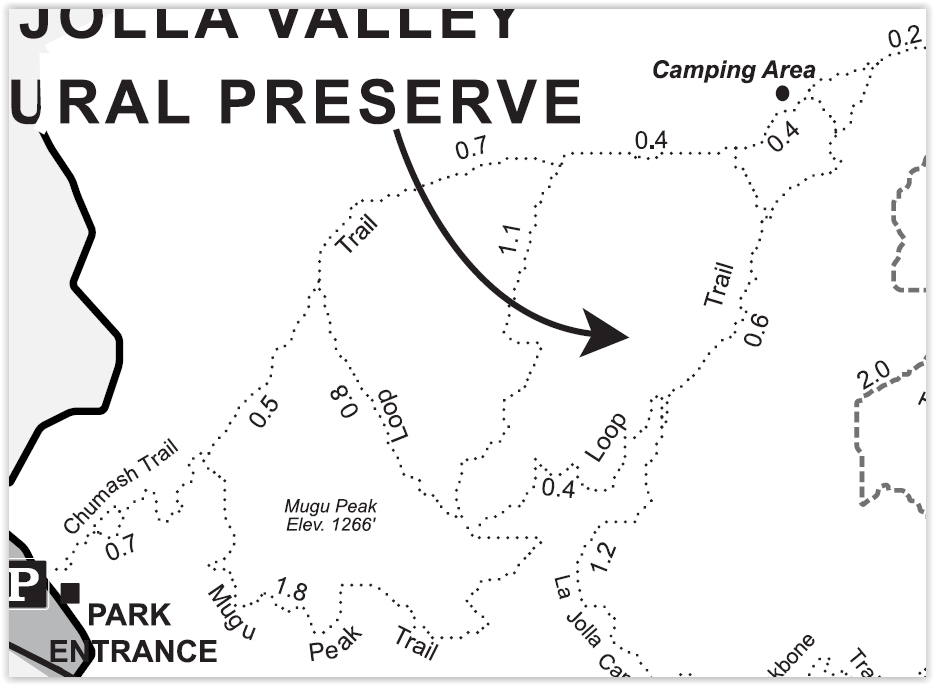
The 1,266 foot elevation Mugu Peak is at the western edge of the Santa Monica Mountains, in Point Mugu State Park. The peak provides views stretching from the Malibu Lagoon/Naval Base Ventura County and Channel Islands on the west, Thornhill Broome Beach on the east, La Jolla Valley on the north and more.

There are multiple ways of getting to the peak. The most direct (and albeit steepest) ascent is via the Chumash Trail, accessible across from the Naval Base shooting range (yes, sometimes you will hear rounds). The Chumash Trail is accessible off of PCH at this link. Look for the left turn into a small dirt parking area that has space for perhaps 15 or so cars.

The 7/10ths of a mile hike up the Chumash Trail is pretty brutal, but I've seen all shapes, sizes and ages making it up at varying paces.

Turn left after reaching the top of the Chumash Trail. Veering left continues the Chumash Trail towards La Jolla Valley. Veer right up the really steep hill for the most direct route to Mugu Peak.

Turn left after reaching the top of the Chumash Trail. Veering left continues the Chumash Trail towards La Jolla Valley. Veer right up the really steep hill for the most direct route to Mugu Peak.

The initial Mugu Peak Trail section is quite steep, then you plateau, then the remainder is more moderate, seen above.

The initial Mugu Peak Trail section is quite steep, then you plateau, then the remainder is more moderate, seen above.

The Mugu Lagoon within Naval Base Ventura County is a colorful sight from throughout the hike and at the top of Mugu Peak.

The Mugu Lagoon within Naval Base Ventura County is a colorful sight from throughout the hike and at the top of Mugu Peak.

Looking northwest from Mugu Peak you will see the the 1,421 foot Laguna Peak, which contains a Naval satellite tracking station.

Looking northwest from Mugu Peak you will see the the 1,421 foot Laguna Peak, which contains a Naval satellite tracking station.

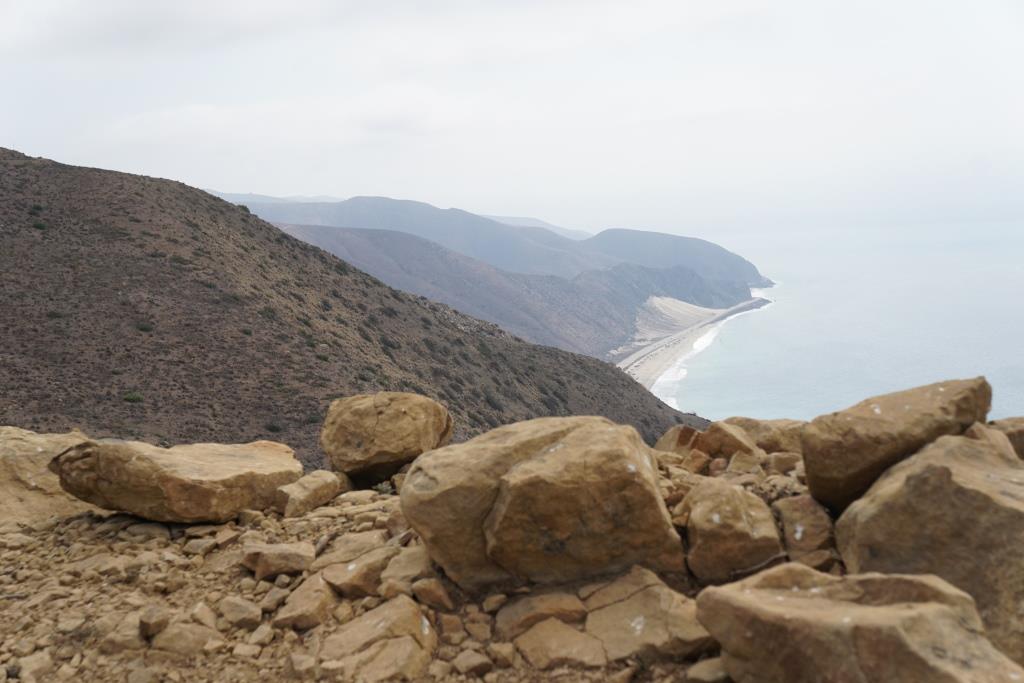
Views southeast with Thornhill Broome Beach in the background.

Views southeast with Thornhill Broome Beach in the background.

So you've reached the top of Mugu Peak, enjoyed the panoramic views, saluted the flag on display, checked out the toolbox under the flag with logbooks and other items, the next choice is, do you go back the way you came or do you take another route? If you head back the direction you came, the title mileage of the hike is about 2 1/2 miles of mostly steep up/downhills.

Well, if you continue in the direction of Thornhill Broome Beach (southeast), you can continue on the Mugu Peak Trail, which is several miles traversing around the southern, then western sections of Mugu Peak. This is my preferred approach as the footing is much easier and your total mileage is roughly 4 miles. Plus, you are treated to additional views that are just beautiful.

Map snippet courtesy of California State Parks.

Map snippet courtesy of California State Parks.

Another view of Thornhill Broome Beach and the large sand dune across PCH from the southeastern edge of the Mugu Peak Trail.

Another view of Thornhill Broome Beach and the large sand dune across PCH from the southeastern edge of the Mugu Peak Trail.

You can also get to Mugu Peak from the La Jolla Canyon Loop Trail.

Westlake Lake in Westlake Village

Westlake Lake is a 125 acre lake with 8 miles of shoreline in Westlake Village. Over 1,300 homes are located on the lake or are within access of it. It is a man-made lake that was completed in 1969 at a cost of $3.5 million.  A number of homes are located on an island in the lake that is connected by La Venta Drive.

View of Westlake Lake from southwest side on Triunfo Canyon Road. The Landing is on the left side.

View of Westlake Lake from southwest side on Triunfo Canyon Road. The Landing is on the left side.

While Westlake Lake is a private lake maintained for Westlake Village residents by the Westlake Lake Management Association, you can still enjoy its beauty in many ways. Running, cycling and walking around the lake via Triunfo Canyon and other adjacent streets is quite popular. Or visit The Landing (32129 Lindero Canyon) on the southwest side of the lake to enjoy a meal at one of several lakefront restaurants such as Boccacio's, Zin Bistro Americana and The Landing Grill and Sushi Bar, all with indoor/outdoor dining. Or just stroll around, taking in the sweeping views and serenity.

View from the southwest side of the Lake while cycling on Lindero Canyon Road.

The lake is stocked with bass but fishing and boating is restricted to Westlake Village residents with guests and permits. So if you don't live there, start making some Westlake Village friends!