Federal Reserve Establishes U.S. Coin Task Force to Address Low Coin Inventories

pennies1.jpg

According to the Federal Reserve, business and bank closures associated with the COVID-19 pandemic have significantly disrupted the supply chain and normal circulation patterns for U.S. coins. While there is an adequate overall amount of coins in the economy, the slowed pace of circulation has reduced available inventories in some areas of the country.

The primary issue with coin is a dramatic deceleration of coin circulation through the supply chain. As of April 2020, the U.S. Treasury estimates that the total value of coin in circulation is $47.8 billion, up from $47.4 billion as of April 2019. While there is adequate coin in the economy, the slowed pace of circulation has meant that sufficient quantities of coin are not readily available where needed. With establishments like retail shops, bank branches, transit authorities and laundromats closed, the typical places where coin enters our society have slowed or even stopped the normal circulation of coin. The coin supply chain includes many participants, from the U.S. Mint who produces new coin, to the Federal Reserve who distributes coin on the U.S. Mint’s behalf, to armored carriers, banks, retailers and consumers, all of whom have a role to play in helping to resolve this issue.

The Federal Reserve is working with the U.S. Mint and others in the industry on solutions. As a first step, a temporary cap was imposed on the orders depository institutions place for coins with the Federal Reserve to ensure that the current supply is fairly distributed. In addition, a U.S. Coin Task Force was formed to identify, implement, and promote actions to address disruptions to coin circulation.

Members of the U.S. Coin Task Force include individuals from the American Bankers’ Association, Department of the Treasury, National Armored Carrier Association, Federal Reserve System and other organizations.

The task force will meet for a series of virtual working sessions in July with the goal of sharing a set of recommendations at the beginning of August. The group will focus on identifying actionable steps that supply chain participants can take to address the current coin circulation issue.

As the economy recovers and businesses reopen, more coins will flow back into retail and banking channels and eventually into the Federal Reserve, which should allow for the rebuilding of coin inventories.
Sundown at Westlake Lake on a Warm Summer Night

Peaceful views of the sun setting from Westlake Lake in Westlake Village on a warm July night. While Westlake Lake is a private lake, you can still enjoy its beauty in many ways. Running, cycling and walking around the lake via Triunfo Canyon and other adjacent streets is quite popular. Or visit The Landing (32129 Lindero Canyon) on the southwest side of the lake to enjoy a meal at one of several lakefront restaurants such as Boccacio's, Zin Bistro Americana and The Landing Grill and Sushi Bar, all with indoor/outdoor dining. Or just stroll around, taking in the sweeping views and serenity.

Natural Gas Flame North of La Conchita in Ventura County

Here are some views of the flame burning just north of the 101 near La Conchita. Taken from La Conchita Beach. You can often see the flame while approaching La Conchita from the southbound 101. The flame is derived from natural gas waste matter from oil drilling in the area. La Conchita Beach can be accessed via an undercrossing under the 101 from La Conchita or from Mussel Shoals on the rough or Rincon Point (via the La Conchita Bike Path).

Local area beaches in Ventura to Carpinteria

("Eternal Flame" cover by Eraina Joy.)

California's Statewide Smoke-Free Air Laws

NoSmokeNoVape.jpg

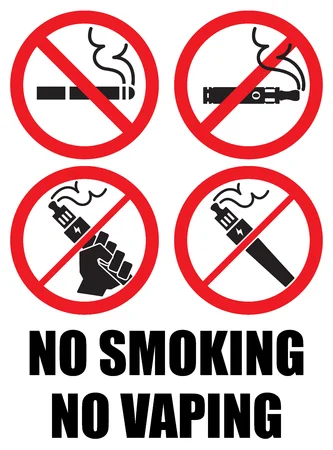
The state of California has a number of smoke-free laws in place that include traditional tobacco products such as cigarettes, cigars and pipes as well as electronic smoking devices. Let's have a look at these laws below, keeping in mind that local laws may be more stringent. Learn more about smoke-free air laws at www.cdph.ca.gov/Tobacco.

Child/Day Care Centers: Smoking is prohibited within all licensed day care center, including private residences licensed as family day care homes.

Farmers' Markets: Smoking is prohibited within 25 feet of farmers' markets.

Foster and Group Homes: Smoking is prohibited within and outside these homes when children are present.

Government Buildings: Smoking is prohibited in all state, county and city government buildings and within 20 feet from their main exits, entrances or operable windows and in any passenger vehicle owned by the state.

Multi-Unit Housing: Smoking is prohibited in apartment and condo indoor commons spaces (e.g. hallways, stairwells, laundry rooms and recreation rooms).

Personal Vehicles: Smoking prohibited when children under age 18 is present in a motor vehicle, whether it is moving or stopped.

Public Transportation: Smoking prohibited.

Workplaces: Smoking is prohibited in all indoor workplaces, including bars, restaurants, offices, factories and warehouses. 

Youth Buses: Smoking is prohibited by operators of youth buses at all times.

Correctional Facilities: Smoking and tobacco products are prohibited in all state correctional facilities. Tobacco products may be possessed in residential staff housing where inmates are not present.

Playgrounds and Youth Sports Events: Smoking and tobacco products are prohibited within 25 feet of playgrounds, tot lot sandboxes and children's recreational areas, as well as within 250 feet of a youth sports event (including practices, games or related activities where kids up to age 18 are present).

Schools: Smoking and tobacco products are prohibited in all school districts, charter schools and county offices of education, while students are under supervision. 

Looking to quit smoking? Find help at the California Smokers' Helpline, 1-800-NO-BUTTS or by visiting www.nobutts.org.

California Tobacco Facts and Figures 2019 from the California Department of Health

  • Adult tobacco use in California decline from 57.4% in 1988 to 10.1%, or 2.8 million adults, in 2017. The rest of the U.S. is at 17..1%.

  • There is a clear correlation between education and cigarette smoking. Just 6.7% of residents with a bachelor’s degree smoke, vs 16% for those without a high school degree.

  • Ventura and Santa Barbara Counties have a cigarette smoking rate of 9.6% in 2015-2017.

  • Youth cigarette use has dropped from 16% in 2002 to 2% in 2018, while the U.S. rate has dropped from 22.5% to 8.1%.

IRS Advises Taxpayers to Keep Economic Impact Payment Notice with Other Tax Recrods

1444 notice lr.jpg

The IRS advises that people who receive an Economic Impact Payment in 2020 should keep Notice 1444, Your Economic Impact Payment, with their tax records. This notice provides information about the amount of their payment, how the payment was made and how to report any payment that wasn’t received.

For security reasons, the IRS mails this notice to each recipient’s last known address within 15 days after the payment goes out. It’s especially important for people to keep this notice if they think their payment amount is wrong. When they file their 2020 tax return, they can refer to Notice 1444 and claim additional credits, if they are eligible for them.

Taxpayers should keep this notice filed with all their other important tax records. These include, W-2s from employers,1099s from banks and other payers, other income documents and virtual currency transaction records.

Learn more about the Economic Impact Payments at www.irs.gov/coronavirus/economic-impact-payments.

Wild Birds Unlimited Nature Shop in Thousand Oaks and Ventura for Local Bird Fans

Wild Birds Unlimited.jpg

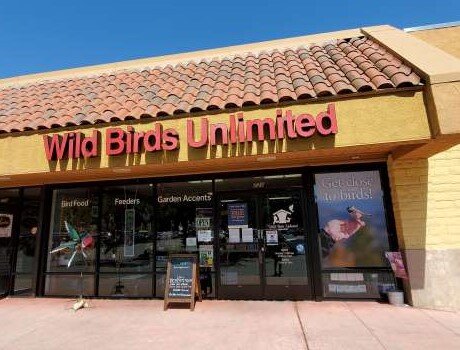
Wild Birds Unlimited Thousand Oaks is located in the Whole Foods Market plaza at Moorpark and Wilbur Roads. The store offers bird foods of all types, bird feeders and an assortment of other items for backyard bird fans. Owners Richard and Catherine are knowledgeable, helpful and friendly. Open 7 days a week. Consider stopping by this fun little store. There's also a location in Ventura at 4020 E. Main Street near Bed, Bath and Beyond.

Thousand Oaks location thousandoaks.wbu.com. (805) 379-3901

Ventura location ventura.wbu.com (805) 765-4594

Wild Birds Food.jpg

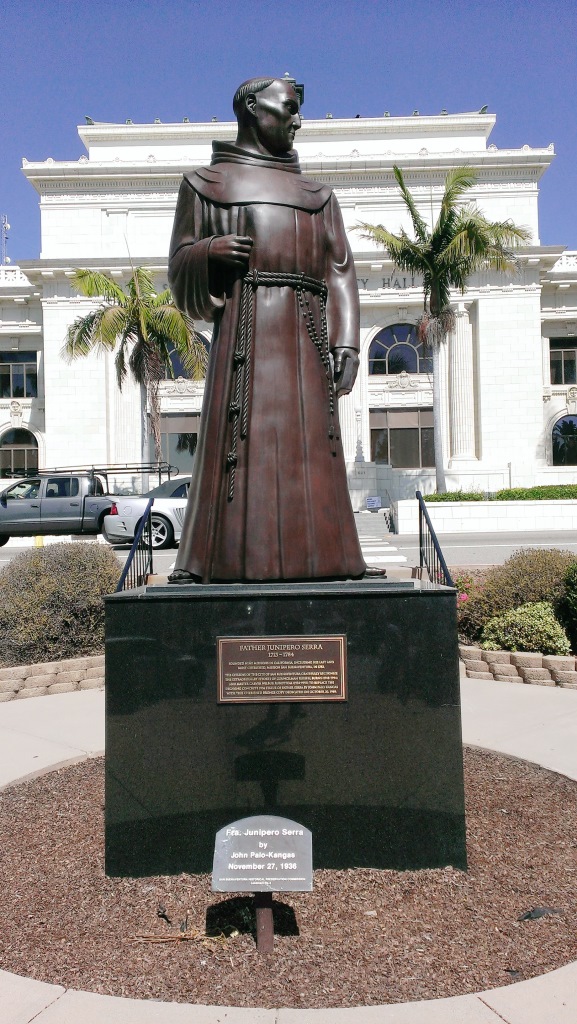
Father Junipero Serra Statue in Downtown Ventura

NOTE: On June 18, 2020, the City of Ventura issued a press release stating that it plans to work with members of the community in moving the statue of Father Junipero Serra to a new, non-public location.


Father Junipero Serra (1713-1784) was a Roman Catholic Spanish Franciscan friar who founded nine Spanish Missions in California stretching from San Diego to Carmel. 

The last of these nine missions, founded on March 31, 1782, was Mission San Buenaventura, which today is an active parish of 3,000 members located at 211 East Main Street in Ventura.

Serra was beatified by Pope John Paul II on September 25, 1988, and canonized by Pope Francis on September 23, 2015, at the Basilica of the National Shrine of the Immaculate Conception in Washington, D.C. - the first canonization ceremony to be held in the country.

Located on a pedestrian island in front of Ventura City Hall at the intersection of N. California Street and Poli Street is a bronze statue of Father Junipero Serra.

JuniperoSerraSign.jpg

In 1936, the Federal Art Project (part of the New Deal) funded this heroic sculpture. Finnish sculptor John Palo-Kangas originally cast it in cement, which decayed over the years.

The present statue, an exact replica of the original statue, was cast in bronze and dedicated on October 20, 1989. A wooden duplicate used in the making of the bronze statue can be seen in the City Hall Atrium.

According to the Mission San Buenaventura website, Serra stood just 5 feet, 2 inches in height. This statue is over 9 feet tall. Go check it out!