Citroën Exhibit at Mullin Automotive Museum in Oxnard to Celebrate 100 Years in Operation

The Mullin Automotive Museum will offer a one of a kind retrospective on one of France's greatest automakers featuring work from its beginning to the present day. The exhibit opened to the public on Saturday, March 11th, 2017 and is the largest Citroen exhibit ever held in the U.S.  

"Citroën: The Man, The Marque, The Mystique," features cars from the entire history of the company as well as an in-depth look at Andre Citroën. The exhibit runs through the spring of 2018.

Citroën has built a reputation over the last 98 years as being a company willing to take risks and do things differently. It has managed to continually push the boundaries of technology and styling without losing its unique Gallic charm, something which is so evident in vehicles like the DS and the 2CV. Founded in 1919 by Andre Citroën, the company was responsible for building Europe’s first affordable mass-produced car, the Citroën Type A. The company also popularized the front wheel drive layout in addition to unibody construction and four-wheel independent suspension with its revolutionary Traction Avant executive car.

“Citroën is a marque that has always appealed to me on some level,” said Peter Mullin, founder and CEO of the Mullin Automotive Museum. “The way in which the company set about designing its often odd but always stunning vehicles, packing them with wildly innovative technologies, is fascinating to me. I’m so pleased that we will soon be able to share these incredible vehicles with the public who may not have ever seen them in person and I hope we’re able to create a new legion of Citroën devotees.”

“Citroën: The Man, The Marque, The Mystique” represents the most comprehensive look at the history of the famed French automaker ever attempted in North America and honors one of the world’s greatest and quirkiest manufacturers. The exhibition features 46 of the world’s most historic and unique Citroëns including a number of vehicles bodied by French coachbuilder Chapron, a rare twin-engined 2CV Sahara, a Traction Avant Cabriolet and an iconic HY Van. Visitors can also expect to see modern Citroëns such as the 2007 C6 and the 2009 C3 Pluriel as well as several late production model 2CVs dating from the 1980s and early 1990s, none of which were ever sold in the U.S.

The museum hosts semi-private tours available on Tuesdays and Thursdays and public days on the 2nd and 4th Saturdays of the month. Tickets are encouraged to be purchased in advance through the Museum’s website. For more information, visit www.MullinAutomotiveMuseum.com or call 805.385.5400.

The Mullin Automotive Museum is located at 1421 Emerson Avenue, Oxnard. The museum is typically open to the public on the second and fourth Saturdays of every month from 10 AM to 3 PM. Tickets must be purchased in advance at www.MullinAutomotiveMuseum.com.
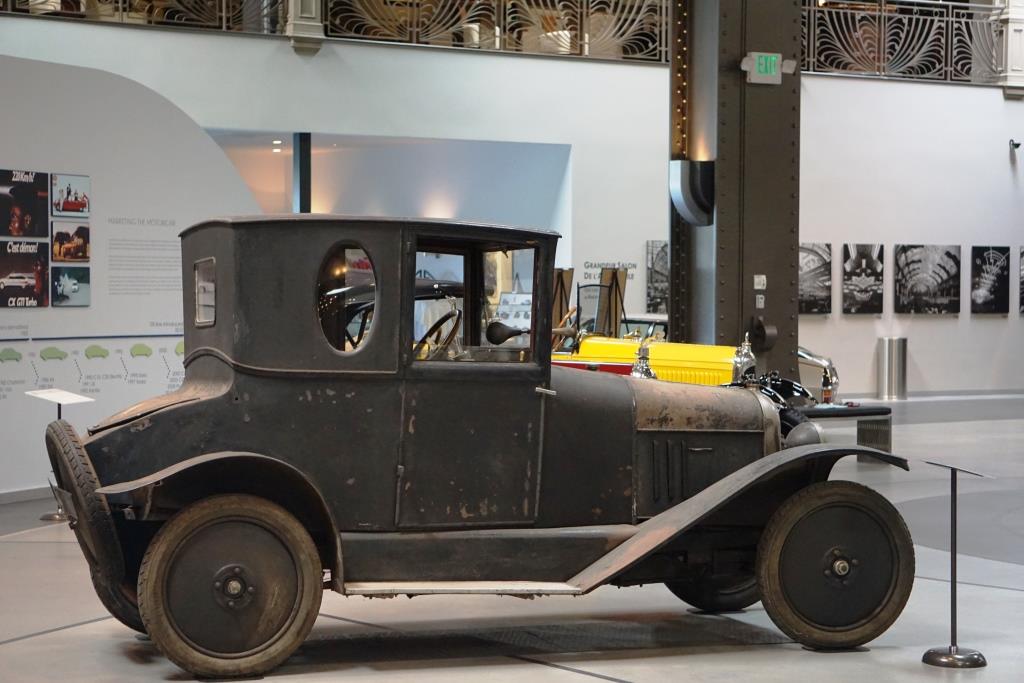
The first Citroën, the Type A, built in 1919.
The first Citroën, the Type A, built in 1919.

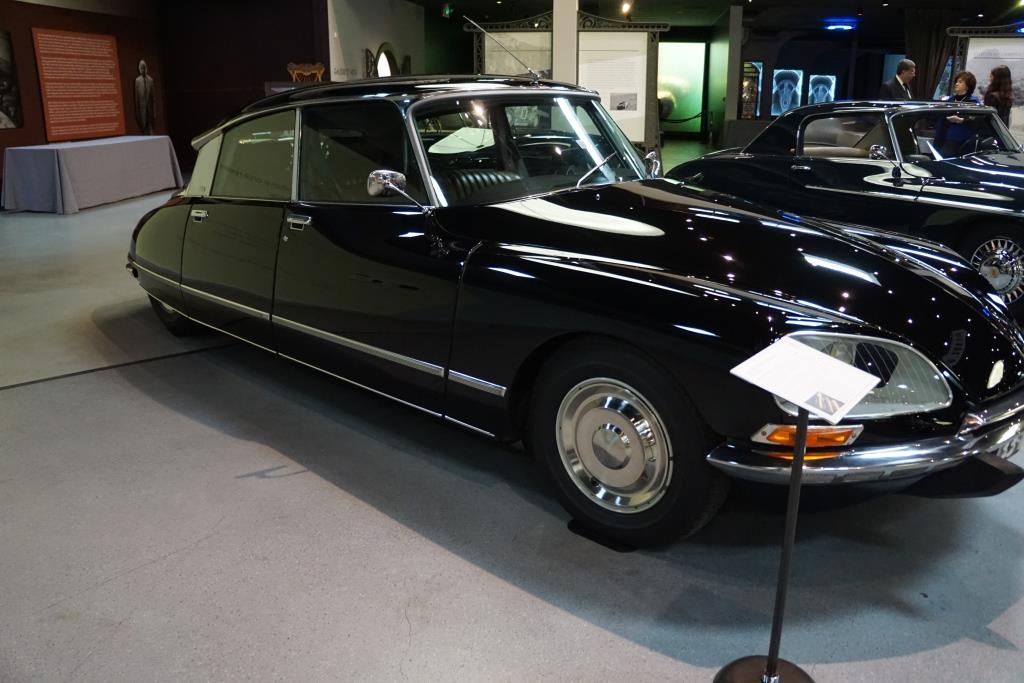
Citroën DS

Citroën DS

Three Asian Small-Clawed Otter Pups Born at the Santa Barbara Zoo on Saturday, October 7th

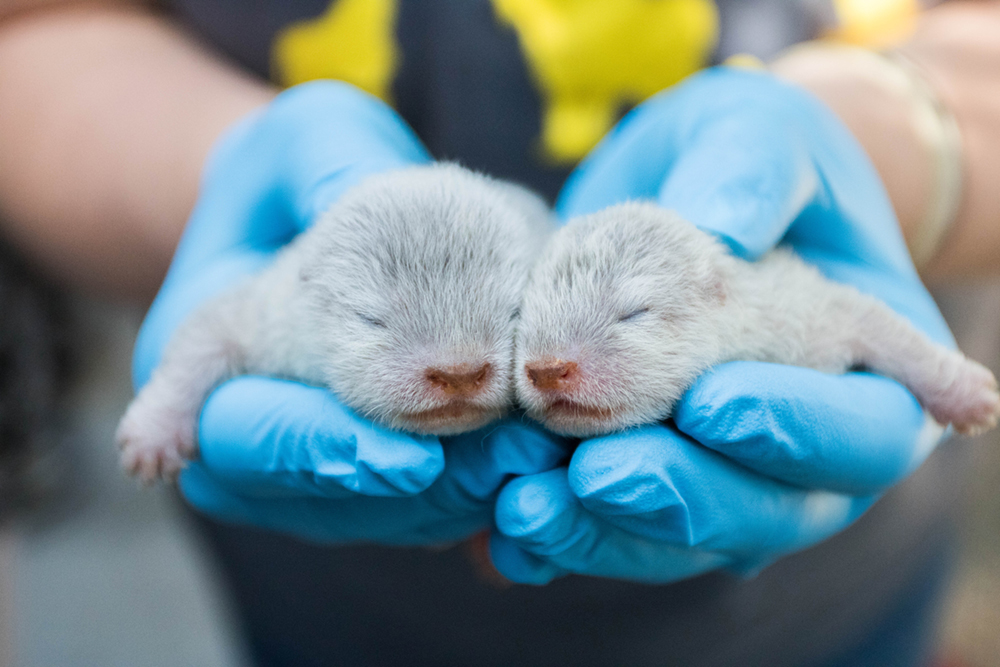
A pair of Asian small-clawed otters at the Santa Barbara Zoo have produced their first litter of pups with three healthy offspring born in a nesting box in their holding area on Saturday, October 7.

SB Zoo Otters Born 2.jpg

As in the wild, where the parents keep their pups in a den, these young otters will not leave their behind the scenes holding area until they are old enough to safely swim and have grown teeth so they can eat solid food. Depending on their development, keepers estimate the pups could go on exhibit as early as mid-December. 

Animal Care staff had recently confirmed that Gail was pregnant and estimated that she was due any day. When keepers arrived Saturday morning, Gail and Peeta remained in the nesting box.

“The parents didn’t come out to greet us and then we heard squeaks,” said the Zoo’s Curator of Mammals Michele Green. “That’s how we knew Gail had given birth.”

Gestation is 68 days, and after birth the female stays in the nesting box with the pups, but is relieved by the male for breaks.

Both of the Zoo’s otters are first-time parents, but are showing excellent parenting skills for the two pups (females and one male), according to keepers.

SB Zoo Otters Born 3.jpg

“Gail only arrived in March and it’s been fun to watch them bond, and now become parents,” says Green. “She’s a young mom, but doing very well. Peeta is attentive and diligent.”

Peeta was born at the National Zoo in Washington, D.C. in 2008. Gail was born at the Greensboro Science Center in South Carolina in 2013. The two were paired as part of a cooperative breeding program of the Association of Zoos and Aquariums (AZA). Their names, inspired by characters in the popular “Hunger Games” books and movies, were given to them by their Santa Barbara Zoo sponsors Peter and Pieter Crawford-van Meeuwen.

The last time Asian small-clawed otters were born at the Zoo was in May 2011 when six pups were born to a pair named Jillian and Bob. That pair also produced five young in August 2010, the first of the species to be born at the Zoo in more than 20 years. The entire family group later moved to the National Zoo, where they live today. Another female, Katniss, was paired with Peeta, but they did not breed. She passed away in December 2016 from a kidney ailment.

When Will the Otter Pups Go On View?

Asian small-clawed otters usually keep their pups in their dens for several weeks until the young have learned to swim and have teeth to eat solid food. Green estimates that the family group may venture into their exhibit in December for swimming lessons in the small pool. By January, the pups should be proficient swimmers, and on view at varying times during the day. By spring, they could be diving in the larger pool. Information on their progress will be available at www.sbzoo.org.  

Foster Feeder Special to Support the Otter Family

The public can help the otter pups by becoming a Foster Feeder, which supports the cost of feeding the growing otter family. New otter Foster Feeders who donate at least $50 receive a custom otter plush embroidered with the Zoo’s logo, along with a Foster Feeder certificate, otter fact sheet and photo, recognition on the Zoo’s Foster Feeder board and in Zoo News, and a one year subscription to Zoo News. For information, visit www.sbzoo.org.

About Asian Small-Clawed Otters

Although this species is not listed as endangered, Asian small-clawed otters are seriously threatened by rapid habitat destruction for palm oil farming and by hunting and pollution.  They are considered an “indicator species,” meaning their population indicates the general health of their habitat and of other species.

This species, the smallest otter in the world, lives in freshwater wetlands and mangrove swamps throughout Southeast Asia including southern India and China, Indonesia, the Philippines, Borneo, and the Malay Peninsula. They prefer quiet pools and sluggish streams for fishing and swimming. Unlike sea otters, they spend more time on land than in water, but they are skillful, agile swimmers and divers, with great endurance. They can stay submerged for six to eight minutes.

Asian small-clawed otters are about two feet long and weigh under 10 pounds, less than half the size of North American river otters. Their claws do not protrude beyond the ends of the digital pads, thus their names, and their feet do not have fully developed webbing and look very much like human hands.

They are one of the few species of otter that live in social groups. The bond between mated pairs of Asian small-clawed otters is very strong. Both the male and female raise the young and are devoted parents. In the wild, Asian small-clawed otters live in extended family groups of up to 12 individuals. The entire family helps raise the young, which are among the most active and playful of baby animals.

The Santa Barbara Zoo is open daily from 10 a.m. – 5 p.m.; general admission is $17 for adults, $10 for children 2-12, $13 for seniors 65+, and free for children under 2. Parking is $7.

The Santa Barbara Zoo is accredited by the Association of Zoos and Aquariums (AZA).

AZA zoos are dedicated to providing excellent care for animals, a great visitor experience, and a better future for all living things. With its more than 200 accredited members, AZA is a leader in global wildlife conservation, and is the public’s link to helping animals in their native habitats.

Grant Park in Ventura is a No Brainer for Panoramic Views of the Coast

GrantParkView1_0515.jpg

The 107 acre Grant Park is easily accessible from Downtown Ventura via Brakey Road or Summit Drive in Ventura and is a quick and easy way to get your dose of coastal views. There's no playground, restrooms, water or other facilities at this park. But there's plenty of open space and scenery below.

GrantParkView2_0515.jpg

The view looking the opposite direction of the Pacific Ocean, over the western-most section residential section of Ventura.Several other notable items at Grant Park are the privately owned Serra Cross Park and the Ventura Botanical Gardens Demonstration Trail.

You can spend 10 minutes up here for a quick dose of views or you could spend half a day up here resting, hiking, picnicking and enjoying the ocean breezes.

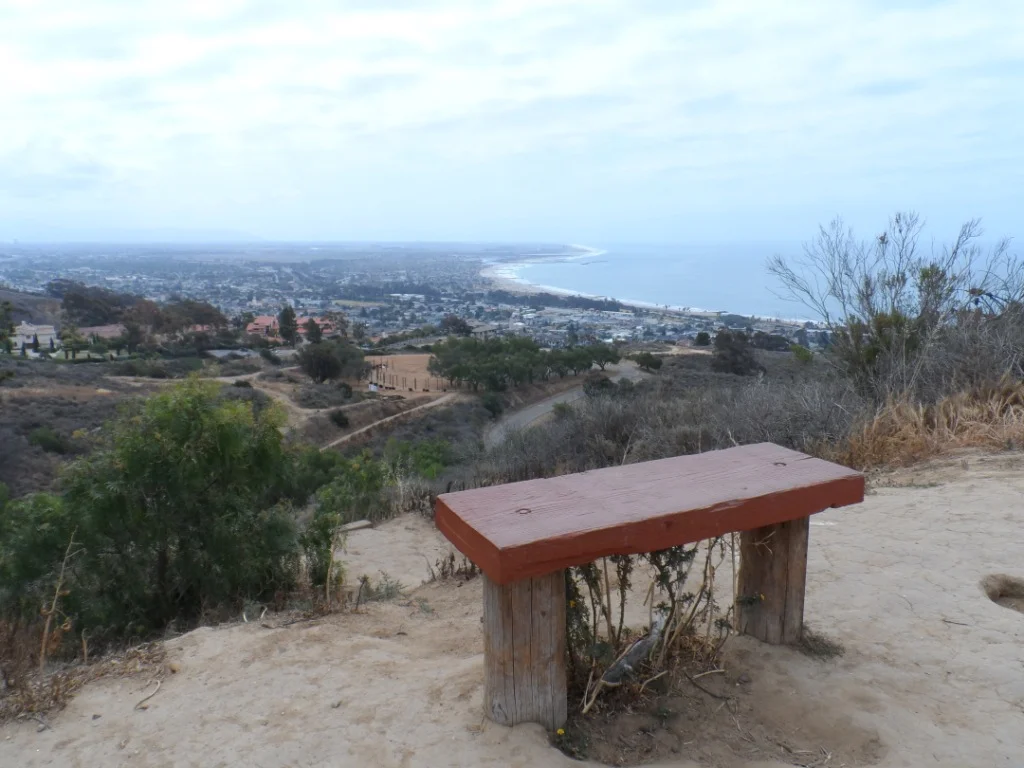
At the very, very top of Grant Park is this lone bench.

At the very, very top of Grant Park is this lone bench.

Sea Breezes, Views, Picnics and a Mermaid at Soter Point, Marina Park in Ventura

SoterPoint1.JPG

Dedicated in 2011, Soter Point at Marina Park in Ventura consists of a shaded picnic area, benches, attactive landscaping and a 15 foot mermaid statue. Soter Point is the result of a private/public partnership between local Ventura residents and the City of Ventura.

The inscription on a plaque on the Mermaid of Soter Point tells the story:

This stunning landmark overlooking the Ventura Harbor represents a trailblazing cooperative effort to beautify our community through private citizens working with public agencies. Andy Soter developed and landscaped the area in memory of his daughter Andrea, a successful and much admired investment manager. The mermaid sculpture and its foundation were donated by Russian emigrants Alec and Tatyana Benke, as an expression of love for their new country, America. Samuel Povar created the first collaboration of this nature in 2007 as a tribute to his late wife Orianna and worked tirelessly to make this Marina Park project a reality. And, the Ventura City Council and the Coastal Commission gave their enthusiastic blessing. Now Povar, Soter, and Benke, all Ventura residents, hope to inspire others to use private capital along with public cooperation and support…to envision something beautiful and make it happen.

Soter Point is located at the southernmost point of Marina Park, a short walk from the main playground area of the park. With beautiful views looking out toward Ventura Harbor and a picnic area cooled by sea breezes, Soter Point does not Disa-Point.

Bench faces south toward Ventura Harbor Village.

Bench faces south toward Ventura Harbor Village.

SoterPoint3.JPG
SoterPoint4.JPG
SoterPoint6.JPG

Status of the Downed Windmill at Rancho Sierra Vista/Satwiwa in Newbury Park

The old windmill in Rancho Sierra Vista/Satwiwa fell down last December apparently as a result of the very strong winds we had at the time. No word on plans to get the windmill back in places as of November 2022, six years later.

Rancho Sierra Vista "Mountain View Ranch" was the name given to the area by Carl Beal when he purchased thousands of acres of the northern section of Rancho Guadalasca in 1936 (the southern section was purchased by William Richard Broome). Beal brought modern ranching to the ranch, including a series of wells, springs and reservoirs from Boney Mountain.  Later the property was sold to Richard Danielson, who farmed and ranched here with his family for 32 years. It was sold to the National Park Service in 1980.

Prior to it falling on its side, the windmill was a favorite destination in Rancho Sierra Vista/Satwiwa. As you'll see in the latter part of the video, the windmill did function prior to its fall.  The NPS will be looking into the best approach to stand it back up and assess damages to the windmill as a result of the fall. Since the windmill is located in the protected Satwiwa Native American Indian Natural Area, NPS must be mindful of its approach to minimize impact to this sacred land.

Satwiwa means "the bluffs" and was the name of a nearby Chumash village. The Satwiwa area was established to reflect the Chumash heritage. Visit the Satwiwa Native American Indian Culture Center on weekends from 9 a.m. to 4 p.m. to learn more about the Chumash from a park ranger. 

The Windmill in Rancho Sierra Vista/Satwiwa in September 2016.

The Windmill in Rancho Sierra Vista/Satwiwa in September 2016.

Ventura County Courthouse (now San Buenaventura City Hall) on National Register of Historic Places

Ventura City Hall (aka San Buenaventura City Hall) was originally built as the Ventura County Courthouse in 1912. Located at 501 Poli Street on a hill overlooking the City of Ventura and the Pacific Ocean, it has a terra cotta exterior, copper sheathed dome and Italian marble foyer.

The Courthouse was in use until 1969, when it was deemed to be an earthquake risk. However, the City of Ventura purchased the building from the county and renovated and made structural improvements to it. The building has functioned as Ventura City Hall since 1974.

It was designated State of California Landmark No. 847 in December 1970 and named to the National Register of Historic Places in August 1971.

Ventura County Court House photo dated February 1971 (Photo Credit: City of Ventura).

Ventura County Court House photo dated February 1971 (Photo Credit: City of Ventura).

The original architect of the Courthouse was Albert C. Martin, who also designed Grauman's Chinese Theater (now TLC Chinese Theatre) in Hollywood.

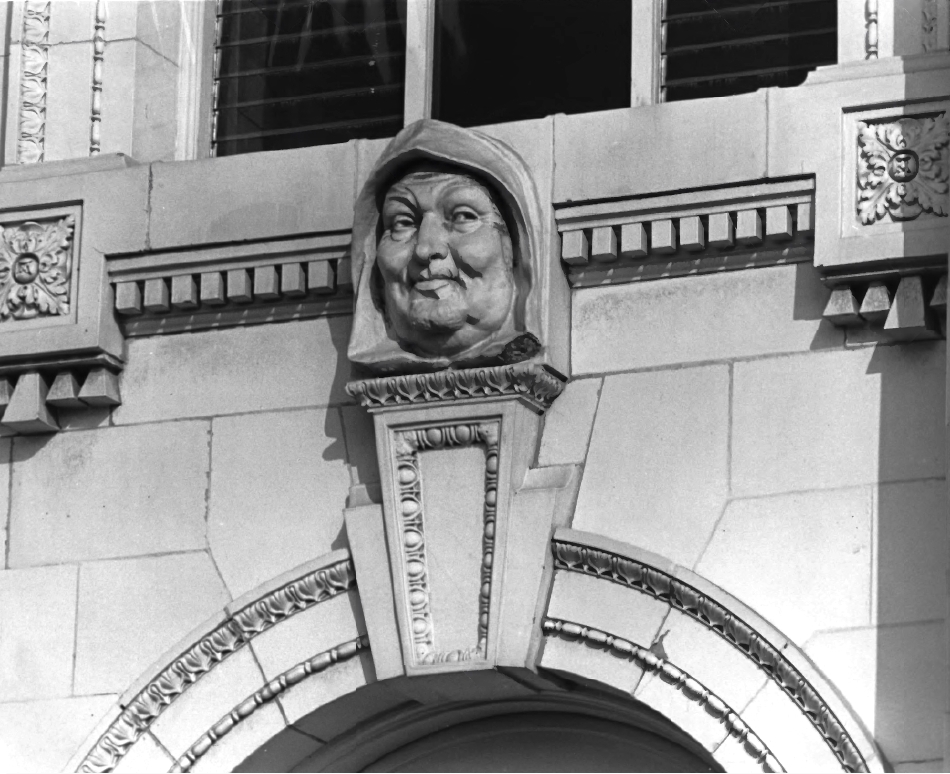
According to the City's website, the 200-foot frontage by 135 foot depth annex was completed in 1932, after five years of work supervised by architect Harold Burkett. Between the first and second floor windows of City Hall are 24 faces, each depicting whimsical friars' faces which serve as a historical reminder that the City of San Buenaventura was one of the nine original Mission towns founded by Father Junipero Serra and Franciscan friars in 1782.

According to the City's website, significant restoration to the building's terra cotta exterior took place in 1987-88 and 2004-5. In 1987-88, it took 16 months of steam cleaning to restore 3,600 terra cotta tiles on City Hall West, including replacing 959 damaged tiles. In 2005, the complex's entire façade was restored, repairing 10,000 blocks by sanding and repainting, replacing 100 damaged blocks and installing a water repellant over the walls and joints.

The end result is that this is one beautiful, can't miss, historic building in Ventura County. More on Ventura City Hall at www.cityofventura.ca.gov/1098/Ventura-City-Hall.

One of the 24 friars' faces on the building taken February 1971 (Photo Credit: City of Ventura).

One of the 24 friars' faces on the building taken February 1971 (Photo Credit: City of Ventura).

Conejo Rambler and "Mister Buttons the Clown" at the 1963 Conejo Valley Days Parade

In Spring 1963, soon after the effort to incorporate the City of Conejo (subsequently Thousand Oaks) was initiated, the Conejo Valley Days Parade took place. Back then, Thousand Oaks was still an unincorporated town in Ventura County.

In 1963, at 2594 E. Ventura Boulevard (later changed to Thousand Oaks Boulevard) in Thousand Oaks, was Conejo Rambler. Today, Allen Motors occupies that spot. 

Seen in the photo below is what appears to be a 1963 Rambler Classic Cross Country station wagon. The sign on the car indicates it was loaned for use in the parade by Conejo Rambler. Sitting on top of that station wagon is "Mister Buttons the Clown." No word on whatever happened to Mister Buttons the Clown, who does not appear to be wearing a seat belt in this shot.

CVDaysParade_ButtonsLR.JPG