Incident with Janye Mansfield's Six Year Old Son at Jungleland Thousand Oaks in November 1966

In November 1966, actress Jayne Mansfield was at Jungleland in Thousand Oaks with her three children, Zoltan (6), Miklos (7) and Mariska (2). Zoltan was attacked by a "tame" lion during the visit. The lion had the boy's head in its jaws before zoo employees were able to pry the lion off. Zoltan eventually recovered, after spending a month at Conejo Valley Hospital.

Manfield died in a car crash in June 1967. The two other adults in the car also died on impact. Her children were asleep in the back seat and they all survived. They were subsequently raised by their father*, Hungarian bodybuilder/actor and 1955 Mr. Universe Mickey Hargitay. And we all know his daughter, award-winning actress Mariska Hargitay.

Mansfield sued Jungleland for $1.6 million, which is about $14 million in today's dollars. Jungleland closed its doors and filed for bankruptcy in October 1969. Zoltan received an out of court settlement of $10,000 from Jungleland in bankruptcy. (Note that while the Mansfield incident was not exactly good publicity for Jungleland, the park had already faced financial challenges with the popularity of newer theme parks, Disneyland and Knotts Berry Farm.)

Looking to learn more about Jungleland? Stop by the Stagecoach Inn Museum in Newbury Park, which has a number of artifacts on display.

More information about Jungleland at THIS LINK.

* In 2025, Mariska announced that her biological father is actually singer Nelson Sardelli, not Mickey Hargitay.
The Twin Ponds Conservation Area in the Conejo Open Space is Protected Land

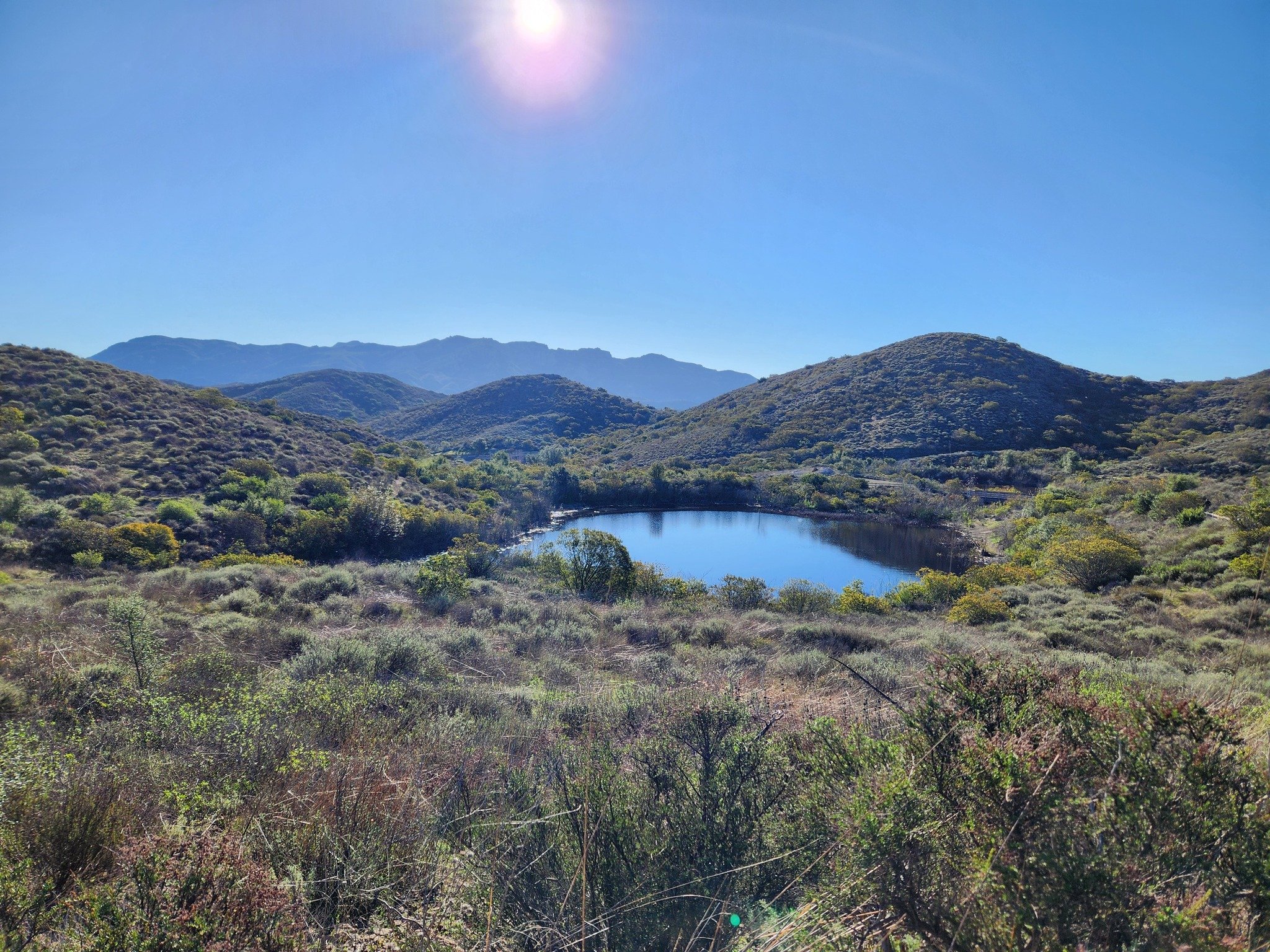
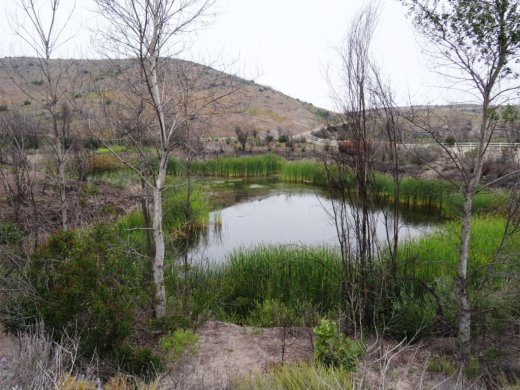
The Twin Ponds Conservation Area in Dos Vientos is part of the open space lands of the Conejo Open Space Conservation Agency and is protected by a conservation easement to the California Department of Fish and Game.

July 2014

July 2014

January 2015

January 2015

May 2016

May 2016

The ponds were originally constructed in the 1920s as part of the irrigation system for agricultural and cattle ranching operations at Dos Vientos Ranch. Today they serve as important habitat for Two Striped Garter Snakes and larger animals such as deer, bobcat, coyote and mountain lions that depend on a reliable source of water. Migrating waterfowl are occasionally abundant, especially in winter.

TwinPondsDV1.JPG

COSCA and Fish & Game ask that we enjoy this scenic area but protect the ponds for the future and ask that we do not enter the water or allow dogs/horses to enter the water, disturb or remove any animal or plant or place any plants or animals, including fish, into the ponds.

To explore the ponds, take the Vista Del Mar Trail from one of several access points in the Dos Vientos area, including the corner of Via Ricardo and Via Rincon and the corner of Rancho Dos Vientos and Via El Cerro. This is a fun little hike to take the kids on and the ponds are only about a mile from the Via Ricardo/Via Rincon trailhead.

Twin Ponds? What ponds? The ponds are completely dried up as of August/September 2016.

Twin Ponds? What ponds? The ponds are completely dried up as of August/September 2016.

January 2024

Late March 2024 - looking great!

State Route 23 Between the 101 and 118 is Dedicated to Japanese American World War II Soldiers

Moorpark Freeway section of SR 23 taken from Marview Trail in Thousand Oaks.

Moorpark Freeway section of SR 23 taken from Marview Trail in Thousand Oaks.

State Route 23 stretches from Malibu to Fillmore in three sections. The south section is the winding, hilly Decker Canyon Road that connects Pacific Coast Highway to Westlake Village and Hidden Valley. This section is approximately 10 miles from PCH to the Potrero Road intersection, but generally takes 20 to 25 minutes to drive.

SR 23 continues as Westlake Boulevard to the Ventura Freeway (U.S. Route 101), where it runs concurrent with the 101 north a couple miles until you reach the Moorpark Freeway overpass. This is another 4 to 4 1/2 miles.

The most visible section of SR 23 in Thousand Oaks is the Moorpark Freeway, which stretches from the 101 to the Los Angeles Avenue exit in Moorpark; about 8 miles. This middle section of the 23 was named the Military Intelligence Service Memorial Highway in 1994 by the California State Assembly. The renaming was made in honor of Nisei, or Japanese American, Soldiers of World War II who served in units of the U.S. Armed Forces comprising the 100/442/MIS triad (Military Intelligence Service, 100th Infantry Battalion and 442nd Regimental Combat Team). **

Military Intelligence Service Memorial Highway sign

Military Intelligence Service Memorial Highway sign

The northern section of SR 23 begins at Los Angeles Avenue (SR 118) in Moorpark and goes north as Grimes Canyon Road, ending at SR 126 in Fillmore. This is about a 12 mile stretch includes some eye opening, hilly twists and turns in the Grimes Canyon Road area.

The total length of SR 23 is about 32 miles.

** Some additional clarification from the 1994 legislation: Segments of State Highway Routes 23 and 99 are officially designated as follows: (a) State Highway Route 23, from Highway 101 to Highway 118, as the Military Intelligence Service Memorial Highway. (b) State Highway Route 99, between the Cities of Fresno and Madera, as the 100th Infantry Battalion Memorial Highway. (c) State Highway Route 99, between the Cities of Salida and Manteca, as the 442nd Regimental Combat Team Memorial Highway. Each of the signs to also include "A unit of the 100/422/MIS triad.

Fireworks Hill in Thousand Oaks Has Hosted the City's Fireworks Show for Decades

So called "Fireworks Hill" is located in the center of Thousand Oaks, enveloped by McCloud Avenue on the northwest, St. Charles Drive on the northeast, Wilbur Road on the east, Marin Street on the south and Hillcrest Drive on the southeast.

The hill is passed by tens of thousands of commuters each day as it can clearly be seen from the 101. 

For decades, the annual City of Thousand Oaks 4th of July Fireworks have been launched from this hill, a 27 acre parcel that was acquired by the City of Thousand Oaks in 1994. According to an April 7, 1994 Los Angeles Times article, the top of the hill was graded three decades prior.

According to minutes from the April 5, 1994 City Council meeting, city council voted by a 3 to 2 vote to acquire the property from the Robert A. Franklyn Estate for $540,000, plus $5,000 in estimated escrow closing costs.

The fireworks launched from this site can be seen from quite a large radius in the surrounding area. Here's to a great Independence Day!

Independence Day events and activities throughout Ventura County

Fireworks Hill shown here in early January 2016, when three were snow capped peaks in the background.

Fireworks Hill shown here in early January 2016, when three were snow capped peaks in the background.

The Story Behind Those Historic El Camino Real Bell Markers on the 101 Freeway

Like me, perhaps you've wondered about those unique bell markers seen frequently on the 101 Freeway with the sign that says "Historic El Camino Real."

One of those ubiquitous Historic El Camino Real bell markers we see along the 101 Freeway.

One of those ubiquitous Historic El Camino Real bell markers we see along the 101 Freeway.

El Camino Real is Spanish for "The Royal Road" and in California is the name for the 700 mile historic California Mission Trail that connects 21 missions, 4 presidios (military forts) and several pueblos (towns) from Mission San Diego de Alcala in the south to Mission San Francisco Solano in Northern California. El Camino Real is designated as California Historical Landmark #784.

California State Assembly Bill 1707 defined the El Camino Real route, which includes portions of Routes 280, 82, 238, 101, 5, 72, 12, 37, 121, 87, 162, 185, 92, and 123 and connecting city streets and county roads in a continuous route from Sonoma southerly to the international border.

So what's up with those bell markers on the 101? According to the California Department of Transportation, the Mission Bell Marker system has existed on the historic El Camino Real route since 1906. The original marker system called for installation of bells one mile apart along the entire length of the El Camino Real. By 1913, over 450 markers were in place, but over the years the bells were removed due to damage, vandalism and theft. In 1959, the Division of Highways was legislatively mandated to maintain the marker system. Legislation in 1974 reiterated that responsibility.

Caltrans initiated a plan to maintain the system beginning in 1974, when less than 100 of the original Mission Bell Markers remained. The bells are exact copies of the original 1906 bells; in fact, the original bell molds were used to fabricate the new bells. Mission Bell Marker locations were chosen based on safety, constructability, visibility and scenic quality of the site. Spacing between marker locations varied based on existing site conditions and limitations. An average spacing of 1 to 2 miles was sought when identifying the locations.

The Caltrans Landscape Architecture Program began in 1996 to fulfill its vision to restore the historic El Camino Real Mission Bell Marker system from San Diego to Sonoma. The portion of the system from San Diego to Los Angeles was not addressed by the restoration project because those bells are mostly located on local streets outside of the State’s jurisdiction. The first phase of the restoration project, between Los Angeles to San Francisco, was completed in early 2005. The second and final phase of the restoration project was completed between San Francisco and Sonoma in late 2012. The Mission Bell Marker system as originally envisioned in the earlier part of the last century has finally been realized!

Caltrans received nearly $2 million in Transportation Enhancement grants to fund restoration of the Mission Bell Marker system on the El Camino Real from Orange County to Sonoma. Funding was received for the manufacture and placement of 585 Mission Bell Markers, placed approximately one to two miles apart along the roadside in the northbound and southbound directions of State Routes 101, 82, 37, 121, and 12. Mission Bell Markers located within the roadside of a state route are maintained by Caltrans. Maintenance of Markers located on local streets are the responsibility of the local entity.

So that explains why you see all of those interesting bell markers on the 101 Freeway! How would you like to have one of these authentic California El Camino Real Bell Markers in your own yard!? Visit the California Mission Bell company website at www.californiabell.com.

Older El Camino Real bell marker on display at the Old Mission Santa Barbara.

Older El Camino Real bell marker on display at the Old Mission Santa Barbara.

Mugu Rock at Point Mugu

Point Mugu is an unincorporated part of Ventura County that is derived from the Chumash word Muwu, or beach. Other than the Naval Base, probably the most well known fixture in Point Mugu is the Mugu Rock. Mugu Rock is a large rock formation that was formed when Pacific Coast Highway was built and cut through the mountain that now resides on the other side of PCH. Before PCH was built, a road went around the rock, where a chain link fence has been placed to keep people away from this hazardous area adjacent to the Pacific Ocean.  PCH was cut through Point Mugu from October 1937 to February 1940, according to this interesting KCET article.

MuguRock_pch.JPG

Mugu Rock is located just a few miles near the northwest tip of PCH before it veers north towards Oxnard. It is about a 10 mile drive from the Camarillo Premium Outlets and about 20 miles from the heart of Thousand Oaks taking either the 101/Lewis Road route or the slightly slower, curvy and interesting Potrero Road route.

Professional landscape and wildlife photographer Greg Clure of Newbury Park has shared a couple neat images facing Mugu Rock from the south. Visit Greg's website at www.gregclurephotography.com for more of his outstanding work.

ClureMuguRock2.jpg
ClureMuguRock1.jpg

And here is some not so professional video footage of Mugu Rock from the north.

A Bit of History Behind the Origination of the Conejo Valley Unified School District

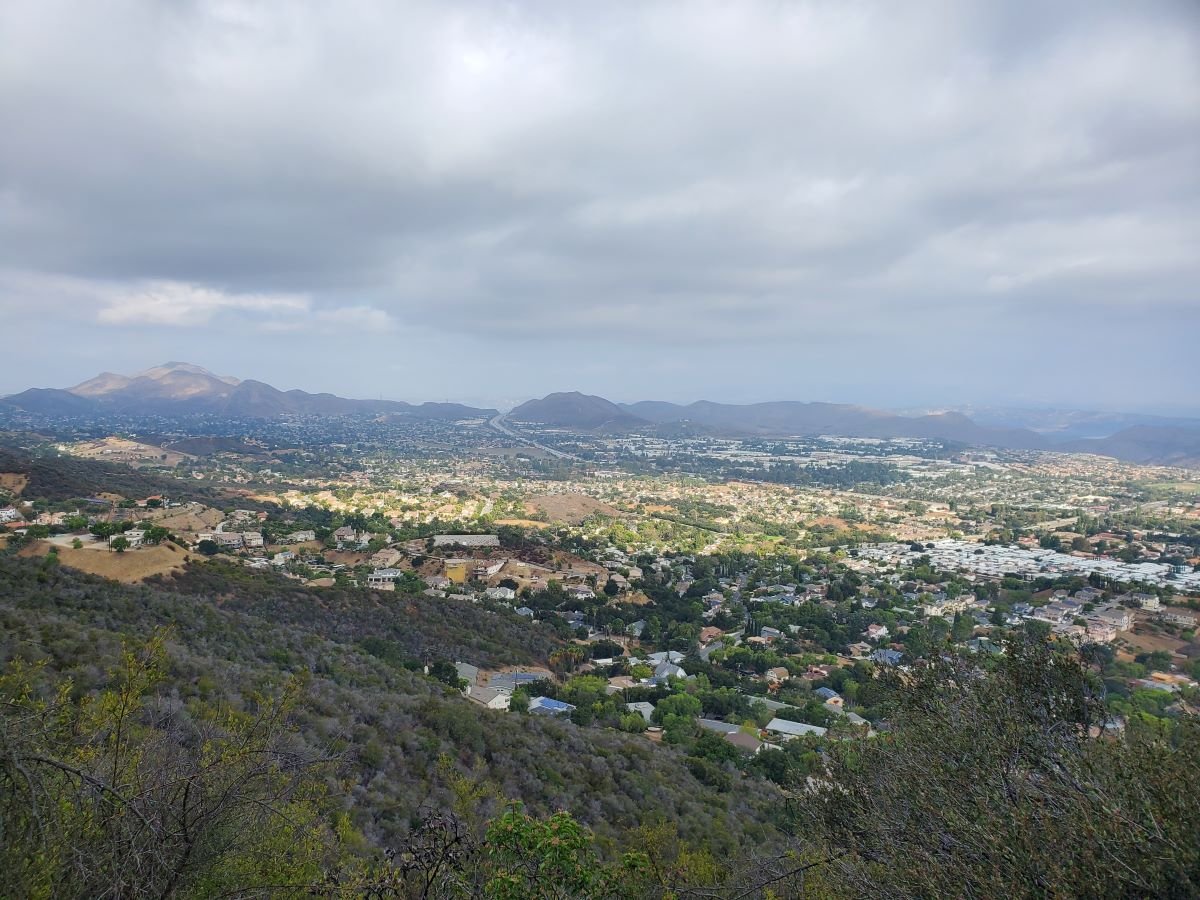
View of the Conejo Valley from the Los Robles Trail in Thousand Oaks

The Conejo Valley spans southeastern Ventura County and northwestern Los Angeles County. Communities in the Conejo Valley include Thousand Oaks, Newbury Park, Westlake Village, Oak Park, Agoura Hills, Lake Sherwood and a portion of Calabasas,

The Conejo Valley Unified School District was created July 1, 1974, unifying the following previous school districts:

  • Timber School District (founded in 1888)

  • Valley Oaks Union School District (founded in 1960 and formerly Conejo School District, founded 1877 and Santa Rosa School District, founded 1912).

  • Newbury Park and Thousand Oaks High Schools (formerly part of Oxnard Union High School District, founded in 1901).

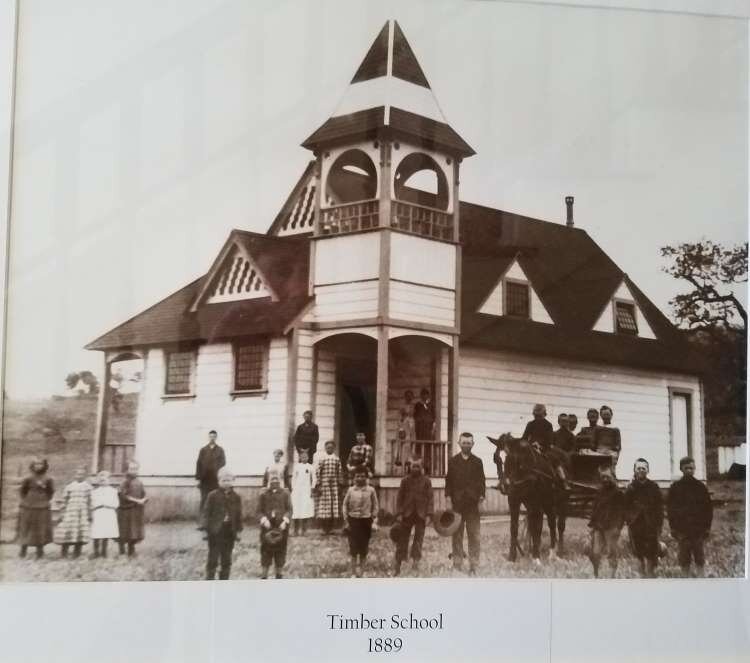
The Timber School was established as the first school in Newbury Park in 1889. The original school was constructed at the intersection of what is now Newbury and Kelley Roads in Newbury Park. The original Timber School was a one room schoolhouse that was demolished to make way for the new, larger Timber School House erected in front of the original school in 1924. The Timber School Auditorium was built in 1948.

The Timber School House and Auditorium buildings at 1872 Newbury Road, Newbury Park represent City of Thousand Oaks Landmark No. 12 and Ventura County Historical Landmark No. 166.

A replica of the original Timber School House was built at the Stagecoach Inn Museum complex in 1995 by students of Newbury Park High School under direction of teacher, Randy Porter.

Replica of the original Timber School at the Stagecoach Inn Museum.

Replica of the original Timber School at the Stagecoach Inn Museum.

Photo of the original Timber School in 1889.

Photo of the original Timber School in 1889.

Formed in 1877, the Conejo School District predates the Timber School District. It was created at a time when there were 126 residents in the Conejo Valley, including 54 children under age 17. After operating for 4 months in a shanty on the ranch of Howard Mills, parents voted to assess $750 for a building that was constructed on two acres of land donated by Mills. The structure was called “Conejo School” and was located near what is now the northwest corner of Westlake Boulevard and Townsgate Road.

As a result of the terrible drought in late 1870s to early 1880s, many ranchers had to leave the area. The Mills property was sold to the Russell family. Abigail Russell, wife of Andrew Russell, struggled to keep the Conejo School open. Eventually, a new Conejo School was built and opened in 1929 at the current location of Conejo Elementary School at 280 N. Conejo School Road in Thousand Oaks. The original school built in 1929 was demolished in 1957 due to unsafe earthquake standards.

Learn more about the Timber School and Conejo School districts on the Stagecoach Inn Museum website at stagecoachinnmuseum.com/timber-school.

Students at Conejo School in 1941 (Photo donated by Gerald Olsen to the Conejo Through the Lens collection, Grant R. Brimhall Library, Thousand Oaks).

Students at Conejo School in 1941 (Photo donated by Gerald Olsen to the Conejo Through the Lens collection, Grant R. Brimhall Library, Thousand Oaks).

Today, the Conejo Valley Unified School District in Ventura County serves Thousand Oaks and its communities of Newbury Park and the Ventura County portion of Westlake Village. As of spring 2025, the district is comprised of the following schools:

  • Four preschool/early child care schools: CVUSD Preschool - Early Childhood Program, Wonder Preschool, Horizon Hills Parenting Program, Be Me Preschool Program (play-based and language enriched program for ages 3 to 5 eligible for special education)

  • Eighteen elementary (K-5) schools: Acacia Magnet School for Enriched Learning, Aspen, Banyan, Conejo Academy of Leadership and Language Immersion, Cypress, EARThS Magnet, Glenwood, Ladera STARS Academy, Lang Ranch, Madroña Academy of the Arts and Sciences, Maple, SHINE Homeschool, Sycamore Canyon, Walnut, Weathersfield, Westlake, Westlake Hills, Wildwood

  • Eight middle schools: Century Academy, Colina, Los Cerritos, Outdoor School, Redwood, Sequoia, SHINE Homeschool, Sycamore Canyon

  • Six high schools: Newbury Park, Thousand Oaks, Westlake, Conejo Valley, Century Academy, SHINE homeschool

  • Homeschool and Hybrid Learning: SHINE: Homeschool Program (TK-12), Century Academy (grades 6-12)

  • Two Adult and Post-Secondary Programs: The Conejo Valley Adult Education, Conejo Oaks Academy (post-secondary program)

The Conejo Valley USD website is www.conejousd.org.