The Ventura County Classical Guitar Society Meets Monthly and is Open to the Public

The Ventura County Classical Guitar Society is a group of classical guitar enthusiasts that meets the last Wednesday of the month at Studio Channel Islands Art Center, 2222 E. Ventura Blvd, Camarillo.

Each session is free to attend and open to the public. There are no fees or dues. Doors open at 6PM. Members of the group as well as guests perform for the group starting at 7PM (guest performers start at 8PM). Donations are accepted for guest performers.

So if you're up for an enjoyable evening of live classical guitar, visit www.vccgs.com and check out upcoming performances.

Upcoming planned performances:

  • 2/25/26: Jack Sanders

  • 3/25/26: Carlos Bedoya

  • 4/29/26: Jennifer Kim

  • 5/27/26: Folias Duo

Bank of America "Museums on Us" Program Offers Free Admission to Over 225 Museums Nationwide

MuseumsOnUs.jpg

If you are a Bank of America or Merrill customer, your bank credit or debit card and photo ID will gain you one free admission to over 225 cultural institutions across the country on the first full weekend of each month. Visit the "Museums on Us" program website at museums.bankofamerica.com for details.

And while there are no Ventura County museums on the list, there are a number of other choices within driving range:

  • Autry Museum of the American West

  • Skirball Cultural Center

  • Museum of Latin American Art in Long Beach (Saturdays only)

  • Discovery Science Center, DiscoveryCube Orange County (Sundays only)

  • Santa Barbara Museum of Art

  • MOXI, The Wolf Museum of Exploration + Innovation in Santa Barbara

Free admission is limited to individual cardholder at participating institutions.

The Murals of Santa Paula Provide a Pictorial History of the City

The City of Santa Paula is the geographical center of Ventura County, located in the rich agricultural Santa Clara River Valley. The city is surrounded by rolling hills and rugged mountain peaks in addition to orange, lemon and avocado groves. Santa Paula is often referred to as the "Citrus Capital of the World."

Santa Paula covers an area of 4.7 square miles and at the date of the 2020 U.S. census had a population of 30,657. It is the 7th largest (and inversely 4th smallest) city in Ventura County in terms of population. The city was incorporated on April 22, 1902.

Something unique to see while in Santa Paula is a series of eleven murals that depict various historical aspects of the city, including its first inhabitants, the Chumash, the discovery of oil, its Latino culture, founding of the Santa Paula Airport, local farming and more. Learn more at this link and by visiting spcity.org/743/Murals.

Click this link for other things to do in Santa Paula!

Daylight Saving Time is Back Again on the 2nd Sunday of March

Daylight Saving** Time is coming back again! Yes, this will take place on Sunday, March 8, 2026. When the clock strikes 2 a.m. that morning, you will lose one hour of beauty sleep. Daylight Saving Time begins in most of the U.S. on the 2nd Sunday of March.

So try to get to bed early that night or you may feel grumpy on Monday! Especially when you realize it feels a lot darker that morning. But the good thing is, it'll be a lot lighter out at dinnertime!

** Contrary to what many of us think, it is called Daylight Saving Time, not Savings Time. Make sure to correct anyone who says it wrong if you really want to get on their nerves. But the reality of it is that we're not saving any daylight, we're just shifting it around.

Before the adoption of standard time zones in the United States, cities, towns, and communities set their own local times based on the sun’s position. In 1883, railroad companies adopted a system of standard time to synchronize movement and trade across the nation. The U.S. adopted an official system of standard time in 1918.

The Standard Time Act of 1918 incorporated a DST mandate from the last Sunday in March to the last Sunday in October. Congress repealed the DST mandate in 1919. President Woodrow Wilson vetoed the repeal. Congress overrode his veto.

Beginning in 1920, DST was a local state/city option. Here’s the history of DST legislation in California:

1930: Prop 7 was but on the ballot to implement DST at 2 a.m. on the last Sunday in April until 2 a.m. on the last Sunday in September. The initiative failed.

1940: Prop 5 was put on the ballot to implement DST. The initiative failed again.

1949: Third time’s a charm. This time it passed.

1962: Prop 6 was passed, which extended DST from the last Sunday in September to the last Sunday in October.

2018: Californians voted in favor of Proposition 7 by a margin of 59.75% to 40.25%. Voting in favor of the proposition allowed the California State Legislature to change the DST period by a 2/3rds vote and to establish permanent, year-round DST in California by a 2/3rds vote if federal law is changed to allow for permanent DST.

Why the holdup?

The holdup is at the federal level, not the state level: Voting yes on Prop 7 was just the first step in the process. California is one of 14 states that introduced legislation in 2019 to shift to permanent daylight saving time. States cannot move forward with permanent daylight saving time without authorization from the federal government. As of November 2019, there were 4 bills awaiting action in Congress that would allow California to be on permanent DST. These were:

H.R. 1556 “Sunshine Protection Act of 2019,” introduced to the House 3/6/19. The bill makes DST the new, permanent standard time. States with areas exempt from DST may choose the standard time for those areas. The bill was pending a hearing in the House Energy and Commerce Committee. S.670 is an identical bill in the Senate, pending a hearing in the Senate Commerce, Science and Transportation Committee. These have gone nowhere.

H.R. 1601 “Daylight Act” and H.R. 2389 “To allow states to elect to observe year-round DST” both authorize states to shift to permanent daylight saving time and are pending hearings in the House Energy and Commerce Committee. These have also gone nowhere.

The Story of Jungleland in Thousand Oaks

The Thousand Oaks Civic Arts Plaza is located on historic land in many respects. The land was originally part of "Rancho El Conejo," a Spanish land grant. Egbert Starr Newbury purchased 2,259 acres of this land in 1874 and built a home here (more on Newbury and his local legacy at THIS LINK).

After a drought in 1876-1877 bankrupted the Newbury family, the land was foreclosed and sold to the Crowley family in 1887, who built a successful ranch on the land. In 1910, Frank Crowley's parents built him a five bedroom, two story home on the land that is located at 2522 Pleasant Way. The Crowley family lived on the ranch until 1922.

The "Crowley House" went through several ownership changes through the years but is now maintained by the Conejo Recreation and Park District and is considered a Ventura County Historical Landmark.

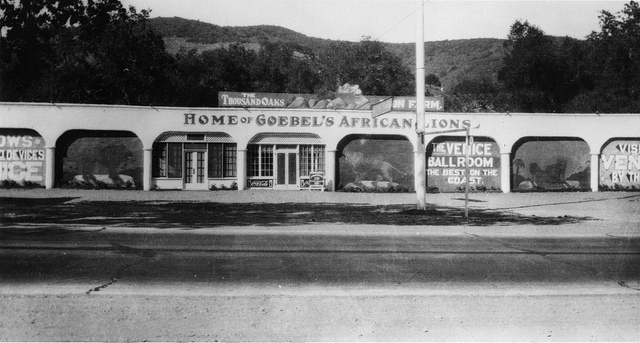
One of the subsequent owners of the Crowley House was Louis and Kathleen Goebel. In 1925, Goebel purchased former Newbury/Crowley land where the Thousand Oaks Civic Arts Plaza currently stands.  It cost him $50. Louis Goebel soon opened Goebel's Lion Farm, where he trained lions and rented them to movie studios.

"Home of Goebel's African Lions" circa 1929 (Courtesy of Conejo Through the Lens, Thousand Oaks Library)

"Home of Goebel's African Lions" circa 1929 (Courtesy of Conejo Through the Lens, Thousand Oaks Library)

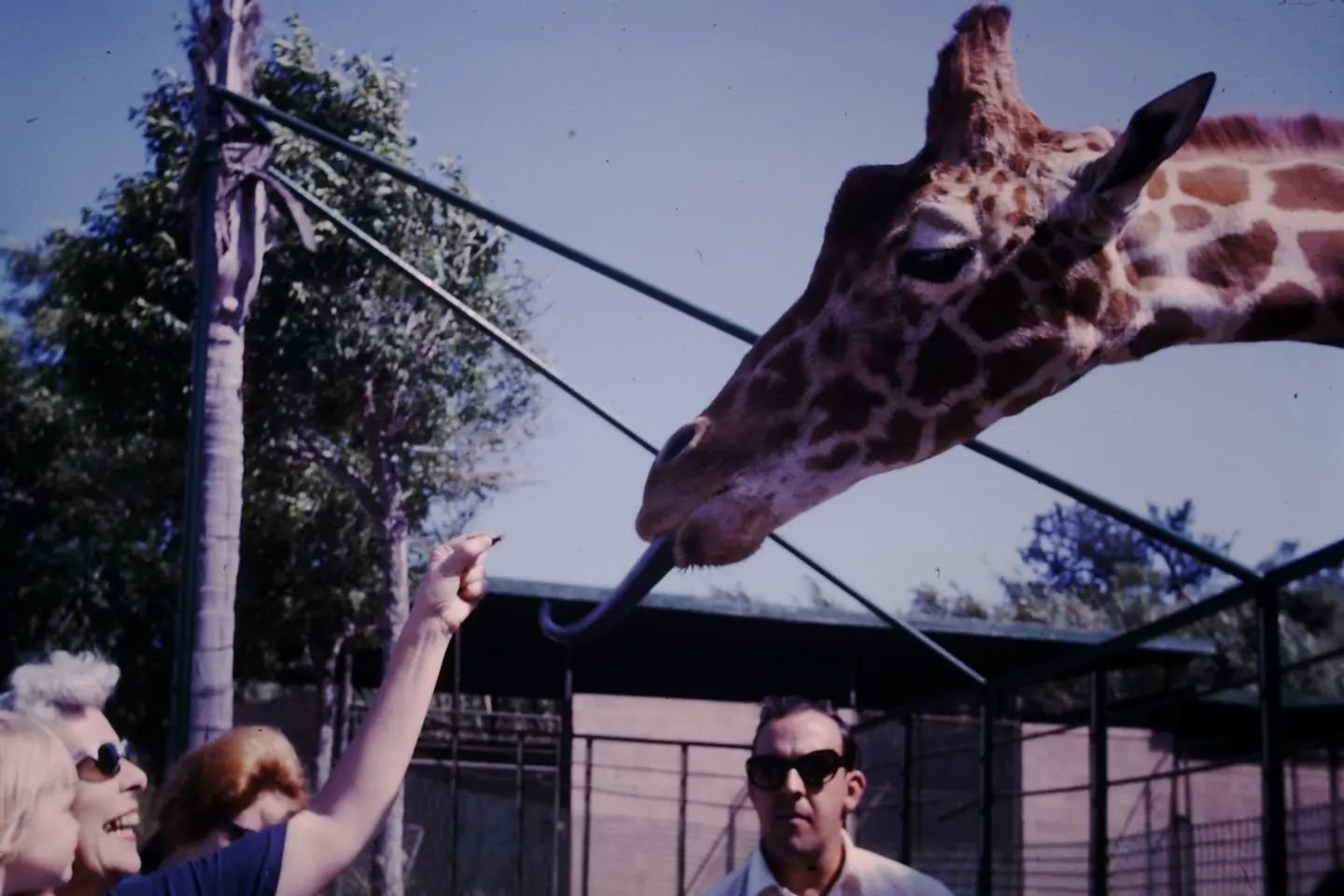
As travelers passed through town, they wanted to see the animals. Goebel capitalized on this in 1929, when the site became "Goebel's Wild Animal Farm," a theme park that became very popular in the 1940s and 1950s. The 170 acre site housed all sorts of animals...elephants, tigers, giraffes, hippos, chimpanzees and more. Additionally, many TV shows and movies were filmed there, such as Tarzan, The Adventures of Robin Hood and Birth of a Nation.

Goebel's Wild Animal Farm was home to Leo the Lion, of MGM Pictures fame. Over the years, other animal celebrity residents included Mr. Ed, the talking horse, Bimbo, the elephant from Circus Boy and Tamba, the chimpanzee in Tarzan films and "Bedtime with Bonzo" starring Ronald Reagan and Diana Lynn.

Goebel sold the business in 1946 and the park was renamed the "World Jungle Compound." Ten years later it was sold again to executives from 20th Century Fox and was renamed "Jungleland." After five years, the business slid and Goebel was able to purchase it back in 1961. 

In between Goebel's Lion Farm and Jungleland, from 1946 to 1955 the tourist destination was called the "World Jungle Compound" (Courtesy of CONEJO THROUGH THE LENS, THOUSAND OAKS LIBRARY.)

In between Goebel's Lion Farm and Jungleland, from 1946 to 1955 the tourist destination was called the "World Jungle Compound" (Courtesy of CONEJO THROUGH THE LENS, THOUSAND OAKS LIBRARY.)

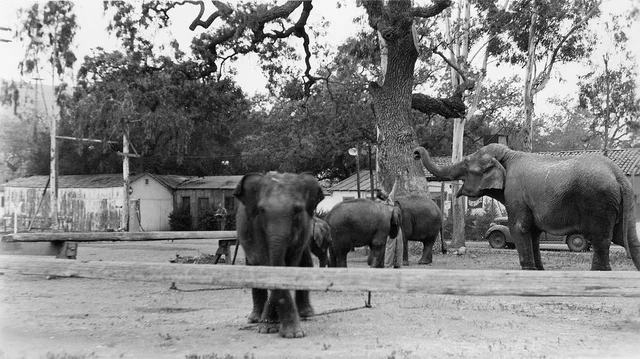
Five elephants at Goebel's Lion Farm (from the Ethel Nixon Collection (via Conejo Through the Lens, Thousand Oaks Library.)

Five elephants at Goebel's Lion Farm (from the Ethel Nixon Collection (via Conejo Through the Lens, Thousand Oaks Library.)

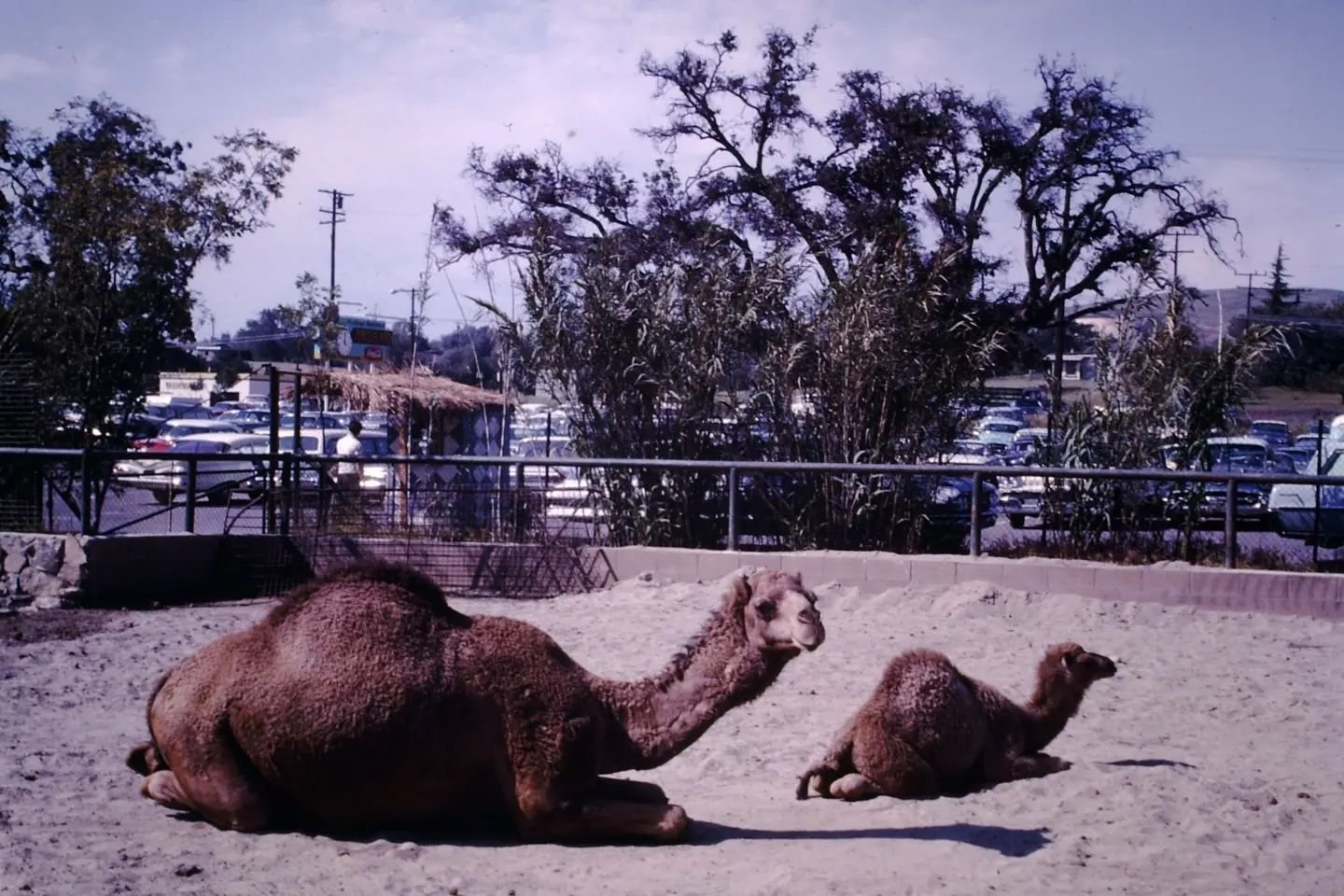
At its peak popularity, the 170 acre Jungleland compound had all sorts of activities - shows by tiger trainer Mabel Stark, and others, elephant rides, tortoise rides, ducky boat rides, train rides, safari tram buses and even a sky tram. Animals included elephants, lions, tigers, hippos, camels, llamas, giraffes, orangutans, chimpanzees and a variety of others.

Jungleland closed in October 1969 after its popularity continued to drop - a combination of increased competition (Disneyland, Knotts Berry Farm, Universal Studios, etc.) and the fact that Highway 101 diverted drivers around the theme park. The park operated for 43 years and its 1,800 animal occupants were sold at auction. 

So...when you stroll through the grounds of the Civic Arts Plaza and The Lakes at Thousand Oaks, close your eyes and see if you can envision all the animal excitement that took place here just a few generations ago in the heart of Thousand Oaks.

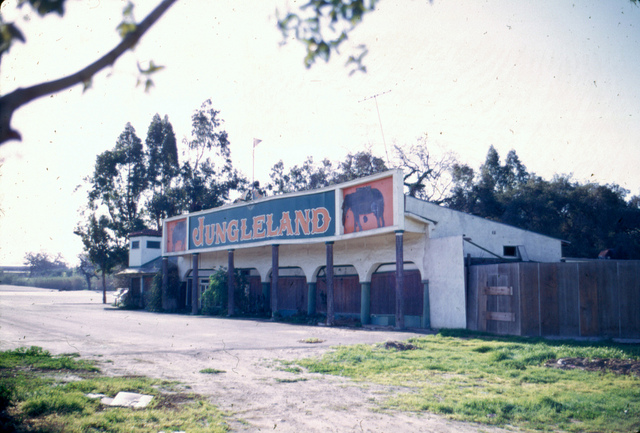
Jungleland sign after the theme park closed in 1969. (Image courtesy of Conejo Through the Lens, Thousand Oaks Library.)

Jungleland sign after the theme park closed in 1969. (Image courtesy of Conejo Through the Lens, Thousand Oaks Library.)

Louis Goebel and Jungleland plaque outside the Civic Arts Plaza.

Louis Goebel and Jungleland plaque outside the Civic Arts Plaza.

More on Jungleland on the Stagecoach Inn Museum website at stagecoachinnmuseum.com/jungleland.

Some photos from around 1965 (from a private collection):

The Hunt Olive Tree in Thousand Oaks is a Living Link to Conejo Valley History

Richard Orville Hunt and his wife Mary Jane purchased a large parcel of land in the Conejo Valley in 1876 in what is now Lynn Ranch. He called it Salto Ranch. Hunt also served as postmaster of the Newbury Park Post Office for 18 years and was well known in the local community. While his former land now is populated with family homes, one part of Hunt's ranch lives on.

HuntOliveTreeSprouts2013_2.JPG

For those of you who drive past the Sprouts Market at 600 West Hillcrest, perhaps you have noticed the historic landmark marker situated in front of the last remaining olive tree from Hunt's orchard. The Hunt Olive Tree was designated a Ventura County Historic Landmark in 1981, when the tree was over 100 years old. That would make this olive tree over 130 years old today.

HuntOliveTreeSprouts2013.JPG
HuntOliveTreeCCSign.jpg

For nostalgia buffs, to the right is a view of the Hunt Olive Tree marker back in the day that Circuit City was located here. It closed in late 2008. This tree was moved to its current home in 1993. I'm not sure why...perhaps to say hello to the thousands of residents who pass by each day. What a fine specimen this link to the past is. The Hunt Olive Tree is also Historical Landmark #4 in the City of Thousand Oaks.

So be sure to say hello to this tree that sits next to the Sprouts Farmers Market sign at Hillcrest and Lynn and do be nice to him (or her). She's older and wiser than all of us combined, having seen and lived through the growth of our local community.

Free Admission Days at Museums in Ventura County and Adjacent Areas

iStock_FreeAdmission.jpg

The "Do Something" section of Conejo Valley Guide highlights over 250 things to do throughout Ventura County and surrounding areas, including over four dozen museums. Let's take a closer look at the museums on the list that offer free admission days.

The information below of course is subject to change, so be sure to contact the museums first to confirm.

Conejo Valley, Simi Valley, Moorpark

There is no admission at the Skateboarding Hall of Fame and Museum that opened at the Simi Valley Town Center in December 2018, though donations are accepted. Stop by to see a tremendous collection of vintage skateboards and skating artifacts. Open Wed-Fri 2-8pm, Sat 11am-8pm, Sun noon-5pm (as of May 2025).

The Santa Susana Depot and Museum in Simi Valley is open to the public on weekends from 1-4pm, free of charge.

Ventura, Camarillo, Oxnard, Port Hueneme

Historic Dudley House Museum in Ventura is open the 1st Sunday of the month most of the year and admission is free (donations encouraged).

Robert J. Lagomarsino Visitor Center at Channel Islands National Park located at the Ventura Harbor is open year-round free of admission.

Channel Islands Maritime Museum offers free admission on the 3rd Thursday of each month.

U.S. Navy Seabee Museum in Port Hueneme offers year-round free admission.

Free admission at the Museum of Ventura County in Downtown Ventura the 1st Sunday of the month.

Free first Saturdays from 11am to 4pm at Studio Channel Islands Art Center in Old Town Camarillo.

There is no admission charge at the Pleasant Valley Historical Museum and Botanical Garden in Camarillo. Open weekends. (NOTE AS OF FEBRUARY 2026 THE MUSEUM IS STILL CLOSED AS IT IS BEING EXPANDED)

Ojai, Santa Paula, Fillmore

Ojai Valley Museum currently offers free admission the 3rd Friday of each month from 10 a.m. to 7 p.m.

Museum of Ventura County’s Agriculture Museum in Santa Paula offers free admission on the 1st Sunday of the month.

Santa Paula Art Museum offers free admission year-round (as of May 2025).

Aviation Museum of Santa Paula is open the 1st Sunday of each month with no admission charge.

California Oil Museum in Fillmore is free admission year-round, though there is a suggested donation of $4.(STILL CLOSED AS OF FEBRUARY 2026 BUT IS CURRENTLY “RE-ENERGIZING”)

Santa Barbara

Admission is free year-round at the Reagan Ranch Center Exhibit Galleries in Santa Barbara on State Street in front of the Amtrak Station.

Santa Barbara Historical Museum offers free admission year-round; donations are welcomed.

Other Areas

Nethercutt Museum in Sylmar offers previously was free but now admission is only $5 year-round to its fantastic showcase of vintage cars.

Griffith Observatory in Los Angeles offers free year-round admission.

Kidspace Kids Museum in Pasadena offers Free Family Night from 4pm to 8pm the 1st Tuesday of each month, except September.

The Getty Villa in Pacific Palisades is free of charge year-round.

California ScienCenter in Exposition Park is free admission year-round.

Bank of America offers free admission to over 150 museums around the country the first full weekend of each month.

1956 Rolls Royce Phantom Saloon at Nethercutt Automotive Museum.

1956 Rolls Royce Phantom Saloon at Nethercutt Automotive Museum.

You like FREE!? Click here for hundreds of other free activities and things in and around Ventura County!