Drop, Cover and Hold On in the Great California ShakeOut on October 18, 2012

The Southern California (West) area is highly susceptible to earthquakes and earthquake related effects. Numerous earthquake faults crisscross southern California and no one within the area resides more than 10 miles from an active fault. In addition to damage caused directly by groundshaking and related groundfailure, other hazards such as fires can easily start during and shortly after an earthquake.

The driving force of earthquakes in California is movement along the San Andreas Fault and the many associated faults within the San Andreas Fault System that form the tectonic boundary between the Pacific and North American tectonic plates. Along this boundary, the Pacific Plate is moving slowly to the northwest relative to the North American Plate. The Pacific plate underlies most of the Pacific Ocean, as well as all California west of the San Andreas fault. When most people think of earthquakes in California, the San Andreas Fault is usually the first thing to pop in their minds, and while the San Andreas Fault is the longest fault in the state it is by no means the only one to be concerned with. Many other faults are found directly beneath our cities in some of the most densely populated areas.

Because you live in the Southern California (West) area, it is likely that a damaging earthquake will occur and affect you during your lifetime. You decide your fate. You decide your future. The steps you take now can mean the difference between your success or failure after the next big quake.

Start preparing on Thursday, October 18, 2012 at 10:18 a.m. by participating in the Great California ShakeOut drill! Joins millions of other Californians and over 100,000 Ventura County participants who will Drop, Cover and Hold On on that date.

Learn more about the Great ShakeOut at www.shakeout.org. Register for the California ShakeOut at www.shakeout.org/california/register/index.php.
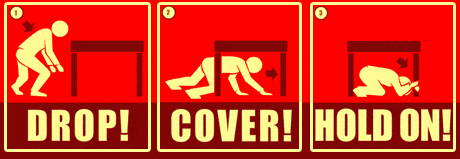
 Now, about that Drop, Cover and Hold On drill (more at www.shakeout.org/california/dropcoverholdon)

  • DROP to the ground (before the earthquake drops you!)
  • Take COVER by getting under a sturdy desk or table, and
  • HOLD ON to it until the shaking stops.
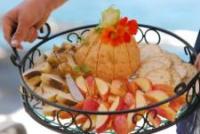
Pumpkin Shaped Fall Cheese Ball Recipe

(Originally posted October 2009) Here's a fun recipe from friend Jill Fisher! Jill has a B.S. in Food Science and Nutrition and is a licensed Personal Chef. To contact Jill, contact me!

My Favorite Fall Cheese Ball

The tangy cheddar cheese mixed with cream cheese makes a delicious companion to sour apple slices and baguette slices.  You can form it into the shape of a pumpkin and put a broccoli stalk on top and voila – a perfect centerpiece for your Fall gathering as well!

 2 (8 oz) blocks extra-sharp Cheddar cheese, shredded

1 (8 oz) package cream cheese

1 (8 oz) container chive and onion cream cheese

2 tsp paprika

½ tsp red pepper

1 broccoli stalk

Red and green apple wedges

Read More

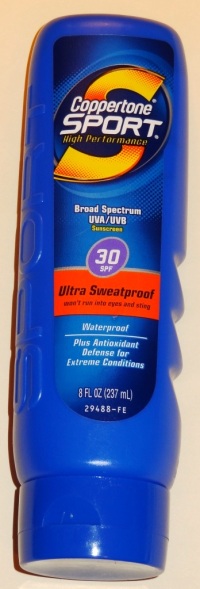
Coppertone Agrees to Stop Calling Its Sunscreens "Waterproof" and "Sweatproof"

Merck & Co. bought Schering-Plough in 2009 and with it inherited the popular Coppertone brand, which is easily the most used sunscreen brand in my household and I'm sure many others.

Back in 2003, lawsuits were filed against Schering-Plough alleging improper marketing of the "waterproof" aspects of Coppertone. On September 21, 2012, Merck agreed to settle these class-action lawsuits without admitting any wrongdoing.  The settlement will cost Merck between $3 million and $10 million, which is about two one-hundreths of a percent of Merck's annual revenue.

According to the settlement, "Merck agrees that all Coppertone sunscreen products manufactured on or after June 22, 2012 for sale in the United States, its territories and possessions, will not use the terms "sunblock," "waterproof," "sweatproof," "all day" and/or "all day protection" in the labeling, advertising, marketing or promotion of these products."

This will have absolutely no impact on my own use of sunscreen as I'm not stupid enough to think that one application of sunscreen will last an entire day if I'm out running, sweating or in the pool all day. But I guess some might be confused by the prominently mentioned "Sweatproof" and "Waterproof" on the front of the label.

It is a bit odd that on the front label Coppertone says "Waterproof" yet on the back label says "Reapply as needed or after towel drying, swimming, perspiring, or vigorous activity."

If you purchased Coppertone products from July 31, 2006 to the date of public notice of the settlement, you can receive "up to $1.50" for each item purchased. They do not define what "up to" means but we'll find out soon enough.

The exact date yet of when we can start making claims has not been announced. When that date comes, the information will be published at www.sunscreensettlement.com, to inform us of our rights, dates and deadlines, etc. Yippee!

The proposed settlement indicates claimants can be reimbursed up to $1.50 each for up to six (6) Eligible Coppertone Sunscreen Products without proof of purchase. Easy enough! But it gets trickier after that, as Merck has the right to require proof of purchase if you claim between 7 and 9 Coppertone purchases. If you bought 10 or more, you will be required to show proof of purchase....like you're gonna have all those CVS and Costco store receipts from 6 years ago.

I was thinking, what if I could produce receipts for, say, 700,000 purchases of Coppertone products since July 31, 2006. I could make over a $1 million! Hmm, maybe I should just stay out of the sun.

In any case, start pondering how many Coppertone sunscreen products you've purchased over the last 6 years and you may get a small chunk o' change. And, of course, apply plenty of broad spectrum UVA/UVB sunscreen in our sunny climate and reapply frequently. Sunburns and skin cancer are not fun.

Facebook Rolls Out New Gift Giving Service On Your Friends' Timelines Today

Facebook rolled out a new feature today that just kind of started appearing on friends' Facebook Walls today. This feature I believe is called "Facebook Gifts" and you pretty much can't help but notice it. Simply go to a friend's wall and you'll see where you can post a message, a photo, or now, wallah, now give them a gift!

So from there all you do is click the "Gift" icon to see what type of choices you have to give. You'll find everything from $5 Starbucks gift cards to flowers, candy, beef jerky, Star Wars USB storage devices, cupcakes, to, well, you name it! They have "recommended gifts" to help you out.

You choose a gift and the next screen gives you additional information about the selection.

The following screen allows you to select a card to accompany the gift. Choose the occasion (birthday, anniversary, etc.).

Then customize the card. In the next screen you decide whether to post the gift on your friend's Timeline or not. After your friend "opens" the wrapped gift on their timeline (or otherwise), they will be asked to provide shipping information (when applicable) and you will be asked to pay. Kind of interesting actually that you don't pay until they actually "open" the present on their Wall.

Here's a preview of how it looks on their wall (recipient's name removed to protect the innocent from false expectation of receiving a gift from a cheapskate like me).

This is actually pretty clever. What better venue to provide a quick and easy way of giving a gift to a friend than in Facebook! I believe this is Facebook's first mainstream foray into the eCommerce world. Given how ubiqutious Facebook birthday messages are, this could really become huge!

This rollout applies so far only to individuals in Facebook and not to Facebook Pages, such as the Conejo Valley Guide Facebook Page at facebook.com/ConejoValleyGuide (hint, hint, follow us there for fun daily tidbits). However, feel free to friend me at facebook.com/ConejoJoe if you happen to be in the mood to test this new Facebook Gifts service (hint, hint, again).

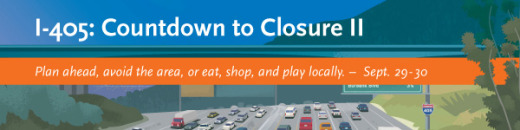
Carmageddon II: 53 Hour I-405 Freeway Shutdown Planned for Sept 29-30, 2012

The second 10-mile closure of both directions of the I-405 over the Sepulveda Pass, popularly known as “Carmageddon,” has now been scheduled for Sept. 29- 30, 2012, when contractors will demolish the remaining side of the Mulholland Bridge.

The I-405 is the nation’s busiest freeway and will be closed in both directions for 53 consecutive hours between the I-10 and U.S. 101. Half a million motorists drive this portion of the I-405 over a typical weekend.

Motorists are advised to avoid the area to minimize auto congestion in the project area and throughout the greater Los Angeles region.

On Friday, September 28, ramps along the 10-mile closure area will begin to be shut down as early as 7 p.m., and closure of individual freeway lanes will begin at 10 p.m. to ensure full freeway closure by midnight. The closure is scheduled to continue until 5 a

Read More

Regional Art Museum is Renamed California Museum of Art Thousand Oaks

The California Museum of Art Thousand Oaks (CMATO) is the new name for the Regional Art Museum (RAM).  The new name was announced at a town hall meeting on September 18, 2012.  The new name fully encompasses the mission and vision of the museum that will serve the communities of California. 

The development of a world-class art museum as a cultural centerpiece for our community is coming to fruition. The museum will be a vital resource and will offer access to, education of, and appreciation for contemporary and traditional fine arts. The museum will be located adjacent to the Civic Arts Plaza.

The CMATO's mission is committed to serving diverse audiences through the exhibition, interpretation, and exploration of the fine and design arts.

To learn more about the planned CMATO and how you can support efforts to bring it to fruition, visit www.cmato.org.

The CDC Warns That Turtles and Other Reptiles are Risky Pets Due to Salmonella

Turtles and other reptiles are risky pets

Turtles are colorful and cute and are often kept as pets. However, many people don’t know that turtles and other reptiles like snakes and lizards can carry harmful germs that can make people very sick. For this reason, turtles and other reptiles might not be the best pets for your family, particularly if there are children 5 years old and younger or people with weakened immune systems in your home.

Turtles and other reptiles  often carry a germ called Salmonella, but appear perfectly healthy and clean. People think Salmonella infections are caused only by contaminated food, but these germs can also be caught by touching animals, including reptiles or amphibians, such as frogs. Salmonella infections can also result from having contact with an animal’s habitat, including the water from containers or tanks where they live.

Salmonella germs can make people sick with diarrhea, vomiting, fever, and sometimes abdominal cramps. This illness is called “salmonellosis.” Some people can become so sick that they need to go to the hospital. In severe illnesses, the Salmonella bacteria may spread to the bloodstream and can lead to death unless the person is treated promptly with antibiotics.

Young children are at increased risk for Salmonella illness because their immune systems are still developing. They also are more likely to put their fingers or other items that have come into contact with germs into their mouths. So, families with young children should avoid keeping turtles as pets, and turtles should not be allowed in schools or child care facilities with young children.

Since 1975, it has been illegal in the United States to sell or distribute small turtles with shells that measure less than 4 inches in length. This size was chosen because young children are more likely to treat smaller turtles as toys and put them in their mouths. This ban, enforced by the U.S. Food and Drug Administration, likely remains the most effective public health action to prevent Salmonella infections associated with turtles.

Since 2006, CDC has received reports of 11 multistate outbreaks, including 6 ongoing outbreaks, and more than 535 cases of laboratory-confirmed Salmonella infections linked to contact with small turtles and their habitats. These illnesses resulted in about 85 hospitalizations and one death. Because many people with salmonellosis do not seek medical care or are not tested, it is estimated that 16 times as many illnesses occurred than were reported.

Tips to reduce the risk of illness from turtles and other reptiles:

  1. Don’t buy small turtles from street vendors, websites, pet stores, or other sources.
  2. Wash your hands thoroughly with soap and warm water immediately after touching a reptile or anything in the area where they live and roam. Use hand sanitizer if soap and water are not readily available. Adults should always supervise hand washing for young children.
  3. Don’t let young children handle or touch reptiles or anything in the area where they live and roam, including water from containers or tanks.
  4. Keep reptiles out of homes with young children or people with weakened immune systems.
  5. Reptiles should not be kept in child care centers, nursery schools, or other facilities with young children.
  6. Don’t touch your mouth after handling reptiles and do not eat or drink around these animals.
  7. Don’t let reptiles roam freely throughout the house or in areas where food or drink is prepared, served, or stored, such as kitchens, pantries, or outdoor patios.

For more information on protecting yourself and your family from illness and to learn more about safely cleaning reptile habitats, please visit www.cdc.gov/Features/SalmonellaFrogTurtle.