Slime Kitchen Thousand Oaks Grand Opening Event on Saturday, March 7th

Join in on the grand opening of the newest Slime Kitchen location at The Oaks shopping mall in Thousand Oaks on Saturday, March 7th.

Slime Kitchen, a premier slime-making experience, is celebrating the opening of its newest location at The Oaks in Thousand Oaks.

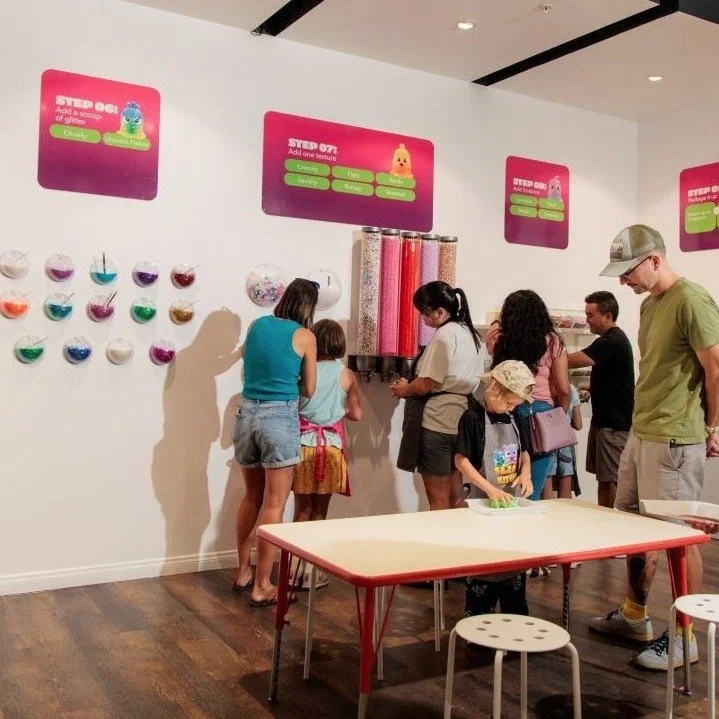
Join them for a ribbon-cutting ceremony and candy bar, then take part in an interactive, step-by-step DIY slime experience, where guests can create their own personalized slime. DIY experiences are available for purchase during the event.

The first 50 guests who complete a DIY experience will receive a complimentary special slime surprise at checkout.

Slime Kitchen’s immersive ten-step process guides customers as they select their base, choose scents, add colors, and incorporate mix-ins to create custom slimes as unique as their imaginations. Designed to ignite creativity and promote sensory learning, the experience transforms slime-making into a journey of connection and discovery.

RSVPs are appreciated, but not required, at www.eventbrite.com/e/slime-kitchen-thousand-oaks-grand-opening-tickets-1983911537815

theslimekitchen.com

Reagan Library Announces "Cowboys: History & Hollywood" Exhibit to Open on October 18th

The Ronald Reagan Presidential Foundation and Institute (RRPFI) today announced its new exhibition, “Cowboys: History & Hollywood,” will open on October 18, 2025, and run through April 19, 2026. The exhibition will take visitors on a journey through the reality and the cinematic allure of the American cowboy—an enduring symbol of strength, self-reliance, and freedom.

Blending true Western history with Hollywood mythmaking, the 10,000-square-foot exhibition will feature authentic gear, rare photographs, historic artifacts, and memorabilia from classic Western films that shaped the cowboy image we know today. Visitors will discover how the cowboy became a cultural icon whose influence extends far beyond the open range.

The upcoming exhibition explores how the work of cowboys has changed, from riders on horseback to today’s modern animal management. Visitors will see how herding methods have advanced from dusty trails to helicopters and ATVs, culminating in a showstopping centerpiece: a Robinson R22 helicopter used to round up cattle. This aircraft will make its arrival on the Reagan Library’s South Lawn next Tuesday, September 23, before taking its place in “Cowboys: History & Hollywood” as a striking example of the modern cowboy’s tools of the trade.

“While many view Robinson helicopters as personal transportation, a large percentage of the nearly 15,000 aircraft we've produced are tools for tough jobs,” said Robyn Eagles, vice president of global marketing and communications at Robinson Helicopter Company.  “Across the world, our R22s are the horsepower of the 21st century, equipping modern cowboys in mustering sheep, cattle, and other animals. We are honored to share the stories of our owners and operators and be a part of this exhibit with a Retro Ronald Reagan-branded R22.”

Additional highlights of “Cowboys: History & Hollywood” include:

  • Dozens of historic saddles, cowboy hats, firearms, and other cowboy equipment from the 19th and early 20th centuries;

  • Roy Rogers’ Trigger and Bullet, the beloved horse and dog that became television legends, along with Rogers’ wife Dale Evans’ horse, Buttermilk;

  • Iconic Hollywood costumes, objects and artifacts from Yellowstone, Gunsmoke, Back to the Future Part III, Nope, and, Annie Get Your Gun;

  • Items belonging to John Wayne, Clint Eastwood and President Ronald Reagan, showcasing their connection to the cowboy image; 

  • President Reagan’s 1953 Willys Jeep CJ-6, which he drove at Rancho del Cielo;

  • An NSYNC tour cowboy costume; 

  • Autographed guitar of Lee Greenwood, “God Bless the USA” singer; 

President Ronald Reagan once said, “I seem to remember a famous country and western song warning mothers not to let their babies grow up to be cowboys… The song forgot that cowboys can sometimes grow up and be President.” To learn more about the cowboy way of life and how President Reagan himself embraced the cowboy persona, purchase tickets to this upcoming exhibit on the Reagan Library website

About the Reagan Foundation and Institute

The Ronald Reagan Presidential Foundation and Institute (RRPFI) is the sole nonprofit organization created by President Reagan charged with advancing his legacy and principles – individual liberty, economic opportunity, freedom and democracy, peace through strength, and national pride. 

A globally recognized nonpartisan organization based in Simi Valley, CA, with a leading policy institute in Washington, DC, RRPFI delivers impactful public affairs programming, policy convenings and projects of national and international significance, and distinctive educational initiatives.  In addition, RRPFI sustains the Ronald Reagan Presidential Library and Museum, the largest and most visited presidential library, which routinely hosts major special exhibitions.

An hour from Los Angeles International Airport, RRPFI’s Simi Valley campus sits on 400 acres, serves as the final resting place of America’s 40th President and former First Lady Nancy Reagan, displays a chunk of the Berlin Wall, and houses the plane President Reagan flew on as Air Force One to 26 countries. Onsite are the Reagan Center for Public Affairs, Presidential Learning Center, Air Force One Pavilion, and the Reagan Leadership Center.  More information is available at www.reaganfoundation.org.

Borchard Skatepark Expansion and Renovation Project in Newbury Park

The Conejo Recreation & Park District voted to approve the expansion and renovation of the Borchard Skatepark in April 2025. The Skatepark is located at Borchard Community Park, 190 Reino Road in Newbury Park, at the corner of Reino and Borchard.

The project will entail demolishing the existing 10,000 sq ft facility and existing parking area to construct a new 20,000 sq ft multi-use facility. Improvements include enhanced lighting, four shade structures, a covered picnic area, spectator seating, and more. The larger facility will offer additional amenities, while providing inclusivity and accessibility to patrons of all abilities.

Total project cost is $4.5 million. Construction is anticipated to begin late this year after final permits are secured.

Learn more at www.crpd.org/planning.

kidSTREAM Children's Museum "Pathway to Play" Brick & Legacy Campaign

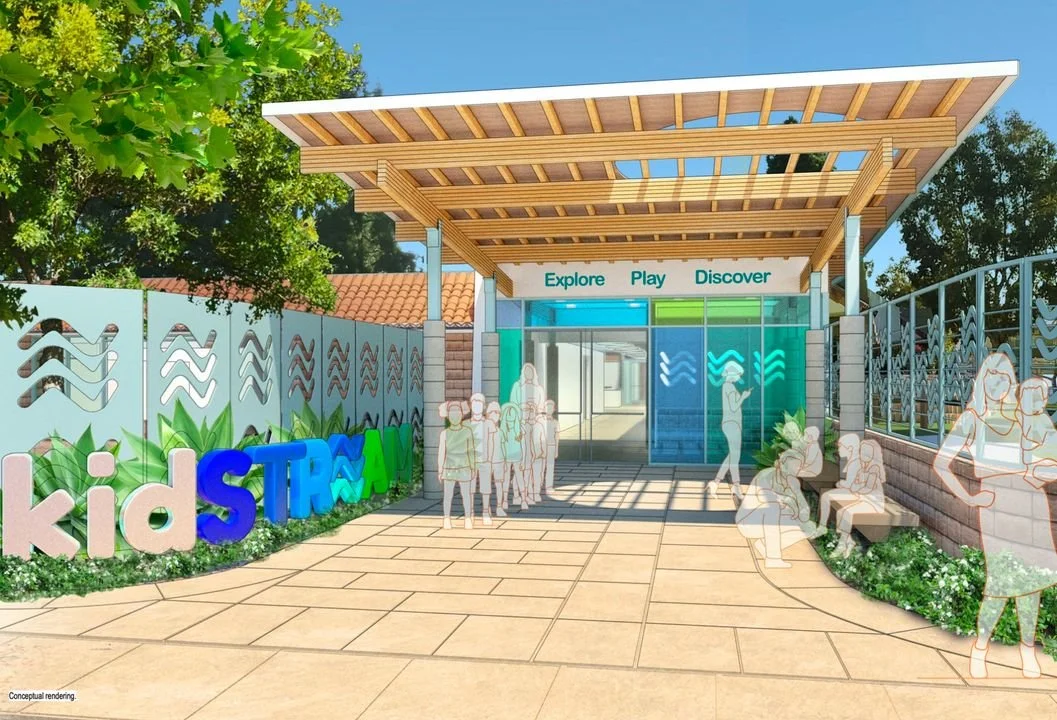
kidSTREAM Children’s Museum is an emerging, hands-on destination dedicated to inspiring children through meaningful play-based learning. Designed especially for kids under 12 years old, kidSTREAM offers opportunities to explore Science, Technology, Reading, Engineering, Arts, and Math (STREAM) through interactive exhibits and programs that spark curiosity, creativity, and critical thinking. kidSTREAM’s mission is to provide a vibrant, engaging environment where young children can discover, imagine, and learn through play, fostering a lifelong love of exploration and learning. Once open, admission will be comparable to other children’s museums in Southern California, ensuring accessibility for families throughout the region.

At completion, the museum, located at 3100 Ponderosa Drive in Camarillo (the former Camarillo Public Library site), will feature over 30,000 sq. ft of indoor and outdoor exhibit space. A grand opening of Phase 1 of the Museum is anticipated by the end of 2025 and will feature 21,000 sq. ft. of indoor/outdoor exhibit space. Outdoor exhibits will highlight local and regional themes (agriculture, Channel Islands, camping, pygmy mammoth dig pit, etc.). Phase 1 indoor exhibits will include an early childhood microbiology area, creative studio and maker space, sensory room, and more.

Currently in its pre-opening phase, kidSTREAM is working towards creating a world-class children’s museum that serves families throughout Ventura County and beyond. As part of this effort, the museum has launched its Brick Legacy Campaign, a public initiative allowing individuals and organizations to leave a lasting mark on kidSTREAM’s future home. By purchasing a personalized brick, bench, or log seat, supporters can help fund immersive exhibits, innovative programming, and expanded access for all children while creating a permanent pathway to play. This campaign invites the community to join us in shaping a place where every child can experience the joy of discovery for generations to come.

Learn more at kidstream.org/brick-legacy-campaign and www.kidstream.org.

First Look from Rubin Telescope Beams into Santa Barbara

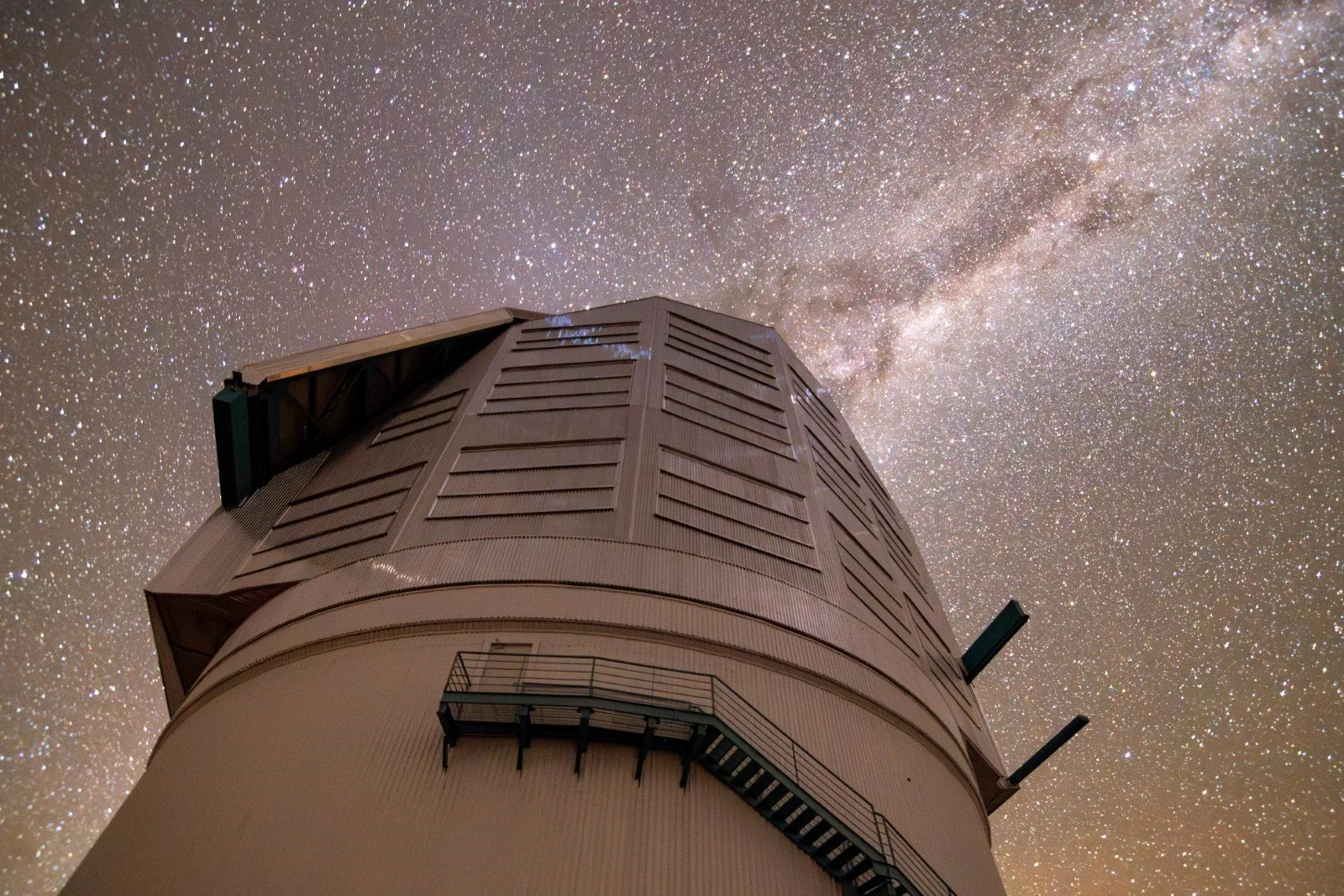
The glow of the Milky Way reflects off of Rubin Observatory's silver dome in this photo from May 2025. Credit: Quint 

On Wednesday, June 25, the Santa Barbara Museum of Natural History hosted a special “First Look” event in partnership with Las Cumbres Observatory (LCO), debuting the first images from the groundbreaking Vera C. Rubin Observatory. As the Museum prepares to launch its Space Sciences exhibit on July 12, this event offers an early glimpse into the global discoveries and local science shaping our understanding of the universe. 

Located in Chile, the Rubin Observatory is the most powerful survey telescope ever built. Over the next decade, it will scan the southern sky every few nights as part of the Legacy Survey of Space and Time (LSST)—capturing dynamic events like supernovae, near-Earth asteroids, and black hole mergers, and helping to unravel mysteries like dark matter.  
 
“The Rubin Observatory will observe countless objects in our local universe that have never been seen before. LCO scientists have been preparing for this for over a decade and we can’t wait to see what exciting things Rubin reveals,” says LCO Observatory Director Lisa Storrie-Lombardi, Ph.D. 

Santa Barbara-based Las Cumbres Observatory (LCO) plays a vital role in the Rubin Observatory’s mission. With the only global network of robotic telescopes, LCO is uniquely positioned to track and study new cosmic events discovered by Rubin in real time. LCO scientists have been instrumental in shaping the project through their leadership in the LSST Discovery Alliance, a collaborative network supporting the Rubin survey’s scientific goals. 

The Museum’s “First Look” event featured a live broadcast of Rubin’s debut images, interactive displays, and a preview of themes that will be explored in its upcoming Space Sciences exhibit. Opening July 12, the exhibit will build public familiarity with the dynamics of the solar system and an appreciation for how astronomers constantly build on past discoveries to refine our understanding of the cosmos. 

Rubin During First Look Observing Campaign. Credit: Matsopoulos 

The Museum’s Astronomy Programs Manager, Ila Jad Komasa said. "Our Gladwin Planetarium allows us to make space more accessible and bring it a little closer to home. We have an amazing opportunity to take these remarkable images from Rubin Observatory and explore them in our planetarium. I am thrilled to collaborate with LCO to celebrate this milestone of astronomy." 

About the Santa Barbara Museum of Natural History 

Powered by Science. Inspired by Nature. The Santa Barbara Museum of Natural History connects people to nature for the betterment of both, drawing on collections that preserve the natural and cultural heritage of the Central Coast and beyond. Founded in 1916, the Museum is a private nonprofit supported in part by philanthropy, membership, and visitors. Members visit free. For more information, visit sbnature.org

This image combines 678 separate images taken by NSF–DOE Vera C. Rubin Observatory in just over seven hours of observing time. Combining many images in this way clearly reveals otherwise faint or invisible details, such as the clouds of gas and dust that comprise the Trifid nebula (top) and the Lagoon nebula, which are several thousand light-years away from Earth. More information about this image is available on RubinObservatory.org. Credit: NSF–DOE Vera C. Rubin Observatory 

"Dead Sea Scrolls: The Exhibition" Opens at the Reagan Library on November 22nd

The Ronald Reagan Presidential Foundation and Institute announces its new exhibit, “Dead Sea Scrolls: The Exhibition,” that will open on November 22nd. The exhibit will mark the Dead Sea Scrolls' return to the U.S.A. for the first time in almost a decade and will celebrate the 75th anniversary of one of the most significant archaeological discoveries in modern history. It offers visitors a firsthand experience of the ancient manuscripts from the collections of the Israel Antiquities Authority and their profound implications for our understanding of the history, culture, and religious practices of ancient Judaism and the early foundations of Christianity. The Scrolls will be shown in a way they have never been seen before, integrating the latest cutting-edge technology that is exposing new secrets being revealed.

Highlights of the exhibit include the Magdala Stone, the Sea of Galilee Boat, often referred to as the "Jesus Boat,” as well as many never-before-toured artifacts.

The Dead Sea Scrolls, believed to date back to around 250 BCE to 68 CE and discovered between 1947 and 1956 in caves near the Dead Sea, are a collection of ancient Jewish manuscripts that have impacted the world’s understanding of history, religion and culture. Many of the scrolls in this rotating exhibit have never been seen outside Israel. Of the first fragments to be displayed are one sheet of the Great Psalms Scroll from Cave 11, dating back to the 1st century CE and written in square Hebrew script, still in use to this day. The exhibit will feature around 200 artifacts from Israel's National Treasures of the Israel Antiquities Authority, including:

● The Magdala Stone, which dates to the Second Temple Period, features intricate carvings of the Temple. These carvings provide insights into the role of synagogues as sacred spaces prior to the Temple's destruction and showcase the earliest known synagogue images of the Temple Menorah.

● The Sea of Galilee Boat, often referred to as the "Jesus Boat," a 1st-century CE fishing boat discovered in 1986 along the northwest shore of the Sea of Galilee. Unearthed during a severe drought, the reconstruction measures 27 feet in length and 7.5 feet in width and includes wood from the original vessel.

● The Psalm Scroll, the most substantial and well-preserved manuscript of Psalms of the thirty-six discovered in the Qumran caves. The Psalm Scroll is a rare find, as it contains several Psalms not found in the Hebrew Bible. These include two on display, focusing on the greatness of King David. The first focuses on his wisdom, attributing to him the writing of Psalms. The second, told in first person, describes the manner in which David was chosen and anointed as the monarch of Israel.

● Ossuaries, small stone receptacles used for secondary burial. They represent burial practices unique to the Second Temple Jewish population, bearing decorative reliefs and inscriptions. These ossuaries teach us about early Jewish beliefs regarding the afterlife, as well as the importance social structure given to family life and death.

● Objects from Masada, a natural fortress in the Judean Desert overlooking the Dead Sea, a key site in the struggle between Jewish rebels and the Roman Empire almost two thousand years ago. Items on display include Aramaic, Hebrew and Latin ostraca—small potsherds bearing writing, botanical remains such as pomegranate peels, walnut shells and olive pits; and imported textiles.

● Tyrian shekels, that were minted in Tyre, were the only coin accepted as the annual Temple tax, mentioned in the New Testament, and contributed by males above 20 years old.

This limited-time exhibit is almost two years in the making, curated by Dr. Risa Levitt, Dr. Orit Shamir, Dr. Joe Uziel, and Navit Popovich-Geller. The show is expected to draw visitors from all over the United States, created by the Israel Antiquities Authority from the collections of the National Treasures.

For more information and to purchase tickets, visit www.ReaganLibrary.com/DeadSeaScrolls.

Lucky Strike Moorpark Bowling to Open on Friday, December 8th

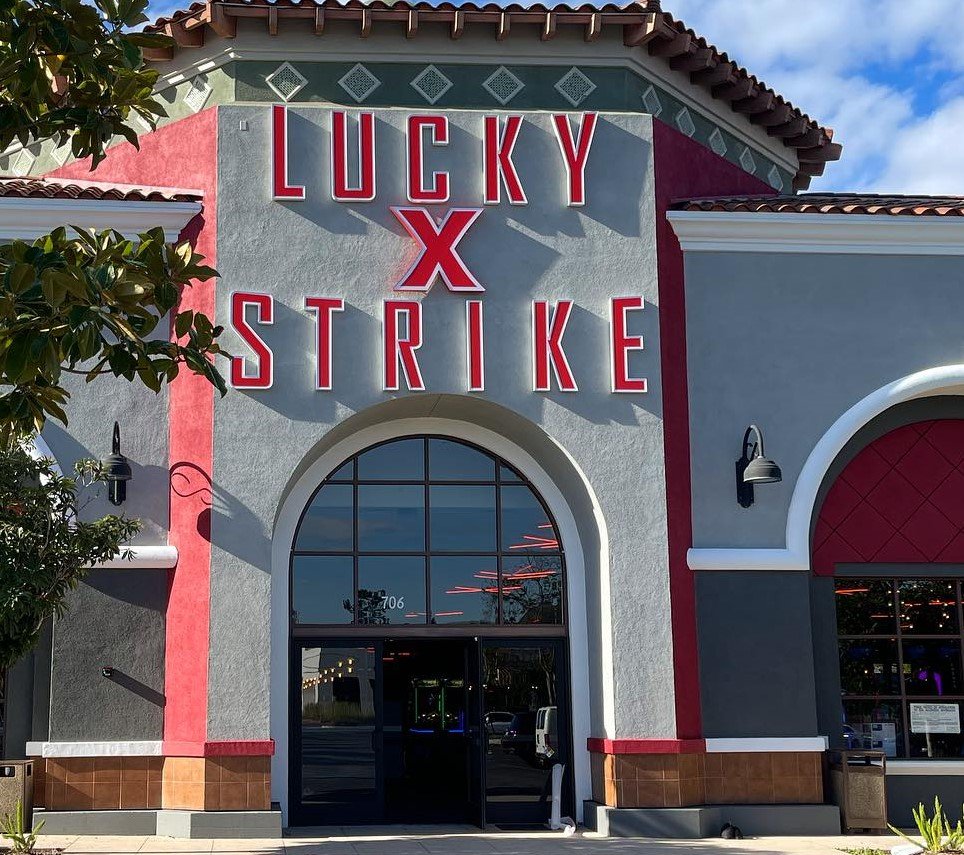
Lucky Strike will be opening its new, 40 lane bowling center in the former Dick’s Sporting Goods at 706 E. Los Angeles Ave, Moorpark on Friday, December 8th. The facility will also include a large bar area, food and arcade. More information at luckystrikeent.com/location/lucky-strike-moorpark or call 805-222-3757.

Grand Opening of Freedom Dog Park in Camarillo on Monday, October 2nd

The new Freedom Dog Park, located at Freedom Park at 275 E. Pleasant Valley Road in Camarillo, will host a grand opening event on Monday, October 2nd from 6-8PM. Located near the Camarillo Airport and Ventura County Animal Services. Great place to bring the pooch at night as they have lights! Open until 9pm. www.pvrpd.org/freedom-dog-park-c1fe3e4

LOCAL AREA DOG PARKS IN AND AROUND VENTURA COUNTY

Santa Barbara Museum of Natural History to Reopen Its Permanent Mineral Exhibit on April 22nd

The Santa Barbara Museum of Natural History is reopening its permanent mineral exhibit and once more inviting the public to marvel at astonishing rocks and crystals.

Over 100 specimens handpicked by Dibblee Curator of Earth Science Jonathan Hoffman, Ph.D., are on view in the small hall off the Museum’s central courtyard. Fan favorites like the fluorescent minerals and Emerald-City-like malachite spires have returned, accompanied by new picks from the Museum’s collection. The new permanent exhibit also features three stunning specimens donated to the Museum at the close of last summer’s temporary mineral extravaganza, Rare Earth.

All the specimens are now situated in a new interpretive and design context that puts the emphasis on their geologic origin and surprisingly lively nature. The exhibit takes a cue from the deep time perspective of research by Robert Hazen, Ph.D., and other prominent mineralogists. The title wall leads with the startling fact that the solar system began with only 60 minerals, whereas over 6,000 are known on Earth today, thanks to the dynamic conditions on our planet.

The room’s new vibe leans away from the glass-case-in-a-store feeling of older mineral exhibits. Organic forms and panoramas mask the cases, evoking the fact that minerals come from our planet’s landscapes, not jewelry stores. Dr. Hoffman and the rest of the Museum’s exhibit team hope to instill a greater appreciation not only for minerals, but for the lively natural forces that generate them.

As Hoffman notes, “Minerals are often beautiful, but their origin stories are just as impressive. We hope visitors will appreciate how minerals demonstrate the dynamic nature of chemistry—how minerals form, how they change over time, how organisms interact with them, and the roles they play in our society.”

The mineral exhibit opens April 22 and is included in Museum admission. Members are always admitted free. More information at sbnature.org/minerals

About the Santa Barbara Museum of Natural History

Powered by Science. Inspired by Nature. Founded in 1916, the Santa Barbara Museum of Natural History inspires a thirst for discovery and a passion for the natural world. The Museum seeks to connect people to nature for the betterment of both, and prides itself on being naturally different. For more information, visit sbnature.org.