Miniature Golf in Ventura County

According to Golflink.com, there are approximately 1,450 miniature golf courses throughout the United States, including 45 in the State of California. Overall, this equates to about 216,000 U.S. residents for each mini golf course. But California severely lags this statistic, with nearly 850,000 residents per mini golf course. Ventura County is in line with California overall in that it currently has a single mini golf course, Golf N' Stuff in Ventura, for a total of roughly 835.000 residents.

A look at the intimidating Hole 17 on course #2 at Golf N' Stuff in Ventura.

A look at the intimidating Hole 17 on course #2 at Golf N' Stuff in Ventura.

I have enjoyed Golf N' Stuff Ventura with my kids for years. It is the closest thing we have to an amusement park in Ventura County. With two 18 hole golf courses, bumper boats, bumper cars, go karts, laser tag and a well-appointed arcade, Golf N' Stuff Ventura has something for everyone. The golf courses are neat as they have such a varied assortment of decor, from a castle and a palace to an old country town, animals and more.

The old country western town at hole 10 of course 2. I love this hole.

The old country western town at hole 10 of course 2. I love this hole.

With easy access from the 101 freeway off at Victoria Avenue, Golf N' Stuff is one of our favorite "staycation" activities. When it's 90 degrees in the Conejo Valley, we'll often find it a comfortable low 70s at Golf N' Stuff. And the facility is open 365 days a year (well, 366 days in leap years). Visit golfnstuff.com/ventura/info.html to learn more. And be sure to sign up with their Email Club to receive 2 for 1 golf coupons throughout the year.

A view of Golf N' Stuff Ventura while driving the 101 North (as if you couldn't figure that out).

A view of Golf N' Stuff Ventura while driving the 101 North (as if you couldn't figure that out).

If you are a mini golf fanatic looking for other venues within about an hour drive of, say, Thousand Oaks, try the following:

California isn't one of the more popular mini golf states in the country, perhaps because there are SO MANY OTHER GREAT THINGS TO DO HERE!

The beautiful and iconic castle at Golf N' Stuff Ventura,

The beautiful and iconic castle at Golf N' Stuff Ventura,

Should I Start Collecting Social Security Benefits Before Reaching Full Retirement Age?

Full Retirement Age (FRA) was 65 for many years. Congress passed a law in 1983 to gradually increase FRA to reflect increasing lifespans. FRA currently ranges from 65 for those born before 1943 to 67 for those born in 1960 or later. At what point should you start taking Social Security payments?

You can also start receiving Social Security benefits as early as age 62, but your monthly benefit would be reduced anywhere from 25 to 30% as a result. See www.ssa.gov/benefits/retirement/planner/agereduction.html for more information on how much you would receive, based on your year of birth.

You can also delay receiving Social Security beyond your FRA, up until age 70. The benefit to doing this is that your benefits are increased anywhere between 5.5% to 8% per year. See www.ssa.gov/benefits/retirement/planner/delayret.html for more information.

What if you start taking Social Security at age 62 but are still working? Depending on your level of income, that could defeat the point of taking early Social Security. Why? Because before you reach FRA, the SSA withholds $1 of every $2 you earn in excess of $22,320 (in 2025) per year from your Social Security payments. Then the year you reach FRA, they still withhold $1 for every $3 in excess of $59,520 (in 2025) until the month you reach FRA. Effectively, if you’re still working at ages 62 to 67, it may defeat the point of taking early FRA.

Note that they do adjust you future payment for the amounts they withhold up until FRA, once you reach FRA. However, they are not paid immediately. They are stretched out over your actuarily determined lifetime via higher monthly payments.

Let’s look at a simple example:

Conejo Joe was born in 1960 and thus turned 62 in 2022. His FRA is 67. His full retirement benefit is, say, $1,000 per month. If he chooses to start receiving payments at age 62, they would be reduced by 30%, to $700 per month. If he chooses to delay receiving benefits until age 70, they would increase by 8% per year over 3 years, to $1240 per month (ignoring increases for inflation).

If Conejo Joe started receiving $700 per month at age 62, by the time he reaches age 70 he would have received $58,800 (ignoring inflation increases). If he waited until age 70, he would receive $1240 per month, or $540 per month more than starting benefits at age 62. It would take him about 9 years to make up the gap.

But if Conejo Joe had other income or continued working at age 62, up to 85% of those $700 per month Social Security payments could be taxed at the federal level (most states, including California, do not tax Social Security benefits). Those taxes should be factored into the decision as to whether he should delay receiving benefits.

If Conejo Joe started taking Social Security at age 67, he would receive $1,000 per month. So by the time he reaches age 70, he would have received total payments of $36,000 (again, ignoring inflation). Had he waited until age 70, he would receive $1240 per month, or $240 more than the FRA benefits he received for the last three years. It would take him 12 1/2 years to make up the $36,000 gap. So if he anticipates living until at least age 82 1/2, in theory it makes sense to wait until age 70 to collect benefits, if possible.

Everyone’s situation is different. Some folks really need the payments early. Others can wait because they are still working. Visit www.ssa.gov for more information and talk to your financial planner and/or CPA for guidance.

One final point. The Social Security Administration says “If you decide to delay your benefits until after age 65, you should still apply for Medicare benefits within three months of your 65th birthday. If you wait longer, your Medicare medical insurance (Part B) and prescription drug coverage (Part D) may cost you more money.

Batting Cages and Paintball in Ventura County

battingcage.jpeg

For you baseball/softball players, here is a summary of local batting cage options, with links to additional contact information:

Paintball? No particular correlation to batting cages, but here it is:

Ambush Paintball and Airsoft Park in Moorpark

California Has Billions of Dollars of Unclaimed Property - Claim Yours Now!

The State of California maintains billions of dollars in unclaimed property belonging to individuals and organizations.

California's Unclaimed Property Law requires "holders" such as corporations, business associations, financial institutions, and insurance companies to report and deliver property to the Controller's Office after there has been no customer contact for three (3) years. Often the owner forgets that the account exists, or moves and does not leave a forwarding address or the forwarding order expires. In some cases, the owner dies and the heirs have no knowledge of the property.

The most common types of unclaimed property are bank accounts and safe deposit box contents, stocks, mutual funds, bonds, and dividends, uncashed cashier's checks or money orders, certificates of deposit, matured or terminated insurance policies, estates, and mineral interests and royalty payments, trust funds and escrow accounts. You may also find things like unused balances in prepaid cards and refunds due.

Find out more at www.ClaimIt.ca.gov.

Search the California Unclaimed Property database at ucpi.sco.ca.gov/en/Property/SearchIndex.

Search by name, address, city, property number or any combination.

What the One Big Beautiful Bill Act Means for Your Individual Taxes in 2025 and Beyond

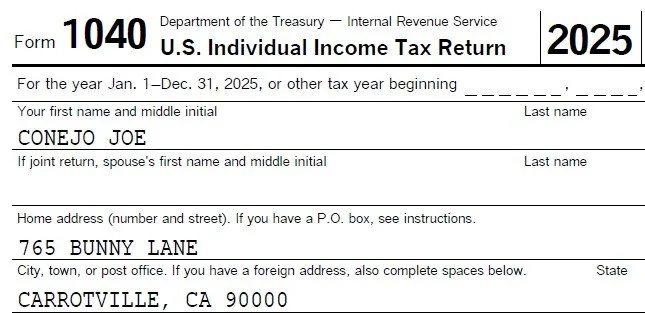
When Congress passed the One Big Beautiful Bill Act signed into law on July 4, 2025, it triggered the most sweeping overhaul of the U.S. tax system since 2017. While headlines focused on Trump Accounts and repealed EV credits, the bill quietly reshaped the rules for everyday taxpayers—introducing new deductions, revising old ones, and locking in key provisions that affect how millions of Americans will file in the years ahead. Here is a high-level summary that breaks down the major individual income tax changes that could shape your bottom line from 2025 through 2028—and beyond.

TAX RATES

The new law retains the current individual income tax rate structure that ranges from 10% to 37%. The income ranges these apply to are permanently adjusted for inflation each year.

STATE AND LOCAL TAX DEDUCTION

The “SALT” itemized deduction cap was raised from $10,000 to $40,000 in 2025, then increases 1% annually through 2029, before dropping back to $10,000 in 2030. However, if your modified adjusted gross income (MAGI) is over $500K, the deduction is reduced by 30% of the excess over $500K, but can’t fall below $10,000.

SENIOR BONUS DEDUCTION

The bill provides an additional standard deduction of up to $6,000 per person for seniors ages 65+ in tax years 2025-2028. The deduction is reduced by 6% of MAGI that exceeds $75K (single) and $150K (joint), which means that the senior bonus deduction phases out completely when MAGI reaches $175K single and $250K married filing jointly. You don't have to be receiving Social Security benefits to receive the deduction.

So for example, if your MAGI is $100K and you are single, you will receive an additional tax deduction in 2025 of $4,500 ($6,000 less 6% of the excess of $100K over $75K).

STANDARD DEDUCTION

The standard deduction in 2025 is $15,750 for single/married filing separately, $23,625 for head of household, and $31,500 for married filing jointly, up from $14,600, $21,900, and $29,200, respectively, in 2024. There is a regular extra standard deduction for 65+ seniors of $2,000 single and $3,200 married filing jointly (both 65+; $1,600 if one spouse is 65+), up slightly from $1,950, $3,100, and $1,550 in 2024. The standard deduction will be indexed for inflation annually.

Here’s another example. If you are married, both 65+ with income of $150K or less in 2025, you will be receiving a standard deduction of $46,700 ($31,500 base deduction + $3,200 extra 65+ deduction + $12,000 bonus 65+ deduction). Of course, if your itemized deductions are greater than your standard deduction of $46,700, we should still take the higher of the two on your 2025 return.

TIP INCOME DEDUCTION

Workers in traditionally tipped industries, such as food service, salons, and spas, can deduct up to $25,000 in tips per year from 2025 to 2028. The deduction phases out for AGIs exceeding $150K single, $300K joint filers.

OVERTIME PAY DEDUCTION

From 2025 to 2028, there is an overtime pay deduction of up to $12,500 in overtime pay per person ($25,000 for joint filers). The deduction phases out $100 for every $1,000 over MAGI of $150K single, $300K joint filers. Only the overtime premium (e.g. the extra pay above your regular hourly rate) is deductible.

PERSONAL CAR LOAN INTEREST

Taxpayers can deduct up to $10,000 in car loan interest for new cars purchased between 1/1/25 and 12/31/28 that were assembled in the U.S. This is an “above the line” deduction, meaning, you can take the deduction whether or not you itemize deductions. The deduction is reduced by $100 for every $1,000 over MAGI of $100K single and $200K joint returns.

EV TAX CREDITS

The tax credits for both new (up to $7,500) and used (up to $4,000) EVs expire this October, which means only three months remain to purchase an EV and potentially receive those credits (subject to current MAGI limits). These credits were previously set to expire after 2032.

RESIDENTIAL CLEAN ENERGY (e.g. SOLAR) CREDITS

Solar tax credits go away in 2026, which means taxpayers have limited time remaining this year to purchase, install, and place in service a home solar system by 12/31/25 to receive a 30% tax credit on the system. This also applies to batteries – if you have an existing solar system, you can install batteries by year-end and receive a tax credit on that purchase. If you have unused solar tax credits, they carry forward to future tax years.

ENERGY EFFICIENT HOME IMPROVEMENT CREDITS

These credits also go away in 2026. This applies to certain energy-efficient windows, doors, insulation, heat pumps, central A/C, etc. These credits can be as much as $1,200 to $3,200 per year. They do not carry forward to future years.

CHILD TAX CREDIT

The child tax credit increases from $2,000 to $2,200 for children under the age of 17 at the end of 2025. It phases out when MAGI reaches $200K single and $400K joint.

CHARITABLE DEDUCTIONS

The new law adds a permanent provision for non-itemizers to deduct up to $1,000 (single) and $2,000 (joint returns) in cash donations to 501(c)3 charities, beginning in 2026. In other words, you can deduct cash donations starting next year, even if you don’t itemize deductions.

The new law introduces a floor of .5% (half of a percent) of AGI for those itemizing charitable donations, beginning in 2026. What this means is that you can deduct charitable donations to the extent they exceed .5% of your AGI. So if your AGI is $200K and your charitable donations are $5,000, you can deduct $4,000 ($5,000 less .5% of $200K).

MISCELLANEOUS ITEMIZED DEDUCTIONS

The bill permanently eliminates various deductions that were previously subject to 2% of AGI prior to 2018, such as unreimbursed employee expenses, tax preparation fees, investment advisory fees, safe deposit box rental, etc.

OTHER ITEMS

Moving expenses associated with work are now permanently not deductible (unless you are active-duty military moving under orders).

After 2025, gambling losses will only be deductible up to 90% of your gambling losses. It is still 100% in 2025. And remember, you must itemize deductions to claim gambling losses. I know a couple of you that this will impact.

“Trump Accounts” are a new type of tax-deferred investment account for every child born between January 1, 2025 and December 31, 2028. The government funds the first $1,000. It is invested in a diversified U.S. stock index fund. Up to $5,000 of additional funds can be invested per year, plus an extra $2,500 from employers.  The funds can be withdrawn starting at age 18 for education and other specified uses. For those with newborns this year, the IRS should be coming out with information about these accounts by the end of the year.

There’s a provision in the new law that allows for a tax credit of up to $1,700 per taxpayer for contributions made to “Scholarship Granting Organizations” that support K-12 private or religious school scholarships. The tax credit must be taken in the year of donation. It cannot be carried forward. And you can’t take both the credit and an itemized deduction for the payment.

The new law made the $750,000 cap on mortgage loan interest deduction permanent. The cap is not tied to inflation.

The estate tax exemption increases from $13.99 million in 2025 to $15 million per individual in 2026 and will be indexed for inflation going forward. If the law hadn’t passed, the exemption would have dropped to about $7 million in 2026.

View the 870 page bill at www.congress.gov/119/bills/hr1/BILLS-119hr1eas.pdf.

What's the Deal With All of Those Signs Posted at the Swimming Pool

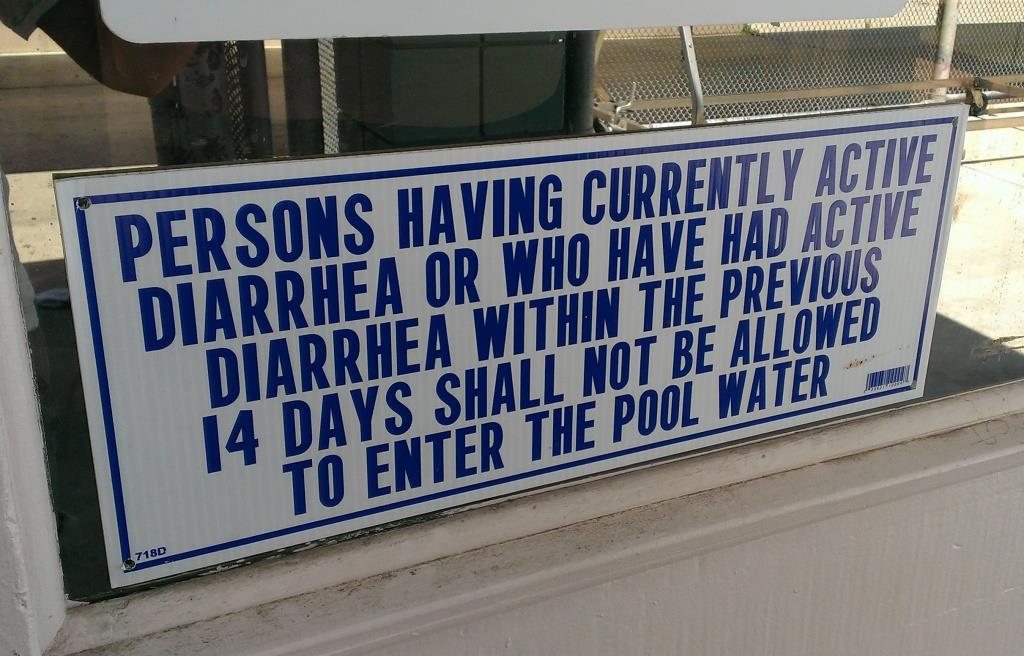
My kids get a laugh from time to time when they notice the sign at the public swimming pool that states, "Persons having currently active diarrhea or who have had active diarrhea within the previous 14 days shall not be allowed to enter the pool water." 

The thought comes to mind, should one have had this issue, how many people would actually remember if it was within the last 14 days. Heck, I can't even remember what I ate for breakfast yesterday and what I watched on TV last Sunday.

But the sign is well intended as waterborne disease is no laughing matter. Waterborne disease outbreaks in pools have often been caused by individuals with recent diarrhea; chlorine doesn't always take care of removing the viruses or parasites that can come from those with recent symptoms.

The requirement for this and other community pool signs comes from California Building Code Chapter 31B "Public Pools," Section 3120B "Required Signs."

Section 3120B.11 "Diarrhea" indicates the sign must have letters at least 1 inch high, clearly states what is noted above, and is posted at the entrance area of a public pool. Public pools include municipal/park district pools, hotel pools, water parks, swim schools, homeowner shared pools, apartment pools, campground pools, etc. One is thus not required to post this sign at your home pool (unless you really want to).

CDC ADVICE TO PREVENT INFECTIONS FROM PUBLIC SWIMMING POOLS

According to this source, the diarrhea sign and a variety of other pool signs were put into law in late 2012. Some examples of other public pool sign requirements include:

  • "No Diving" sign for pools with maximum depth of 6 feet or less

  • "No Lifeguard" sign when applicable

  • Emergency sign with 911 and nearest emergency services

  • "No use after dark" sign for pools without lighting

  • Artificial respiration and CPR sign

  • Pool user capacity sign (1 person per 10 sq ft in spa; 1 person per 20 sq ft in pool)

So you've learned something new. If you'd like to read the entire Chapter 31B “Public Pools” of the California Building Code, or any section of the Code for that matter, visit www.bsc.ca.gov/Codes.aspx.

DOZENS OF VENTURA COUNTY AREAS SWIMMING POOLS AND WATER PLAY PLACES

Incident with Janye Mansfield's Six Year Old Son at Jungleland Thousand Oaks in November 1966

In November 1966, actress Jayne Mansfield was at Jungleland in Thousand Oaks with her three children, Zoltan (6), Miklos (7) and Mariska (2). Zoltan was attacked by a "tame" lion during the visit. The lion had the boy's head in its jaws before zoo employees were able to pry the lion off. Zoltan eventually recovered, after spending a month at Conejo Valley Hospital.

Manfield died in a car crash in June 1967. The two other adults in the car also died on impact. Her children were asleep in the back seat and they all survived. They were subsequently raised by their father*, Hungarian bodybuilder/actor and 1955 Mr. Universe Mickey Hargitay. And we all know his daughter, award-winning actress Mariska Hargitay.

Mansfield sued Jungleland for $1.6 million, which is about $14 million in today's dollars. Jungleland closed its doors and filed for bankruptcy in October 1969. Zoltan received an out of court settlement of $10,000 from Jungleland in bankruptcy. (Note that while the Mansfield incident was not exactly good publicity for Jungleland, the park had already faced financial challenges with the popularity of newer theme parks, Disneyland and Knotts Berry Farm.)

Looking to learn more about Jungleland? Stop by the Stagecoach Inn Museum in Newbury Park, which has a number of artifacts on display.

More information about Jungleland at THIS LINK.

* In 2025, Mariska announced that her biological father is actually singer Nelson Sardelli, not Mickey Hargitay.