FEMA Ready.gov Website Provides Emergency Preparedness Tips

Ready.gov.png

The Federal Emergency Management Agency (FEMA) launched Ready.gov to educate and prepare Americans for emergencies, both natural and man-made.  Three key sections of the site are maintaining an emergency supply kit, making a plan and being informed.

Here are FEMA's recommendations for a kit of food, water and supplies to last at least 3 days per person should rescue workers not be able to get to you right away after a disaster/emergency.

  • At least 3 days of water per person, consisting of at least one gallon of water per person, per day.

  • At least 3 days of non-perishable food per person. Things like ready-to-eat canned items, protein or fruit bars, cereal or granola, peanut butter, dried fruit, nuts, crackers, canned juices, high energy foods, food for infants, etc.

  • Battery-powered or hand crank radio and a NOAA Weather Radio and extra batteries

  • Flashlights and extra batteries

  • First aid kit with 2 pairs of gloves, sterile dressings, cleansing agent/soap/towelettes, antibiotic and burn ointments, bandages, eye wash solution, thermometer, prescription items (other items to consider...scissors, tweezers, petroleum jelly, aspirin, anti-diarrheal, antacid, laxative)

  • Whistle to signal for help

  • Dust mask to help filter contaminated air; plastic sheeting and duct tape for shelter

  • Moist towelettes, garbage bags and plastic ties for personal sanitation

  • Wrench or pliers to turn off utilities

  • Manual can opener if you have canned food

  • Local maps

  • Cell phone with chargers and backup battery.

Other items to consider:

  • Prescription medications and glasses

  • Non-prescription medications such as pain relievers, anti-diarrhea medications, antacids or laxatives.

  • Infant formula, bottles, diapers, wipes and diaper rash cream

  • Pet food and extra water for your pet

  • Important family documents such as copies of insurance policies, identification and bank account records in a waterproof, portable container

  • Cash and change

  • Emergency reference materials, first aid manual, etc.

  • Sleeping bag or warm blanket for each person.

  • Complete change of clothing including a long sleeved shirt, long pants and sturdy shoes.

  • Household chlorine bleach and medicine dropper – When diluted nine parts water to one part bleach, bleach can be used as a disinfectant. Or in an emergency, you can use it to treat water by using 16 drops of regular household liquid bleach per gallon of water. Do not use scented, color safe or bleaches with added cleaners.

  • Fire extinguisher

  • Matches in a waterproof container

  • Feminine supplies and personal hygiene items

  • Mess kits, paper cups, plates and plastic utensils, paper towels

  • Paper and pencil

  • Books, games, puzzles or other activities for children

  • Since Spring 2020: masks, soap, hand sanitizer and disinfecting wipes

But don't stop with this list! Visit Ready.gov to learn more about emergency preparedness!

Visit www.ready.gov/sites/default/files/2021-02/ready_checklist.pdf for an amergency supply list.

Tortilla Flats Mural in Ventura

The Tortilla Flats Mural is located at the Figueroa Street underpass at the 101 freeway in Ventura. Created in 2008 by artists MB Hanrahan and Moses Mora, this public art project commemorates the community that lived here in and around westside Ventura in the 1920s to the 1950s, when it was displaced by the 101.

Earlier the Tortilla Flats area was known as Tiger Town, Spanish Town and/or Indian Town. The indigenous Chumash named the area "Shisholop."

(The Shisholop Village site at the south end of Figueroa Street - directly on the beach - was named City of Ventura Historic Landmark No. 18 in December 1975. Believed to have been a Chumash provincial capital, Shisholop was first settled shortly after A.D. 1000 and was visited in 1542 by Portuguese navigator Juan Rodriguez Cabrillo while on an exploratory expedition for Spain.)

The mural depicts a series of narratives of historically significant or interesting buildings and pictures of the varied cultural backgrounds in the area - Chumash, Mexican, Spanish, Asian, African American and European - which evolved into Ventura that we now know.

The images were selected from old photographs and were inspired by interviews with former residents.

The underpass is located next to Harbor Boulevard, where just across the street is Seaside Park and the Ventura County Fairgrounds.

More information at www.publicartinpublicplaces.info/public-art-tortilla-flats-2008-by-mb-hanrahan-and-moses-mora.

Tortilla Flats Mural2.JPG

Purple Heart Trail Signs on U.S. Highway 101 in Ventura County Commemorate Veterans

Purple Heart Trail.JPG

In November 2014, Caltrans District 7 installed two signs designating a segment of U.S. Highway 101 as part of the National Purple Heart Trail — a system of signed highways, bridges and other monuments that honor soldiers who have received the Purple Heart medal.

One of these signs can be seen on the northbound 101 in Thousand Oaks, right before the Westlake Boulevard offramp. The other sign is near the Bates Road offramp of the southbound 101.

These two signs complete 240 continuous miles of Purple Heart trail in California, from Ventura County to Monterey.

Senate Concurrent Resolution No. 27 established specified portions of US Highway 101 in the counties of Santa Barbara and Ventura for inclusion in the National Purple Heart Trail.

The U.S. 101 in Ventura County is also dedicated to the U.S. Army's 101st Airborne Division as commemorated by "The Screaming Eagles Hwy - 101st Airborne Division" placed nearby.

The Truck Escape Ramp on Kanan Dume Road at the Intersection of Pacific Coast Highway

From time to time we take Kanan Road in Agoura Hills to Malibu for quick access to Zuma Beach, Westward Beach and Point Dume State Beach as well as Escondido Canyon Park, Paradise Cove and other great outdoor spots in Malibu.

From the 101, Kanan Road is about 12 miles from Pacific Coast Highway and takes roughly 15 minutes without traffic. Something that has always puzzled me is why it is called Kanan Road all the way from its juncture with North Westlake Boulevard in Thousand Oaks to the 101, through Oak Park and Agoura Hills, down to its intersection with Mulholland Highway in Malibu and then becomes Kanan Dume Road.

Runaway Truck Escape Ramp

The southernmost section of Kanan Dume Road is particularly steep, with an 8% grade over three miles.  My kids always ask about the "Escape Ramp" at the bottom of Kanan Dume Road at its intersection with PCH.

The Truck Escape Ramp was built in 1987 after a series of crashes and resulting deaths due to runaway trucks. The escape ramp, or arrester bed, is an 800 foot long, pit in the middle lane of the road filled 2 1/2 feet deep with gravel. The allowable weight limit for trucks on Kanan Dume was also dropped in 1987 from 14,000 to 8,000 lbs.

The arrester bed was renovated in 2014 to make it wider and improve signage. Thankfully we have never seen the escape ramp used, but it is there if it is ever needed.

Tunnel Vision

There are three tunnels on Kanan Dume Road between Latigo Canyon Road and PCH built in the late 1960s to early 1980s. They are affectionately referred to as T-1, T-2 and T-3. T-3 is two-lane tunnel located at approximately 1142-1208 Kanan Road in Agoura Hills, roughly five miles from Highway 101. A short distance later, you will drive through T-2, located just northeast of Rocky Oaks Park. About 2 1/2 miles from T-2 is the T-1 tunnel, just south of the Newton Canyon Backbone Trail trailhead.

One of three tunnels on Kanan Dume Road in Malibu. This one is called T-3. (Clever, eh?)

One of three tunnels on Kanan Dume Road in Malibu. This one is called T-3. (Clever, eh?)

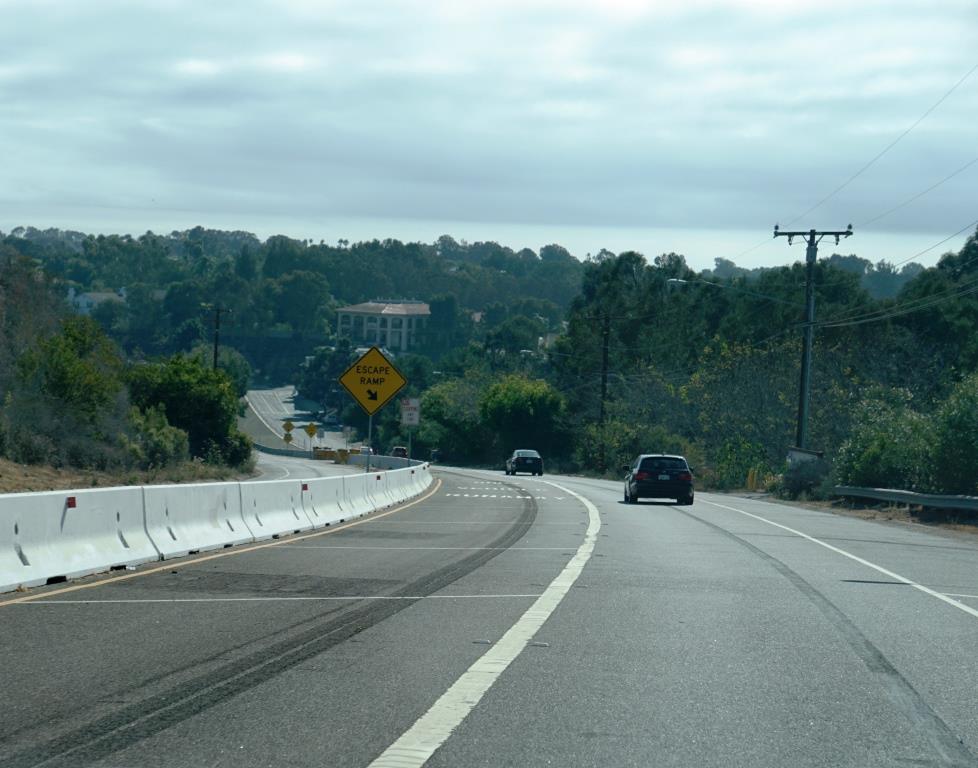
Signage indicating approach of the truck escape ramp on Kanan Dume Road.

Signage indicating approach of the truck escape ramp on Kanan Dume Road.

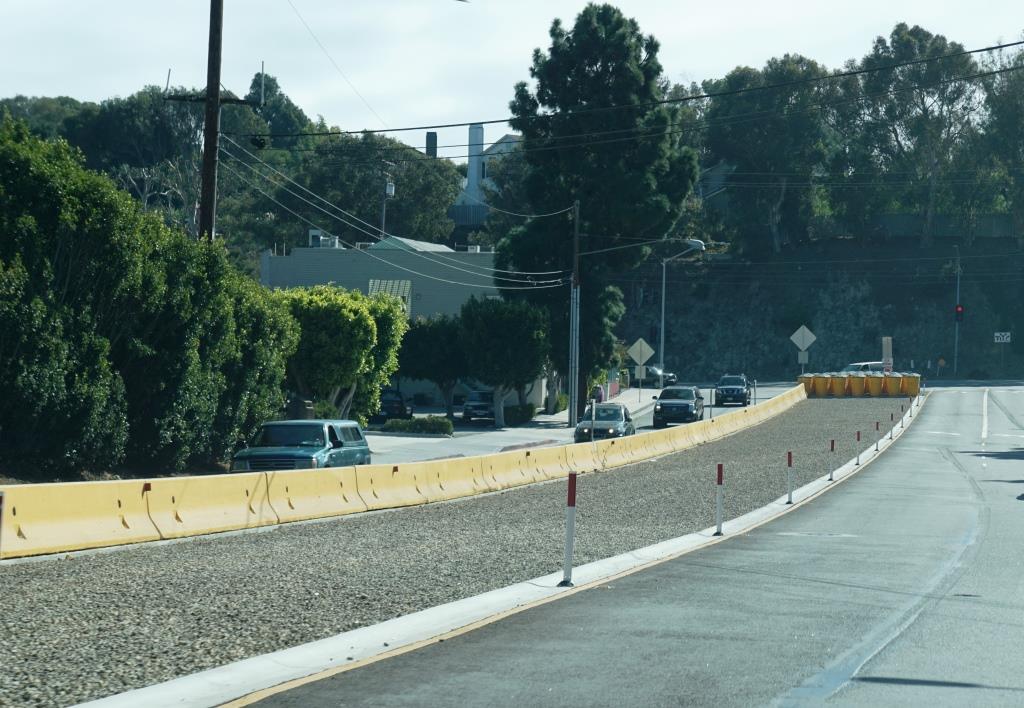
A closer view of the escape ramp gravel pit. My son asked if we could drive in it (in my minivan). I said, "um, no" although if our brakes gave out, sure, I would use it.

A closer view of the escape ramp gravel pit. My son asked if we could drive in it (in my minivan). I said, "um, no" although if our brakes gave out, sure, I would use it.

Where Were You on 9/11? I Certainly Remember.

Ten years ago we were horrified by the 9/11 terrorist attacks. We watched the scenes over and over.  It was surreal. We were scared and concerned but felt helpless as we could do nothing about it from our TV screens. Most of us will never forget where we were and what we were doing that day. I’ll centainly never forget.

Of all places, I happened to be in Paris on an overseas MBA project with a classmate. We were in a taxi driving from our hotel to Orly Airport, where we were to fly to Nice. The attacks had already occurred yet Josh* and I had no idea, nor could we have ever imagined the extent of what had taken place.

* I just spoke with Josh today and coincidentally he wrote about our experience at www.unboxedthoughts.com/2011/09/09/ten-years-later/ (My account here was originally written 4 years ago but I've updated it for the 10th Anniversary remembrance of the attacks.)

Our taxi driver was Chinese and of course spoke French, but not English. The extent of our combined French vocabulary was oui, merci, bonjour and Hors D'oeuvres.

Halfway into the ride the driver turned up the radio volume very loud. Our first clue that something was wrong was repeatedly hearing the word “American” on the news. Our driver tried to communicate what he was hearing and our interpretation of his animated hand motions was that an airplane had crashed. We had absolutely no idea what really had just taken place in New York.

At Orly Airport, things went as planned. We checked in and were on the flight to Nice. The only thing we found slightly disturbing was the police patrolling the airport with large, machine gun like weapons. But we didn’t think too much of it at the time as we were both looking forward to visiting the South of France for the first time.  The flight moved forward without a hitch.

We landed in Nice and at the baggage claim area our names we

Read More

Two Ventura County Cities Were Born on September 29, 1964!

You wouldn't immediately know it looking at the headline of this September 30, 1964 issue of The Daily News, but the day before, residents in BOTH Camarillo and Thousand Oaks voted to incorporate their respective cities.

The article indicates that voters in Camarillo voted in favor of incorporation by a 5 to 1 margin, with 64% of the 3,745 registered voters turning in ballots. In the far right column, you'll see that with 10 of 18 precincts counted, 61% of 2,428 votes cast in Thousand Oaks were for incorporation. In Thousand Oaks they also voted on the name of the city...over 87% of votes cast said "yes" to the name Thousand Oaks.

Thanks to the Pleasant Valley Historical Society Museum in Camarillo for maintaining this and other local Ventura County history!

CamarilloTOaksIncorp2.jpg

SKA-teen Roller Rink in Thousand Oaks From 1967 to 1983

ska-teen1.JPG

Back in the day, there was a roller rink at 300 Hampshire Road in Thousand Oaks, across the street from the former K-Mart. It was called the SKA-teen Roller Rink. It opened in 1967 and closed in 1983.

Twelve years later, Roller Dome opened at 950 Avenida de Los Arboles in Thousand Oaks in 1995, where it operated until October 2010.

Now the only remaining roller rink in Ventura County is Skating Plus in Ventura.

ICE SKATING, ROLLER SKATING AND SKATEBOARDING OPTIONS IN VENTURA COUNTY