American Lung Association's 2014 Tobacco Control Report Shows More Progress Needed

The American Lung Association has released its 12th Annual "State of Tobacco Control" report that reviews tobacco control policies and assigns grades to U.S. and state governments based on tobacco control laws in effect as of January 2, 2014. Tobacco control laws were reviewed to assess if they adequately protect citizens from impact of tobacco use.

2014 is the 50th anniversary of the 1964 Surgeon General's report linking smoking to lung cancer and other serious diseases. Since 1965, the percentage of Americans smoking has dropped from 42.4% (52.8 million Americans) to 18% (43.2 million) in 2012, according to CDC surveys.

Today, the Surgeon General notes that smoking is still the nation’s leading cause of preventable death and disease, responsible for the deaths of close to 480,000 Americans and up to $333 billion in annual healthcare and lost productivity costs attributed to smoking.

The American Lung Association calls for all levels of government to achieve three goals:

  • Reduce smoking rate to less than 10% within 10 years
  • Protect all Americans from secondhand smoke within 5 years
  • Eliminate the death and disease caused by tobacco

The U.S. Government received the following grades in 2013:

  • FDA Regulation: D (rule not issued to assert FDA authority over all tobacco products)
  • Cessation Coverage: C (only partially covered in federal healthcare programs)
  • Cigarette Tax: D (tax rate per pack of 20 is $1.01)
  • Tobacco Treaty: D (public health treaty not submitted to Senate for ratification)

 Here are highlights of California grades and rankings:

  • Tobacco Prevention Control and Spending: California received an F, though all but four states (Hawaii, North Dakata, Wyoming and Delaware), received D or F grades in terms of spending CDC recommended amounts.
  • Smokefree Air: California received an A for having laws in place that restrict smoking. 28 states and Washington DC have passed laws prohibiting smoking in almost all public places and workplaces, including restaurants and bars.
  • Cigarette Tax: D (Tax rate per pack of 20 is 87 cents) For each 10% price increase, consumption drops by about 7% for youth and 4% for adults. The average state excise tax is $1.53. An A grade was given for taxes of $3.06 and up and an F was given for taxes under 76.5 cents per pack. States with A grades (where you will pay the most in taxes) are New York, Massachusetts, Hawaii, Rhode Island and Connecticut. There are 15 states with F grades, mostly in the southeast.
  • Cessation Coverage: California received an F in terms of providing a "quitline" and ensuring coverage of cessation programs, though all but 7 states received D or F grades.

Read more about the State of Tobacco Control 2014 report at www.stateoftobaccocontrol.org.

Moving on, the American Lung Association in California released its own report on January 22nd covering cities and counties in California in the categories of Smokefree Outdoor Air, Smokefree Housing, Reducing Sales of Tobacco Products and Overall Tobacco Control.  Some highlights:

  • Out of 540 cities and counties in California, 18 scored an overall grade of A, including Albany, Baldwin Park, Berkeley, Calabasas, Contra Costa C
Read More

USDA Issues Public Health Alert for Certain Foster Farms Chicken Products

On Monday, the U.S. Department of Agriculture's (USDA) Food Safety and Inspection Service (FSIS) issued a public health alert due to concerns that illness caused by strains of Salmonella Heidelberg are associated with raw chicken products produced by Foster Farms at three facilities in California.

At this point in the investigation, FSIS is unable to link the illnesses to a specific product and a specific production period. Raw products from the facilities in question bear one of the establishment numbers inside a USDA mark of inspection or elsewhere on the package:

  • “P6137”
  • “P6137A”
  • “P7632”

The products were mainly distributed to retail outlets in California, Oregon and Washington State.

This public health alert is being issued after an estimated 278 illnesses were recently reported in 18 states, predominantly in California.  The outbreak is continuing. The investigations indicate that consumption of Foster Farms brand chicken and other brand chicken produced at Foster Farms plants are the likely source of this outbreak of Salmonella Heidelberg infections. Illnesses were linked to Foster Farms brand chicken through epidemiologic, laboratory and traceback investigations conducted by local, state, and federal officials. The Centers for Disease Control and Prevention (CDC) is partnering with state health departments to monitor the outbreak while FSIS continues its investigation.

The investigation is ongoing and FSIS is prepared to take additional actions or expand the investigation based on new evidence.

FSIS reminds consumers to properly handle raw poultry in a manner to prevent contamination from spreading to other foods and food contact surfaces. 

FSIS further reminds consumers of the critical importance of following package cooking instructions for frozen or fresh chicken products and general food safety guidelines when handling and preparing any raw meat or poultry. In particular, while cooking instructions may give a specific number of minutes of cooking for each side of the product in order to attain 165 °F in

Read More

National Park Service Parks and Websites Closed Due to Government Shutdown

Yay! Government shutdown ended on Thursday, October 17th. The National Park Service and other Government agencies are now back in business.

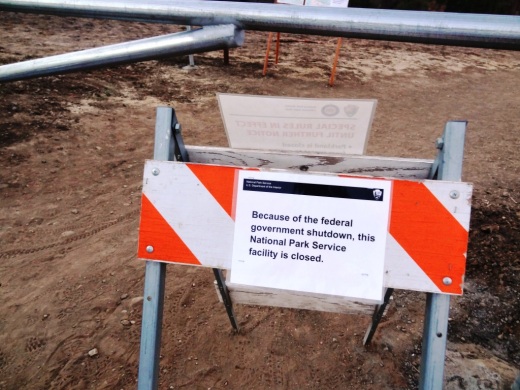
This is the screen shown on the National Park Service website as a result of the federal government shutdown. All national parks are closed and NPS websites and Facebook pages are not in operation until the shutdown ends.

The NPS has closed all 401 national parks, including park grounds, visitor centers, hotels, campgrounds and park roads (except for thru ways). All programs are cancelled and permits for special events on park grounds are rescinded.

The shutdown will affect over 20,000 NPS employees, who are furloughed until an appropriation is passed, while 3,000 employees continue to work on essential services, including security, emergency services and firefighting.

For updates, visit the Department of the Interior website at www.doi.gov/shutdown.

Sign at Rancho Sierra Vista/Satwiwa trailhead in Newbury Park.

CDC Reports Over 200,000 Preventable Heart Disease and Stroke Deaths Annually


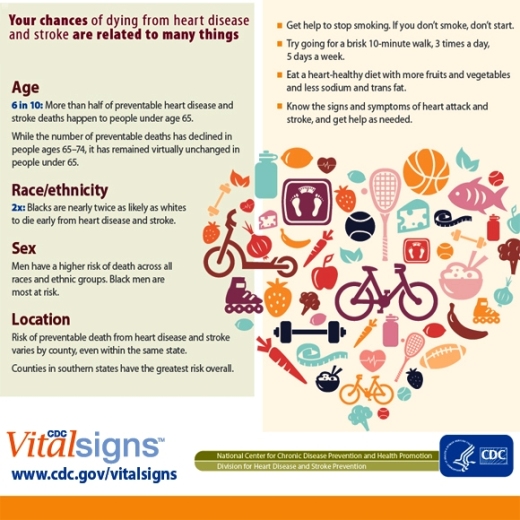
More than 200,000 preventable deaths from heart disease and stroke occurred in the United States in 2010, according to the Centers for Disease Control and Prevention.  More than half of these deaths happened to people younger than 65 years of age, and the overall rate of preventable deaths from heart disease and stroke dropped nearly 30 percent between 2001 and 2010, with the declines varying by age.  Lack of access to preventive screenings and early treatment for high blood pressure and high cholesterol could explain the differences among age groups.

  • Age: Death rates in 2010 were highest among adults aged 65-74 years (401.5 per 100,000 population).  But preventable deaths have declined faster in those aged 65–74 years compared to those under age 65.
  • Race/ethnicity: Blacks are twice as likely—and Hispanics are slightly less likely—as whites to die from preventable heart disease and stroke.
  • Sex: Avoidable deaths from heart disease, stroke and high blood pressure were higher among males (83.7 per 100,000) than females (39.6 per 100,000). Black men have the highest risk. Hispanic men are twice as likely as Hispanic women to die from preventable heart disease and stroke.
  • Location: By state, avoidable deaths from cardiovascular disease ranged from a rate of 36.3 deaths per 100,000 population in Minnesota to 99.6 deaths per 100,000 in the District of Columbia. By county, the highest avoidable death rates in 2010 were concentrated primarily in the southern Appalachian region and much of Tennessee, Arkansas, Mississippi, Louisiana, and Oklahoma.  The lowest rates were in the West, Midwest, and Northeast regions.

To save more lives from these preventable deaths, doctors, nurses, and other health care providers can encourage healthy habits at every patient visit, including not smoking, increasing physical activity, eating a healthy diet, maintaining a healthy weight, and taking medicines as directed.

Learn more about CDC’s heart disease, stroke, and high blood pressure initiatives, and the national Million Hearts initiative.

Ventura County Recognizes September as National Preparedness Month

September is National Preparedness Month and the County of Ventura is joining the nationwide effort to encourage individuals, families, businesses and organizations to prepare for emergencies by getting a kit, making a plan, staying informed and getting involved in their local community.

At 10:00 a.m. on September 10, 2013, the Ventura County Board of Supervisors will proclaim September as National Preparedness Month in Ventura County.

Preparedness is important because in the event of a local emergency, Ventura County residents may need to be self-reliant for at least three days without access to electricity, water service, or food. “Being prepared is a shared responsibility and everyone should do their part,” said Kevin McGowan, Assistant Director of the Ventura County Sheriff’s Office of Emergency Services. “Emergencies will happen, so I urge residents to be proactive and get prepared before disasters strike”.

Ventura County residents can take simple steps to be better prepared for disasters by making an emergency supply kit, developing a family communications plan, staying informed of the local hazards and getting involved in our community.

CLICK HERE for an Emergency Supply List.

For more information on how to be better prepared, visit the Ready Ventura County website at www.readyventuracounty.org as well as on Facebook (www.facebook.com/ReadyVC) and Twitter (www.twitter.com/ReadyVC) for weekly preparedness tips, news and events.

Thousand Oaks Police Department Reminds Drivers to Slow Down

According to the Thousand Oaks Police Department, in the past 12 months there have been seven fatal traffic collisions in the City of Thousand Oaks. Four of these fatalities have occurred on Westlake Boulevard. Three of the fatalities were motorcycle riders and the one this week was a solo vehicle into a power pole. Speeding was a factor in all of the accidents. The victims were boys 21 years of age and younger.

As a result of the latest traffic collision, a 17-year-old passenger is still in critical, but stable condition. Both boys in the last accident were scheduled to start their senior year at Thousand Oaks High School this week.

The Thousand Oaks Traffic Division would like to put an end to these tragedies. Therefore, the traffic division will be increasing enforcement in this area and other areas prone to speeding in an effort to make the roadway safer.

Please take the time drive safely. Most importantly, reduce your speed and obey all traffic laws.

Source: Thousand Oaks Police Department

Speaking of speeding teens, less than two weeks ago my wife and kids were driving on Lynn Road near the 101 in the late afternoon when another local teen managed to lose control of the car he was driving and barrel across the median into oncoming traffic, totaling both cars. SLOW DOWN indeed and don't even think about texting while driving!

Thousand Oaks Police Department Message Regarding AMBER Alert System Importance

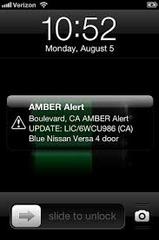
Like many of you, I was sitting at my desk on Monday night when I was startled by the high pitched AMBER alert that appeared on my smartphone. Following is a messge from the Thousand Oaks Police Department today regarding the importance of the AMBER Alert System.

In the last week there has been a lot of curiosity regarding the AMBER Alert System. You may have received a text message on your cell phone or may have seen the numerous traffic signs indicating an AMBER Alert was issued. The AMBER Alert system most recently proved to be successful with locating the abducted teen from San Diego. This system has shown its continued value to the public and law enforcement officers since its inception.

The history of the AMBER Alert System began in Texas in 1996, when broadcasters teamed with local police to develop an early warning system to help find abducted children.

AMBER stands for America's Missing: Broadcast Emergency Response and was created as a legacy to 9-year-old Amber Hagerman, who was kidnapped while riding her bicycle in Arlington, Texas, and then brutally murdered. Other states and communities soon set up their own AMBER plans as the idea was adopted across the nation.

How does it work?

Once law enforcement determines that a child has been abducted and the abduction meets AMBER Alert criteria, law enforcement issues an AMBER Alert and notifies broadcasters and state transportation officials. AMBER Alerts interrupt regular programming and are broadcast on radio and television and on highway signs. AMBER Alerts can also be issued on lottery tickets, wireless devices such as mobile phones, and over the Internet.

Are AMBER Alerts issued for all missing children?

AMBER Alerts are issued for abducted children when the situation meets the AMBER Alert criteria. When a child is missing, law enforcement can act swiftly to help recover the child, by developing search and rescue teams or by bringing dogs to the scene to track the scent. AMBER Alert

Read More