Southern California Edison Has Announced Possible Public Safety Power Shutoffs

Southern California Edison (SCE) and other energy companies in California have announced the possibility of preventative power shutoffs in areas where there are elevated wildfire risks.

Much of the Conejo Valley and greater Ventura County are considered to be of extreme risk, according to a the California Public Utilities Commission. A map showing high fire threat areas is at https://ia.cpuc.ca.gov/firemap/.

This is how Public Safety Power Shutoff (PSPS) works, according to SCE:

  • When elevated fire conditions (e.g. strong winds) present a clear danger, SCE may shut off power temporarily on specific power lines for public safety.

  • SCE intends to notify customers of potential shutoffs 2 days in advance via email, text or phone call. They may also send another notice to customers a day in advance.

  • SCE will also notify local governments, the emergency management community and first responders.

  • SCE will update customers regularly via its website and social media.

SCE can sign up for alerts at www.sce.com/outagealerts.

Additional information and updates will be posted at www.vcemergency.com.

Additional safety tips during an outage from SCE:

  • Disconnect all sensitive electronics to prevent damage or loss of data.

  • If you use a portable gas generator, use it outdoors only.

  • Don’t connect a generator to your home’s circuit breaker panel.

  • Consider obtaining extra fuel for your generator for extended outages and keep the fuel in approved containers in a safe location away from ignition sources.

How Bills Become Law in the California State Legislature

The California State Legislature is made up of two houses: the 40 member Senate and the 80 member Assembly, representing the people of the State of California.

All legislation begins as an idea or concept. Ideas and concepts can come from a variety of sources. The legislative process begins when a Senator or Assembly Member decides to author a bill.

A Legislator sends the idea for the bill to the Legislative Counsel where it is drafted into the actual bill. The draft of the bill is returned to the Legislator for introduction to the Senate or the Assembly.

A bill is introduced or read the first time when the bill number, the name of the author, and the descriptive title of the bill is read on the floor of the house. No bill may be acted upon until 30 days has passed from the date of its introduction.

The bill then goes to the Rules Committee of the house of origin where it is assigned to the appropriate policy committee for its first hearing. Bills are assigned to policy committees according to subject area of the bill. For example, a Senate bill dealing with health care facilities would first be assigned to the Senate Health and Human Services Committee for policy review. Bills that require the expenditure of funds must also be heard in the fiscal committees: Senate Appropriations or Assembly Appropriations. Each house has a number of policy committees and a fiscal committee. Each committee is made up of a specified number of Senators or Assembly Members.

During the committee hearing the author presents the bill to the committee and testimony can be heard in support of or opposition to the bill. The committee then votes by passing the bill, passing the bill as amended, or defeating the bill. Bills can be amended several times. Letters of support or opposition are important and should be mailed to the author and committee members before the bill is scheduled to be heard in committee. It takes a majority vote of the full committee membership for a bill to be passed by the committee.

Each house maintains a schedule of legislative committee hearings. Prior to a bill's hearing, a bill analysis is prepared that explains current law, what the bill is intended to do, and some background information. Typically the analysis also lists organizations that support or oppose the bill.

Bills passed by committees are read a second time on the floor in the house of origin and then assigned to third reading. Bill analyses are also prepared prior to third reading. When a bill is read the third time it is explained by the author, discussed by the Members and voted on by a roll call vote. Bills that require an appropriation or that take effect immediately, generally require 27 votes in the Senate and 54 votes in the Assembly to be passed. Other bills generally require 21 votes in the Senate and 41 votes in the Assembly. If a bill is defeated, the Member may seek reconsideration and another vote.

Once the bill has been approved by the house of origin it proceeds to the other house, where the procedure is repeated.

If a bill is amended in the second house, it must go back to the house of origin for concurrence, which is agreement on the amendments. If agreement cannot be reached, the bill is referred to a two house conference committee to resolve differences. Three members of the committee are from the Senate and three are from the Assembly. If a compromise is reached, the bill is returned to both houses for a vote.

If both houses approve a bill, it then goes to the Governor. The Governor has three choices. The Governor can sign the bill into law, allow it to become law without his or her signature, or veto it. A governor's veto can be overridden by a two thirds vote in both houses. Most bills go into effect on the first day of January of the next year. Urgency measures take effect immediately after they are signed or allowed to become law without signature.

Bills that are passed by the Legislature and approved by the Governor are assigned a chapter number by the Secretary of State. These Chaptered Bills (also referred to as Statutes of the year they were enacted) then become part of the California Codes. The California Codes are a comprehensive collection of laws grouped by subject matter.

Bicycle Safety Tips From the Ventura County Sheriff's Office

bike sign.JPG

Each year, hundreds of bicyclists in California are involved in a collision with a motor vehicle. Here are some important facts bicyclists and motorists should know.

California vehicle code section 21202(a): Any person operating a bicycle upon a roadway at a speed less than the normal speed of traffic moving in the same direction at the same time shall ride as close as practicable to the right-hand curb or edge of the roadway.

A bicycle ridden at night must be equipped with a lamp emitting a white light. There must also be a red reflector on the rear of the bicycle that must be visible from 500 feet when directly in front of a motor vehicle whose headlights are on.

Riders under the age of 18 must wear a helmet at all times. All riders, regardless of age, should wear a helmet at all times to reduce injuries.

No person shall drive a motor vehicle in a bicycle lane established on a roadway except to park where parking is permitted, to enter or leave the roadway, or to prepare for a turn within a distance of 200 feet from the intersection.

Bicyclists must travel on the right side of the roadway in the direction of traffic, except when passing, making a legal left turn, riding on a one-way street, riding on a road that is too narrow, or when the right side of the road is closed due to road construction. (CVC 21650.)

Handlebars must not be higher than the rider's shoulders. (CVC 21201(b))

A driver of a motor vehicle shall not overtake or pass a bicycle proceeding in the same direction on a highway at a distance of less than three feet between any part of the motor vehicle and any part of the bicycle or its operator. (CVC 21760(c))

Bicyclists must obey the rules of the road because they travel along the roadway with other motorists. It is important to note drivers and bicyclists must share the road. When making turning movements in a car or on a bike, use caution, be seen (appropriate lighting after dark) and be predictable.

The Thousand Oaks Traffic Bureau urges citizens to drive their cars and ride their bicycles responsibly. Wear equipment to protect you and make you more visible to others, like a bike helmet, bright clothing (during the day), reflective gear, and a white front light and red rear light and reflectors on your bike (at night, or when visibility is poor). Plan your route if driving as a vehicle on the road; choose routes with less traffic and slower speeds. Your safest route may be away from traffic altogether, in a bike lane or on a bike path.

For more information on bicycle safety, visit:

www.safekids.org/bike

www.ots.ca.gov/grants/pedestrian-and-bicycle-safety

www.calbike.org/go_for_a_ride/california_bicycle_laws

You also avert motorists when you ride on some of these class I (protected) bike paths around Ventura County.

New U. S. Stamp Prices Take Effect January 27, 2019

hines.jpg

The U.S. Postal Service announced last October that the following price changes will take effect on January 27, 2019:

First class letter postage increase from 50 cents to 55 cents.

Additional ounces on letters actually decreases from 21 cents to 15 cents.

The price of sending postcards remains at 35 cents.

Regular flat rate envelope increases from $6.70 to $7.35.

about.usps.com/newsroom/national-releases/2018/pr18_086.htm

Information About Clean Power Alliance Electricity Rates in Ventura County, Conejo Valley

CPAlliance.png

As like many of you, I’ve received a number of notifications from the Clean Power Alliance and due to my sheer lack of time, desire, interest, energy, procrastination and/or (fill in the blank), have waited until now to actually investigate what this means.

So let me impart my newfound wisdom to you.

Clean Power Alliance (CPA) of Southern California was established in 2017 to provide cost competitive “clean” electricity to residents in certain parts of Los Angeles County and several other cities. It quickly grew to 31 communities, including our local Thousand Oaks, Agoura Hills, Calabasas, Camarillo, Moorpark, Ojai, Oxnard, Simi Valley, Ventura and unincorporated Ventura County.

What CPA does is purchase renewable, clean energy, while Southern California Edison (SCE) will continue to deliver it and bill for it.

Each member city that opted in to this program established a default rate option for residents to acquire electricity from CPA via SCE. This is just a default rate. You can change it (see below). The CPA website describes these rates at cleanpoweralliance.org/rate-options/residential-rates:

  • Lean Power - costs 1-2% less than SCE’s default rate (Lean Power provides 36% renewable energy content at the lowest possible cost)

  • Clean Power - comparable to SCE’s default rate (0-1% savings) (Clean Power provides 50% renewable energy content)

  • 100% Green Power - at most, 7-9% premium to SCE’s default rate (as the name indicates, this is 100% renewable energy content)

CPA further noted that SCE has proposed a double digit increase to 2019 rates to make up for a budget shortfall. If these increases are approved, they will likely take effect in March/April 2019 and CPA rates will also change accordingly.

Your Default CPA Power Product

Here are the “default” power products from CPA that local agencies in the Conejo Valley and Greater Ventura County areas have selected:

  • Lean Power (36%) - Agoura Hills, Calabasas, Camarillo, Simi Valley

  • Clean Power (50%) - Malibu, Moorpark

  • 100% Green Power - Ojai, Oxnard, Thousand Oaks, Ventura, Unincorporated Ventura County

You can verify your own rate default option at cleanpoweralliance.org/rate-options.

Changing Your Default or Opting Out

As mentioned above, you are not required to stick with the default option. You can switch to a different option at any time. Do so as follows:

  • Go to cleanpoweralliance.org/rate-options and log in, using your 10 digit SCE customer number (remove the dashes), last name and zip code.

  • There you will see your account status and the other rate options. You may opt down, or up, as it were, to one of the other options, based on your current default.

You may opt out if you’d like, but be aware of the fine print: If you opt out, you will be charged a one-time account processing fee by SCE and will be prevented by SCE from returning to CPA for a minimum of 12 months.

The City of Thousand Oaks provides additional information about CPA at THIS LINK. One other item of note on that page for solar users is “Although applications for onsite solar will still need to go through SCE for interconnection to the grid, CPA will pay customers at a higher rate than SCE for any excess solar energy generated.” Sounds pretty good to me.

More Info:

Clean Power Alliance: cleanpoweralliance.org

So Cal Edison: www.sce.com

Application to Request Funds From Conejo Valley Victims Fund Now Open, through February 18, 2019

Following the tragedy that occurred at Borderline Bar & Grill on November 7, 2018, Ventura County Community Foundation (VCCF), in coordination with other local organizations established the CONEJO VALLEY VICTIMS FUND.  After immediately distributing $310,000 in cash assistance and $500 prepaid gift cards related to the Borderline shooting, VCCF is now inviting individuals affected by the tragedy to submit applications for funding.

Funding Application for Conejo Valley Victims Fund: conejovalleyvictimsfund.org
Deadline for application submittal: February 18, 2019.

100% of the funds that have been raised will be used to assist the families of those who lost loved ones, the victims who were physically injured and those present inside the Borderline Bar & Grill the night of November 7, 2018. The payments from the Conejo Valley Victims Fund are to be apportioned in accordance with the severity of the injury to the victims arising from the event. 

VCCF has partnered with Give An Hour, which will lead efforts to provide mental health, emotional and case support to victims during the application process. In addition to opening up their Provider Network for mental health support, Give an Hour providers and staff are available to help those needing assistance with the Victim’s Fund Application. Three Victim Assistance Clinics will provide assistance to those who need help with the application. Licensed mental health clinicians will be on site at the Victim Assistance Clinics to offer support. 

Victims’ Assistance Clinic Dates, Times at Community Room Engage, 660 Hampshire Road, Suite 101, Westlake Village:

  • Monday, January 14, 12:00 noon to 8:00pm

  • Wednesday, January 16, 9:00am to 6:00pm

  • Saturday, January 19, 9:00am to 5:00pm

Additionally, VCCF will host two public forums to give concerned community members and those impacted by the Borderline shooting an opportunity to provide feedback and ask questions about this Draft Final Protocol which will determine the process and distribution protocols for awarding financial support to qualified applicants. The Final Distribution Protocol will be developed by the Special Oversight Committee, incorporating feedback from the Public Forum meetings held on January 3, 2019, and is subject to approval by the Ventura County Community Foundation.

The Draft Final Protocol document can be found at www.ConejoValleyVictimsFund.org. To submit your feedback on the Draft Final Protocol, please submit your comments to info@conejovalleyvictimsfund.org or attend a public forum held on:  

Thursday, January 3, 8:00am - 9:30am or 6:00pm - 7:30pm. 
at the Scherr Forum at the Thousand Oaks Civic Arts Plaza. 
 

Financial contributions are still welcome and can be made at www.vccf.org

For more information, please contact Vanessa Bechtel at (805) 330-6676.

Historic Structures Destroyed and Other Areas Burned by the Woolsey and Hill Wildfires in the Santa Monica Mountains

The Woolsey Fire of November 2018 has burned nearly 100,000 acres of land, including 20,839 of the 23,621 National Park Service (NPS) owned acreage within the boundary of the Santa Monica Mountains National Recreation Area (SMMNRA).

Other partners in management of the SMMNRA include California State Parks, the Mountains Recreation and Conservation Authority and the Santa Monica Mountains Conservancy.

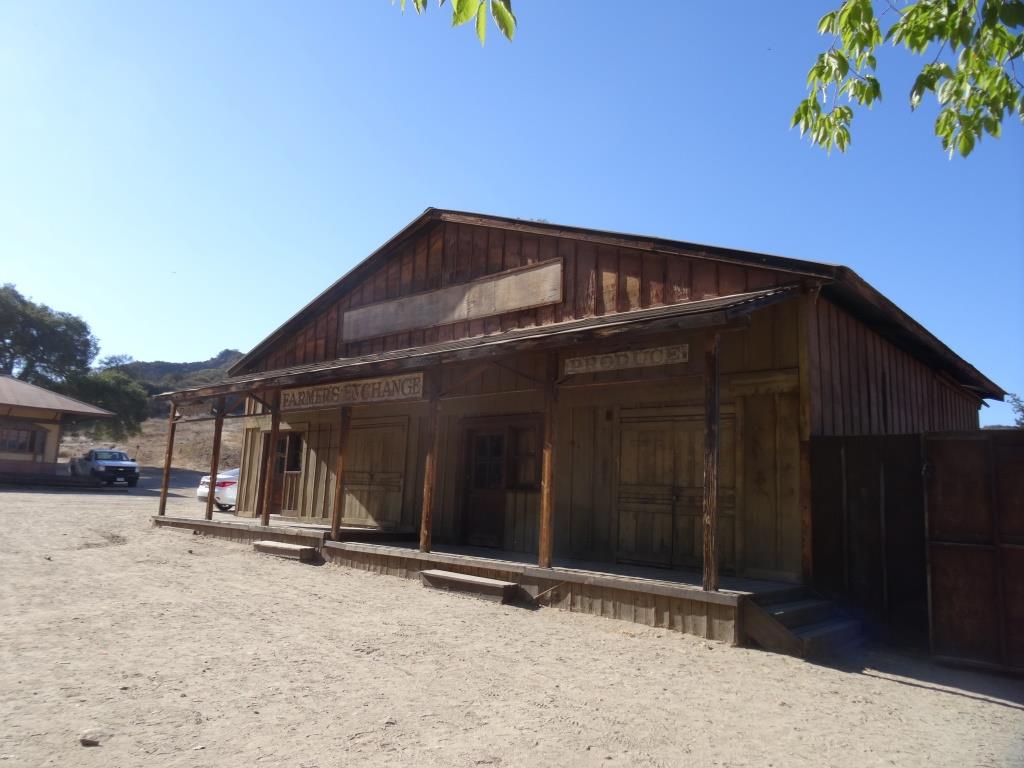
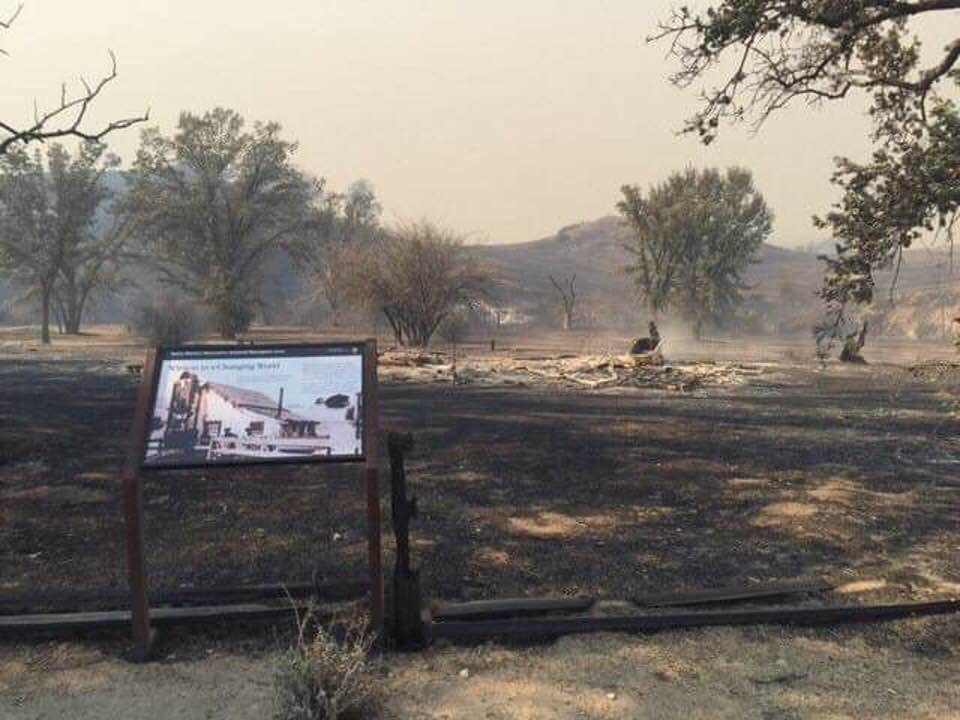
The Western Town at Paramount Ranch was destroyed. The only buildings left intact are the church building and train station. The NPS has announced “The Paramount Project” campaign to raise fund and rebuild Western Town in 24 months. Also destroyed was the residence of a park ranger. NOTE: PARAMOUNT RANCH WAS RE-OPENED TO THE PUBLIC ON 12/3/18.

Farmer’s Exchange structure in the Western Town at Paramount Ranch

Farmer’s Exchange structure in the Western Town at Paramount Ranch

The aftermath at Paramount Ranch’s Western Town.

The aftermath at Paramount Ranch’s Western Town.

The Morrison Ranch House in the Cheeseboro Canyon area of Agoura Hills, was destroyed. Rancher John Morrison and his family occupied this house in 1904 and lived and worked in the home for nearly 60 years. The original ranch house, modified over the years, dates back to the late 1800s. It is now gone.

Morrison Ranch House one year ago - November 2017.

Morrison Ranch House one year ago - November 2017.

Morrison Ranch House after the Woolsey Fire (Photo courtesy of Friends of Morrison Ranch House at twitter.com/SantaMonicaMtns/status/1062025537927827456)

Morrison Ranch House after the Woolsey Fire (Photo courtesy of Friends of Morrison Ranch House at twitter.com/SantaMonicaMtns/status/1062025537927827456)

Peter Strauss Ranch was decimated by the Woolsey Fire. The Rocky Oaks ranger residence and archives building were destroyed and Rocky Oaks park was just devastated; you can barely recognize it. The Arroyo Sequit ranger residence was destroyed.

The National Park Service’s Santa Monica Mountains National Recreation Area website at www.nps.gov/samo/index.htm will post updates.

Strauss Ranch Bench.JPG

Other structures destroyed in the Santa Monica Mountains falling into lands maintained by other organizations include the historic Sepulveda Adobe, Red House, White Oak Barn and Reagan Ranch. Malibu Creek State Park updates at www.parks.ca.gov/?page_id=614.

KTLA reported on November 11th that the Woolsey Fire also destroyed the MASH set. After the park reopened on December 18th, I checked it out and found that nearly the entire set is still there.. The iconic sign is still in place, though it is barely readable and needs some work.

Iconic sign post Woolsey Fire. Faded but still standing!

Iconic sign post Woolsey Fire. Faded but still standing!

Iconic MASH sign last March.

Iconic MASH sign last March.

NOTE: THE TAPIA DAY-USE AREA WITHIN MALIBU CREEK STATE PARK WAS RE-OPENED ON 12/3/18.

MALIBU CREEK STATE PARK DAY-USE AND BACKCOUNTRY TRAILS REOPENED 12/18/18. CAMPGROUND REMAINS CLOSED UNTIL FURTHER NOTICE.

Other California State Park properties impacted by the Woolsey and Hill Fires, include Leo Carrillo State Park (fire burned through the campground, the visitor center, sector office, employee residences, three lifeguard towers, Leo Shop structures, the Junior Lifeguard Complex and several restrooms) and El Matador Beach. www.parks.ca.gov/NewsRelease/852 REOPENED 11/27/18

Also temporarily closed, but not on fire, include Point Mugu State Park, Malibu Lagoon State Beach, Point Dume State Beach, La Piedra and El Pescador Beaches and Topanga State Park. THESE WERE REOPENED 11/27/18.

The Mountains Recreation and Conservation Authority announced a number of parks it manages are closed as a result of the Woolsey Fire, including Escondido Canyon Park, Las Virgenes View Trail, Triunfo Creek Park, Upper Las Virgenes Canyon Open Space Preserve, Charmlee Wilderness Park, Zev Yaroslavsky Las Virgenes Highlands Park and others. (Updates at mrca.ca.gov/press/mountains-recreation-and-conservation-authority-issues-list-of-park-closures.) Amazingly, while much of Charmlee was burned, the structures survived. UPDATE 1/11/19: MRCA ANNOUNCED ALL OF THE ABOVE TRAILS, WITH THE EXCEPTION OF ESCONDIDO AND CHARMLEE, HAVE REOPENED.

On to Camarillo…Camarillo Grove Park sustained fire damage from the Hill Fire and is closed until further notice. Updates at www.pvrpd.org/parks/dog/grove.asp or 805.482.1996.

MASH set at Malibu Creek Park in pre-Woolsey Fire days.

MASH set at Malibu Creek Park in pre-Woolsey Fire days.

Reagan Ranch house in pre-Woolsey Fire days.

Reagan Ranch house in pre-Woolsey Fire days.

Charmlee Wilderness Park entrance post-Woolsey Fire (Photo Credit: MRCA)

Charmlee Wilderness Park entrance post-Woolsey Fire (Photo Credit: MRCA)

Charmlee entrance is greener, yet still dry, times.

Charmlee entrance is greener, yet still dry, times.

The replica Chumash Village at the Chumash Indian Museum / Oakbrook Regional Park was destroyed by the Woolsey Fire, which is so unfortunately as the place was just magical. However, most of the beautiful oak trees canopying the grounds were saves.

Kristy’s Roadhouse Malibu and SIP Malibu at the corner of Kanan and Sierra Creek Road were destroyed by the Woolsey Fire.

Kristy’s Roadhouse Malibu and SIP Malibu at the corner of Kanan and Sierra Creek Road were destroyed by the Woolsey Fire.

Simi Valley and Oak Park: Update 12/7/18 - RSRPD indicates Challenger Park in Simi Valley and Eagle View Park in Oak Park remain closed. The public is asked to stay out of Corriganville Park, the Wood Ranch Trailhead open space and trails west of the Long Canyon Trail. Oak Canyon Community Park, including the dog park, are closed until further notice. Updates at rsrpd.org.

Calabasas: The Calabasas Bark Park at 4232 Las Virgenes Road is currently closed as a result of the Woolsey Fire.