Tell Me a Little Bit About the City of Westlake Village Boundary

Westlake Village is a master-planned community that is transected diagonally by the Los Angeles/Ventura County line. 

The Ventura County side of Westlake Village, which is 8,544 acres, was annexed into the City of Thousand Oaks in 1968 and 1972. The Los Angeles County side of Westlake Village is 3,456 acres and was incorporated as the City of Westlake Village in 1981. 

Westlake Village Map.JPG

Ah yes, the challenge of distinguishing between the Los Angeles and Ventura County sections of Westlake Village. It truly is a diagonal boundary that stretches from just northeast of Lindero Canyon Road, south of Blackbird Avenue on the north to South Westlake Blvd at Kirsten Lee Drive on the south.

It is impossible to drive, bike or walk the boundary line because it crosses right through the middle of Westlake Lake. Although, you could drive along the border on La Venta Drive southwest from Watergate Road.

Further north, the border cuts diagonally across Westlake Golf Course.  In fact, the driving range section of the golf course bordered on the west by Lakeview Canyon Road and on the north by the 101 is located within the City of Thousand Oaks while the rest of the course is in Westlake Village.

Costco Westlake Village and the Four Seasons Westlake Village are solely part of the City of Westlake Village, as is the Las Virgenes Reservoir.

Does it really matter what side you're on? For most, no. But there's one clear financial difference. Sales taxes. As of July 2024, sales taxes in the Thousand Oaks/Ventura County portion of Westlake Village are 7.25% as compared to 9.5% in the Los Angeles County based City of Westlake Village. The difference is 2.25% for Los Angeles County district taxes. That means if you live in the City of Westlake Village, you’ll be paying $1,125 more for a $50,000 car than those living in the Ventura County portion of Westlake Village.

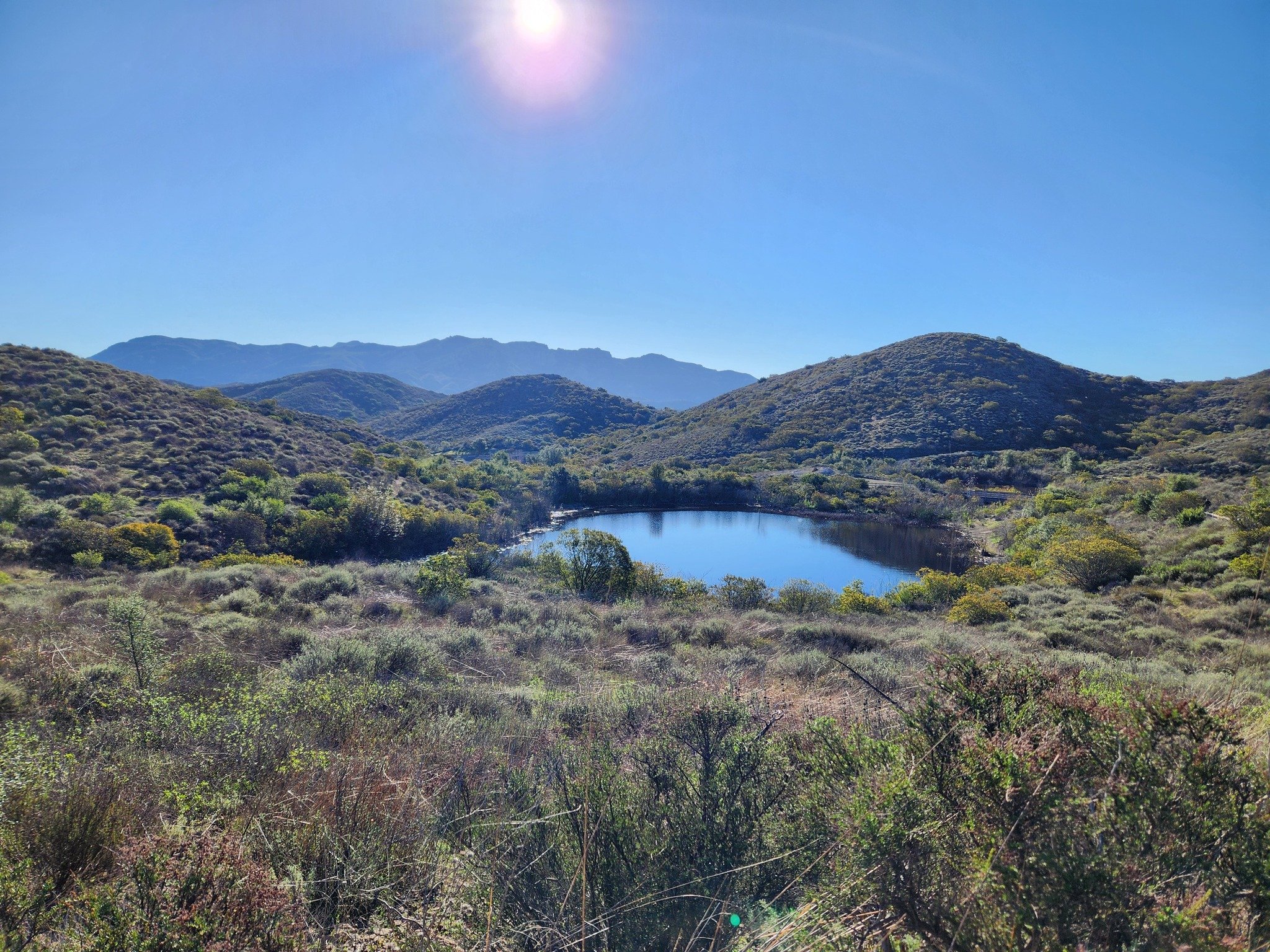
Las Virgenes Reservoir, the only body of water lying completely in the City of Westlake Village.

Las Virgenes Reservoir, the only body of water lying completely in the City of Westlake Village.

What the One Big Beautiful Bill Act Means for Your Individual Taxes in 2025 and Beyond

When Congress passed the One Big Beautiful Bill Act signed into law on July 4, 2025, it triggered the most sweeping overhaul of the U.S. tax system since 2017. While headlines focused on Trump Accounts and repealed EV credits, the bill quietly reshaped the rules for everyday taxpayers—introducing new deductions, revising old ones, and locking in key provisions that affect how millions of Americans will file in the years ahead. Here is a high-level summary that breaks down the major individual income tax changes that could shape your bottom line from 2025 through 2028—and beyond.

TAX RATES

The new law retains the current individual income tax rate structure that ranges from 10% to 37%. The income ranges these apply to are permanently adjusted for inflation each year.

STATE AND LOCAL TAX DEDUCTION

The “SALT” itemized deduction cap was raised from $10,000 to $40,000 in 2025, then increases 1% annually through 2029, before dropping back to $10,000 in 2030. However, if your modified adjusted gross income (MAGI) is over $500K, the deduction is reduced by 30% of the excess over $500K, but can’t fall below $10,000.

SENIOR BONUS DEDUCTION

The bill provides an additional standard deduction of up to $6,000 per person for seniors ages 65+ in tax years 2025-2028. The deduction is reduced by 6% of MAGI that exceeds $75K (single) and $150K (joint), which means that the senior bonus deduction phases out completely when MAGI reaches $175K single and $250K married filing jointly. You don't have to be receiving Social Security benefits to receive the deduction.

So for example, if your MAGI is $100K and you are single, you will receive an additional tax deduction in 2025 of $4,500 ($6,000 less 6% of the excess of $100K over $75K).

STANDARD DEDUCTION

The standard deduction in 2025 is $15,750 for single/married filing separately, $23,625 for head of household, and $31,500 for married filing jointly, up from $14,600, $21,900, and $29,200, respectively, in 2024. There is a regular extra standard deduction for 65+ seniors of $2,000 single and $3,200 married filing jointly (both 65+; $1,600 if one spouse is 65+), up slightly from $1,950, $3,100, and $1,550 in 2024. The standard deduction will be indexed for inflation annually.

Here’s another example. If you are married, both 65+ with income of $150K or less in 2025, you will be receiving a standard deduction of $46,700 ($31,500 base deduction + $3,200 extra 65+ deduction + $12,000 bonus 65+ deduction). Of course, if your itemized deductions are greater than your standard deduction of $46,700, we should still take the higher of the two on your 2025 return.

TIP INCOME DEDUCTION

Workers in traditionally tipped industries, such as food service, salons, and spas, can deduct up to $25,000 in tips per year from 2025 to 2028. The deduction phases out for AGIs exceeding $150K single, $300K joint filers.

OVERTIME PAY DEDUCTION

From 2025 to 2028, there is an overtime pay deduction of up to $12,500 in overtime pay per person ($25,000 for joint filers). The deduction phases out $100 for every $1,000 over MAGI of $150K single, $300K joint filers. Only the overtime premium (e.g. the extra pay above your regular hourly rate) is deductible.

PERSONAL CAR LOAN INTEREST

Taxpayers can deduct up to $10,000 in car loan interest for new cars purchased between 1/1/25 and 12/31/28 that were assembled in the U.S. This is an “above the line” deduction, meaning, you can take the deduction whether or not you itemize deductions. The deduction is reduced by $100 for every $1,000 over MAGI of $100K single and $200K joint returns.

EV TAX CREDITS

The tax credits for both new (up to $7,500) and used (up to $4,000) EVs expire this October, which means only three months remain to purchase an EV and potentially receive those credits (subject to current MAGI limits). These credits were previously set to expire after 2032.

RESIDENTIAL CLEAN ENERGY (e.g. SOLAR) CREDITS

Solar tax credits go away in 2026, which means taxpayers have limited time remaining this year to purchase, install, and place in service a home solar system by 12/31/25 to receive a 30% tax credit on the system. This also applies to batteries – if you have an existing solar system, you can install batteries by year-end and receive a tax credit on that purchase. If you have unused solar tax credits, they carry forward to future tax years.

ENERGY EFFICIENT HOME IMPROVEMENT CREDITS

These credits also go away in 2026. This applies to certain energy-efficient windows, doors, insulation, heat pumps, central A/C, etc. These credits can be as much as $1,200 to $3,200 per year. They do not carry forward to future years.

CHILD TAX CREDIT

The child tax credit increases from $2,000 to $2,200 for children under the age of 17 at the end of 2025. It phases out when MAGI reaches $200K single and $400K joint.

CHARITABLE DEDUCTIONS

The new law adds a permanent provision for non-itemizers to deduct up to $1,000 (single) and $2,000 (joint returns) in cash donations to 501(c)3 charities, beginning in 2026. In other words, you can deduct cash donations starting next year, even if you don’t itemize deductions.

The new law introduces a floor of .5% (half of a percent) of AGI for those itemizing charitable donations, beginning in 2026. What this means is that you can deduct charitable donations to the extent they exceed .5% of your AGI. So if your AGI is $200K and your charitable donations are $5,000, you can deduct $4,000 ($5,000 less .5% of $200K).

MISCELLANEOUS ITEMIZED DEDUCTIONS

The bill permanently eliminates various deductions that were previously subject to 2% of AGI prior to 2018, such as unreimbursed employee expenses, tax preparation fees, investment advisory fees, safe deposit box rental, etc.

OTHER ITEMS

Moving expenses associated with work are now permanently not deductible (unless you are active-duty military moving under orders).

After 2025, gambling losses will only be deductible up to 90% of your gambling losses. It is still 100% in 2025. And remember, you must itemize deductions to claim gambling losses. I know a couple of you that this will impact.

“Trump Accounts” are a new type of tax-deferred investment account for every child born between January 1, 2025 and December 31, 2028. The government funds the first $1,000. It is invested in a diversified U.S. stock index fund. Up to $5,000 of additional funds can be invested per year, plus an extra $2,500 from employers.  The funds can be withdrawn starting at age 18 for education and other specified uses. For those with newborns this year, the IRS should be coming out with information about these accounts by the end of the year.

There’s a provision in the new law that allows for a tax credit of up to $1,700 per taxpayer for contributions made to “Scholarship Granting Organizations” that support K-12 private or religious school scholarships. The tax credit must be taken in the year of donation. It cannot be carried forward. And you can’t take both the credit and an itemized deduction for the payment.

The new law made the $750,000 cap on mortgage loan interest deduction permanent. The cap is not tied to inflation.

The estate tax exemption increases from $13.99 million in 2025 to $15 million per individual in 2026 and will be indexed for inflation going forward. If the law hadn’t passed, the exemption would have dropped to about $7 million in 2026.

View the 870 page bill at www.congress.gov/119/bills/hr1/BILLS-119hr1eas.pdf.

The Twin Ponds Conservation Area in the Conejo Open Space is Protected Land

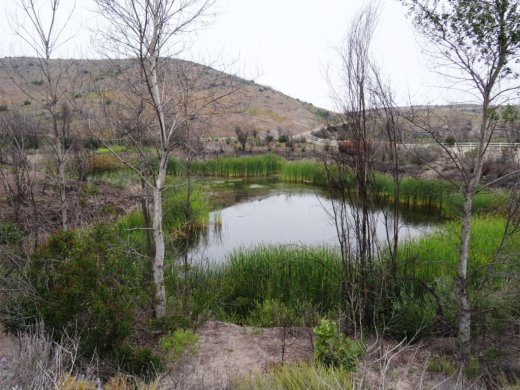
The Twin Ponds Conservation Area in Dos Vientos is part of the open space lands of the Conejo Open Space Conservation Agency and is protected by a conservation easement to the California Department of Fish and Game.

July 2014

July 2014

January 2015

January 2015

May 2016

May 2016

The ponds were originally constructed in the 1920s as part of the irrigation system for agricultural and cattle ranching operations at Dos Vientos Ranch. Today they serve as important habitat for Two Striped Garter Snakes and larger animals such as deer, bobcat, coyote and mountain lions that depend on a reliable source of water. Migrating waterfowl are occasionally abundant, especially in winter.

TwinPondsDV1.JPG

COSCA and Fish & Game ask that we enjoy this scenic area but protect the ponds for the future and ask that we do not enter the water or allow dogs/horses to enter the water, disturb or remove any animal or plant or place any plants or animals, including fish, into the ponds.

To explore the ponds, take the Vista Del Mar Trail from one of several access points in the Dos Vientos area, including the corner of Via Ricardo and Via Rincon and the corner of Rancho Dos Vientos and Via El Cerro. This is a fun little hike to take the kids on and the ponds are only about a mile from the Via Ricardo/Via Rincon trailhead.

Twin Ponds? What ponds? The ponds are completely dried up as of August/September 2016.

Twin Ponds? What ponds? The ponds are completely dried up as of August/September 2016.

January 2024

Late March 2024 - looking great!

The Story of Jungleland in Thousand Oaks

The Thousand Oaks Civic Arts Plaza is located on historic land in many respects. The land was originally part of "Rancho El Conejo," a Spanish land grant. Egbert Starr Newbury purchased 2,259 acres of this land in 1874 and built a home here (more on Newbury and his local legacy at THIS LINK).

After a drought in 1876-1877 bankrupted the Newbury family, the land was foreclosed and sold to the Crowley family in 1887, who built a successful ranch on the land. In 1910, Frank Crowley's parents built him a five bedroom, two story home on the land that is located at 2522 Pleasant Way. The Crowley family lived on the ranch until 1922.

The "Crowley House" went through several ownership changes through the years but is now maintained by the Conejo Recreation and Park District and is considered a Ventura County Historical Landmark.

One of the subsequent owners of the Crowley House was Louis and Kathleen Goebel. In 1925, Goebel purchased former Newbury/Crowley land where the Thousand Oaks Civic Arts Plaza currently stands.  It cost him $50. Louis Goebel soon opened Goebel's Lion Farm, where he trained lions and rented them to movie studios.

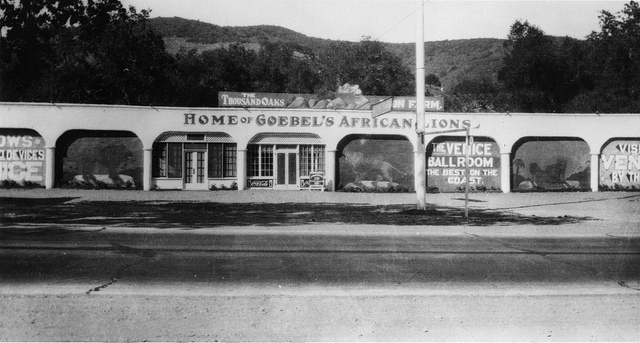
"Home of Goebel's African Lions" circa 1929 (Courtesy of Conejo Through the Lens, Thousand Oaks Library)

"Home of Goebel's African Lions" circa 1929 (Courtesy of Conejo Through the Lens, Thousand Oaks Library)

As travelers passed through town, they wanted to see the animals. Goebel capitalized on this in 1929, when the site became "Goebel's Wild Animal Farm," a theme park that became very popular in the 1940s and 1950s. The 170 acre site housed all sorts of animals...elephants, tigers, giraffes, hippos, chimpanzees and more. Additionally, many TV shows and movies were filmed there, such as Tarzan, The Adventures of Robin Hood and Birth of a Nation.

Goebel's Wild Animal Farm was home to Leo the Lion, of MGM Pictures fame. Over the years, other animal celebrity residents included Mr. Ed, the talking horse, Bimbo, the elephant from Circus Boy and Tamba, the chimpanzee in Tarzan films and "Bedtime with Bonzo" starring Ronald Reagan and Diana Lynn.

Goebel sold Jungleland in 1946 and the park was renamed the "World Jungle Compound." Ten years later it was sold again to executives from 20th Century Fox and was renamed "Jungleland." After five years, the business slid and Goebel was able to purchase it back in 1961. 

In between Goebel's Lion Farm and Jungleland, from 1946 to 1955 the tourist destination was called the "World Jungle Compound" (Courtesy of CONEJO THROUGH THE LENS, THOUSAND OAKS LIBRARY.)

In between Goebel's Lion Farm and Jungleland, from 1946 to 1955 the tourist destination was called the "World Jungle Compound" (Courtesy of CONEJO THROUGH THE LENS, THOUSAND OAKS LIBRARY.)

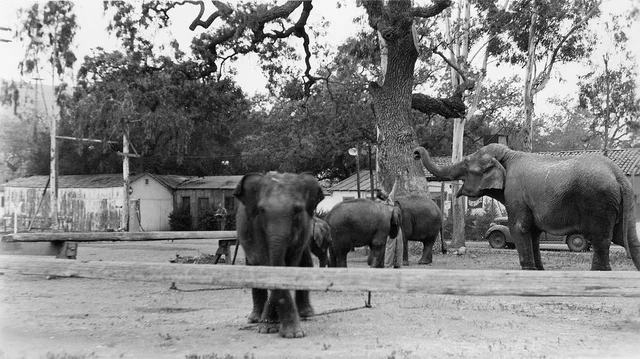
Five elephants at Goebel's Lion Farm (from the Ethel Nixon Collection (via Conejo Through the Lens, Thousand Oaks Library.)

Five elephants at Goebel's Lion Farm (from the Ethel Nixon Collection (via Conejo Through the Lens, Thousand Oaks Library.)

At its peak popularity, the 170 acre Jungleland compound had all sorts of activities - shows by tiger trainer Mabel Stark, and others, elephant rides, tortoise rides, ducky boat rides, train rides, safari tram buses and even a sky tram. Animals included elephants, lions, tigers, hippos, camels, llamas, giraffes, orangutans, chimpanzees and a variety of others.

Jungleland closed in October 1969 after its popularity continued to drop - a combination of increased competition (Disneyland, Knotts Berry Farm, Universal Studios, etc.) and the fact that Highway 101 diverted drivers around the theme park. The park operated for 43 years and its 1,800 animal occupants were sold at auction. 

So...when you stroll through the grounds of the Civic Arts Plaza and The Lakes at Thousand Oaks, close your eyes and see if you can envision all the animal excitement that took place here just a few generations ago in the heart of Thousand Oaks.

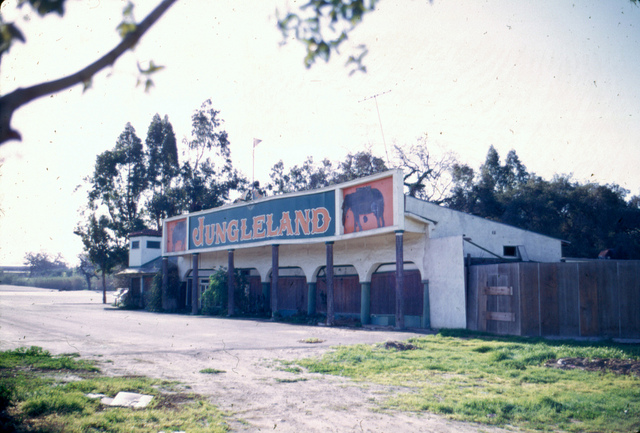
Jungleland sign after the theme park closed in 1969. (Image courtesy of Conejo Through the Lens, Thousand Oaks Library.)

Jungleland sign after the theme park closed in 1969. (Image courtesy of Conejo Through the Lens, Thousand Oaks Library.)

Louis Goebel and Jungleland plaque outside the Civic Arts Plaza.

Louis Goebel and Jungleland plaque outside the Civic Arts Plaza.

More on Jungleland on the Stagecoach Inn Museum website at stagecoachinnmuseum.com/jungleland.

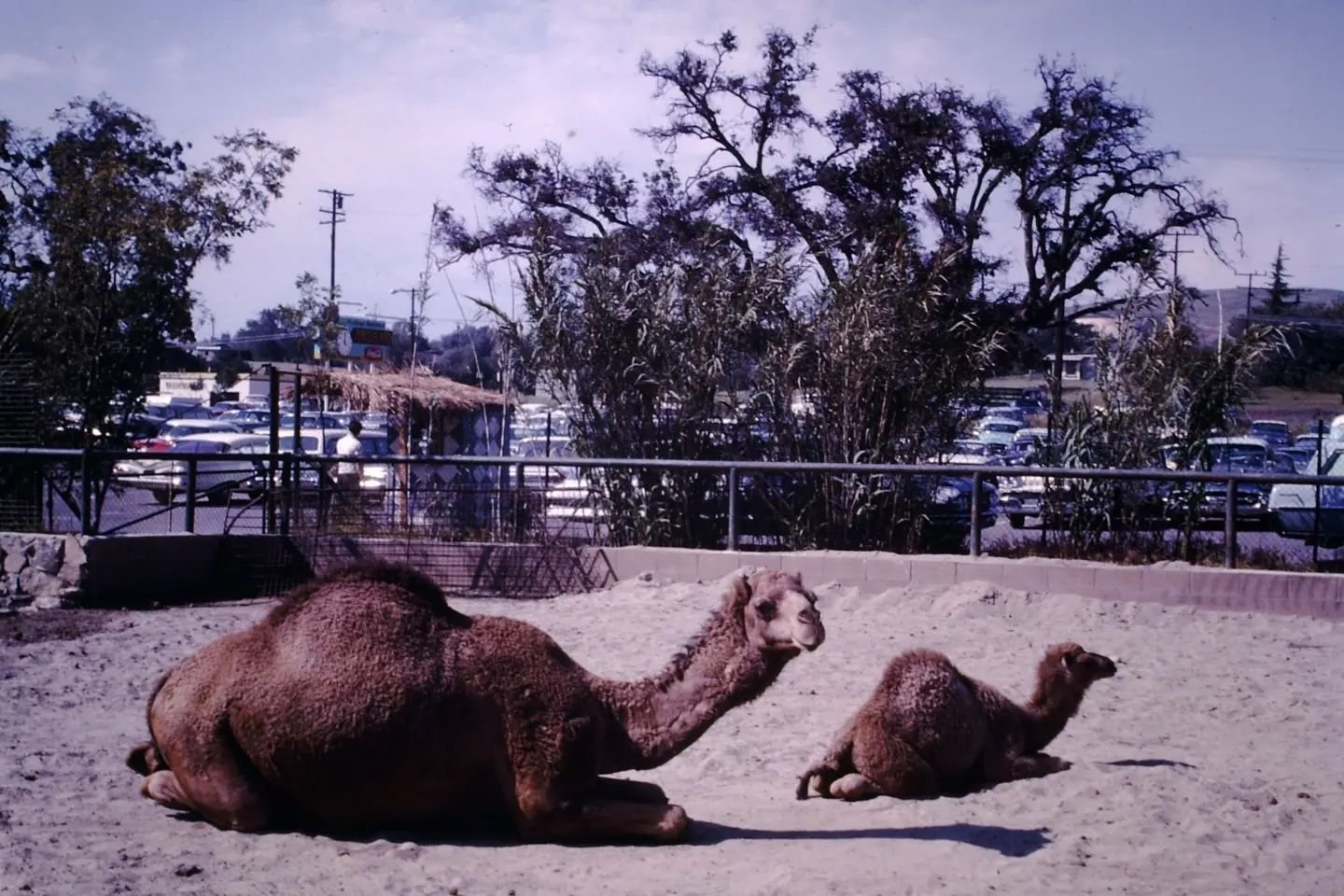
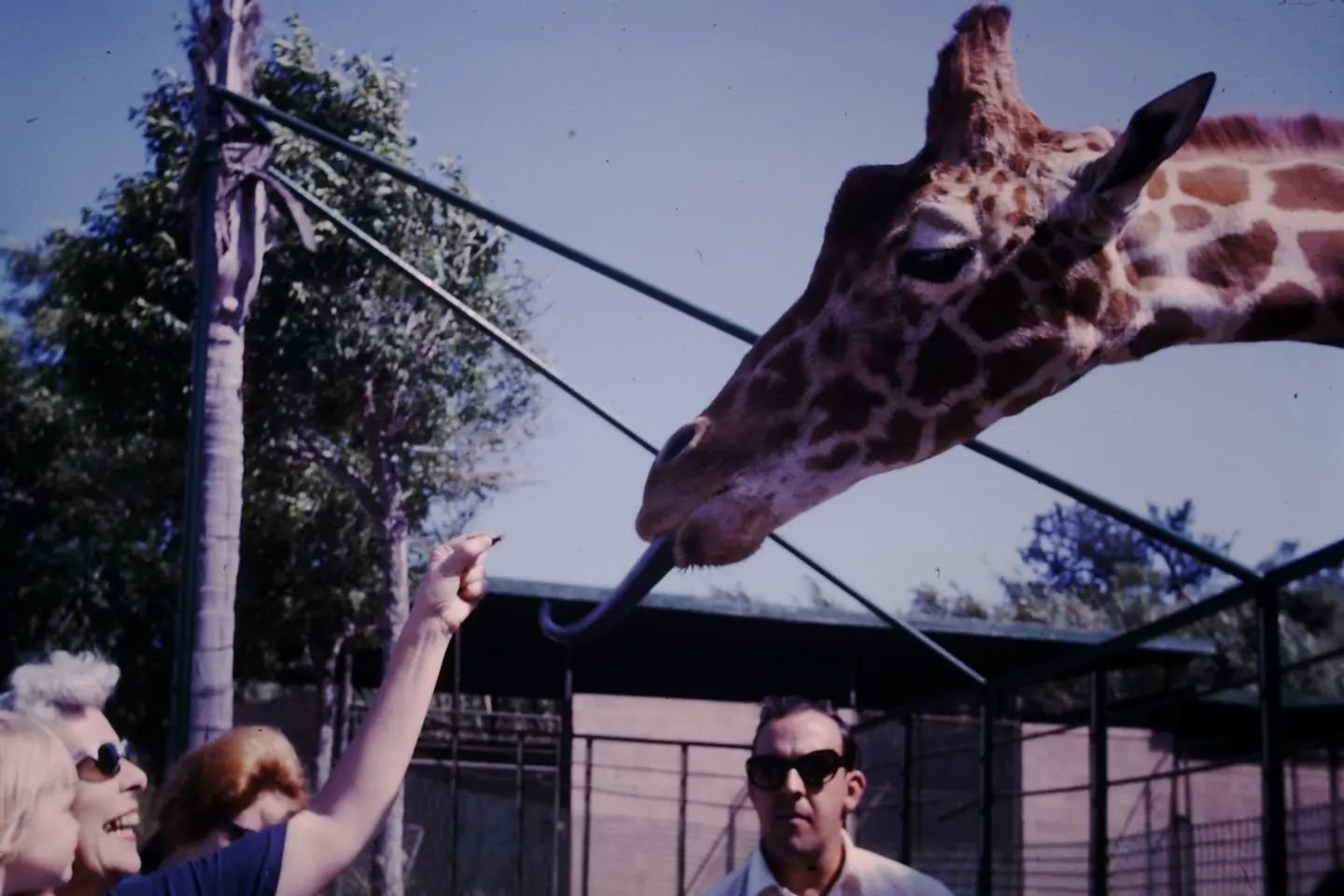
Some photos from around 1965 (from a private collection):

Mugu Rock at Point Mugu

Point Mugu is an unincorporated part of Ventura County that is derived from the Chumash word Muwu, or beach. Other than the Naval Base, probably the most well known fixture in Point Mugu is the Mugu Rock. Mugu Rock is a large rock formation that was formed when Pacific Coast Highway was built and cut through the mountain that now resides on the other side of PCH. Before PCH was built, a road went around the rock, where a chain link fence has been placed to keep people away from this hazardous area adjacent to the Pacific Ocean.  PCH was cut through Point Mugu from October 1937 to February 1940, according to this interesting KCET article.

MuguRock_pch.JPG

Mugu Rock is located just a few miles near the northwest tip of PCH before it veers north towards Oxnard. It is about a 10 mile drive from the Camarillo Premium Outlets and about 20 miles from the heart of Thousand Oaks taking either the 101/Lewis Road route or the slightly slower, curvy and interesting Potrero Road route.

Professional landscape and wildlife photographer Greg Clure of Newbury Park has shared a couple neat images facing Mugu Rock from the south. Visit Greg's website at www.gregclurephotography.com for more of his outstanding work.

ClureMuguRock2.jpg
ClureMuguRock1.jpg

And here is some not so professional video footage of Mugu Rock from the north.

Daylight Saving Time is Back Again on the 2nd Sunday of March

Daylight Saving** Time is coming back again! Yes, this will take place on Sunday, March 9, 2025. When the clock strikes 2 a.m. that morning, you will lose one hour of beauty sleep. Daylight Saving Time begins in most of the U.S. on the 2nd Sunday of March.

So try to get to bed early that night or you may feel grumpy on Monday! Especially when you realize it feels a lot darker that morning. But the good thing is, it'll be a lot lighter out at dinnertime!

** Contrary to what many of us think, it is called Daylight Saving Time, not Savings Time. Make sure to correct anyone who says it wrong if you really want to get on their nerves. But the reality of it is that we're not saving any daylight, we're just shifting it around.

Before the adoption of standard time zones in the United States, cities, towns, and communities set their own local times based on the sun’s position. In 1883, railroad companies adopted a system of standard time to synchronize movement and trade across the nation. The U.S. adopted an official system of standard time in 1918.

The Standard Time Act of 1918 incorporated a DST mandate from the last Sunday in March to the last Sunday in October. Congress repealed the DST mandate in 1919. President Woodrow Wilson vetoed the repeal. Congress overrode his veto.

Beginning in 1920, DST was a local state/city option. Here’s the history of DST legislation in California:

1930: Prop 7 was but on the ballot to implement DST at 2 a.m. on the last Sunday in April until 2 a.m. on the last Sunday in September. The initiative failed.

1940: Prop 5 was put on the ballot to implement DST. The initiative failed again.

1949: Third time’s a charm. This time it passed.

1962: Prop 6 was passed, which extended DST from the last Sunday in September to the last Sunday in October.

2018: Californians voted in favor of Proposition 7 by a margin of 59.75% to 40.25%. Voting in favor of the proposition allowed the California State Legislature to change the DST period by a 2/3rds vote and to establish permanent, year-round DST in California by a 2/3rds vote if federal law is changed to allow for permanent DST.

Why the holdup?

The holdup is at the federal level, not the state level: Voting yes on Prop 7 was just the first step in the process. California is one of 14 states that introduced legislation in 2019 to shift to permanent daylight saving time. States cannot move forward with permanent daylight saving time without authorization from the federal government. As of November 2019, there were 4 bills awaiting action in Congress that would allow California to be on permanent DST. These were:

H.R. 1556 “Sunshine Protection Act of 2019,” introduced to the House 3/6/19. The bill makes DST the new, permanent standard time. States with areas exempt from DST may choose the standard time for those areas. The bill was pending a hearing in the House Energy and Commerce Committee. S.670 is an identical bill in the Senate, pending a hearing in the Senate Commerce, Science and Transportation Committee. These have gone nowhere.

H.R. 1601 “Daylight Act” and H.R. 2389 “To allow states to elect to observe year-round DST” both authorize states to shift to permanent daylight saving time and are pending hearings in the House Energy and Commerce Committee. These have also gone nowhere.

Would You Like Slides with That? Fast Food Places in Ventura County with Play Areas!

McD_PlayArea.jpg

Sometimes it's fun to take the kids out where you know they'll be able to burn off some steam after their chicken nuggets and fries. Mind you, my kids much prefer going to a park to play, but sometimes it’s nice to eat and play at these (mostly) indoor play areas.

Here are places to eat that have play areas.  Know of other places?  Well then, give me the scoop (the news, not the fries).

McDonalds Locations with Play Areas

Carl's Jr Locations with Play Areas

Chick-fil-A Locations with Play Areas

Other Places with Play Areas