Aviation Museum of Santa Paula

aviationmuseumsantapaula.gif

The Aviation Museum of Santa Paula is open the first Sunday of each month, with a "Chain of Hangars" from 10 a.m. to 2 p.m.  Closed if there is rain. FREE (but donations are appreciated).

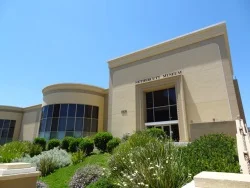
Hangar Number One is the first in the museum's chain of hangars. It tells the story of the founding of Santa Paula Airport in 1930. Each of the privately owned hangars houses a variety of vintage aircraft and privately owned collections of memorabilia, from antique radios to race cars. Several other aircraft owners put their antique aircraft on display and many vintage aircraft also fly in each month.

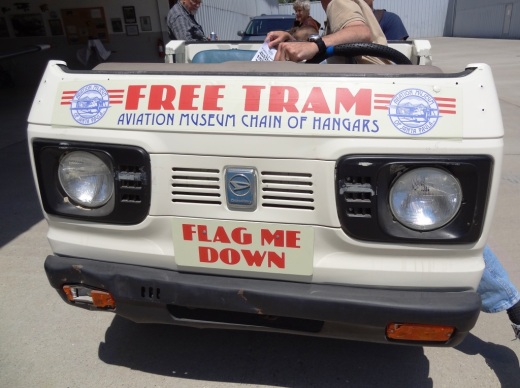
A museum tram is available to save you some steps between hangars. The Experimental Aircraft Association Chapter 723 offers free airplane rides to kids ages 8-17. The Museum's Gift Hangar, located inside CP Aviation, offers a variety of toys and apparel for airplane buffs of all ages.

More information at www.aviationmuseumofsantapaula.org or call 805.525.1109. The Aviation Museum is located near the corner of Santa Maria Street and 8th Street in Santa Paula. More info at this link.

SPAviationMuseum.JPG
AviationMuseumTram.JPG

The Nethercutt Museum in Sylmar

Nethercutt1.JPG

The Nethercutt Museum in Sylmar houses a spectacular collection of over 120 antique, vintage, black iron and classic automobiles. This is a place that a surprisingly few number people know about but is a must see. It is a truly gorgeous collection of cars, including numerous winners of the Pebble Beach Concours d’Elegance and other famed auto shows.

Nethercutt2.jpg

Particularly eye opening to an auto novice like me is the sheer number of different car manufacturers on display that I'd never heard of, like Tucker, Simplex, Cord, REO, Maybah, Ruxton, Westinghouse, Pierce-Arrow, Moon etc as well as autos made by Daimler, Rolls Royce, Cadillac, Packard, Lincoln, Ford, Duesenberg, Oldsmobile, Bugatti and others. There is also huge number of hood ornaments, headlamps and other vintage paraphernalia on display.

Nethercutt3.JPG
Nethercutt4.jpg

Admission to The Nethercutt Museum is free of charge and hours are 9 a.m. to 4:30 p.m. Thursday through Saturday. Visit www.nethercuttcollection.org for more information. Open to all ages.

Nethercutt5.JPG

Located at 15151 Bledsoe Steet, Sylmar. When I went I took the 101 east to the 405 south towards Santa Clarita, which becomes the 5 freeway. Get off at Roxford exit east (exit 159A; don't get confused and take the NEXT Roxford exit). Turn right on Roxford, right on San Fernando Road and left on Bledsoe. Museum is a few blocks up on the left hand side. Turn left on Bradley (at Bledsoe) and an immediate left into the parking lot.

Nethercutt6.JPG

Outside the Museum you can walk through a 1912 Pullman Rail Car and a 1937 Canadian Pacific Royal Hudson Locomotive. Open twice a day (weather permitting) at 12:30 p.m. and 3:45 p.m. for 15 minutes.

In addition to the main Museum, next door at 15200 Bledsoe is The Nethercutt Collection, which has over 50 automobiles along with what they call the world's finest assemblage of mechanical musical instruments. Admission here is also free but you must make reservations for the 2 hour docent-led tour, kids must be 12 and older, and no video recording or flash photography is allowed. Tours are currently offered at 10 a.m. and 1:30 p.m. Thursday through Saturday.

Nethercutt7.JPG
Nethercutt8.JPG
Nethercutt9.JPG

Santa Susana Depot Museum and Model Railroad in Simi Valley

SantaSusana_pic1.JPG

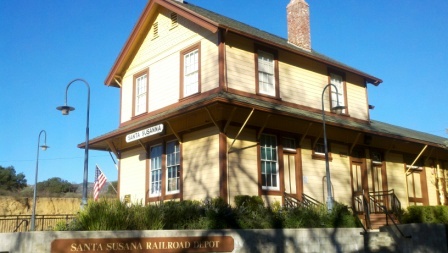
Visit a fully restored Southern Pacific Railroad depot that was built in 1903 with both freight and passenger trains rushing by at the Santa Susana Depot Museum and Model Railroad. The depot served passengers and farmers in Simi Valley for over 60 years, with a classic passenger waiting room featuring a pot-belly stove, the depot was also headquarters for local freight shipments.

The depot is a museum filled with hundreds of items having both railroad and local historical significance. The depot is owned and managed by the Rancho Simi Recreation and Park District, which took it over from the Southern Pacific Railroad in 1973. The depot was moved to its current location and after 10 years of neglect was restored to its current state by 1996. The depot was restored to what it looked like in 1938.

Also at the depot is the Santa Susana Model Railroad Club’s large operating HO scale model railroad. Located inside the depot's freight room, the layout of the railroad portrays Simi Valley during the mid 1950s. Trains run each weekend, with Sundays being the best day to see several trains operating simultaneously.

The depot is located on the grounds of Simi Valley’s beautiful Oak Knolls Park. For you rail fans, the depot is adjacent to the Union Pacific Railroad’s busy “Coast Line,” which is also utilized by both Amtrak and Metrolink passenger trains. You will standing in close proximity to passing trains, so get ready to wave!
The depot is located at 6503 Katherine Road in Simi Valley. For more information and a map to the depot/parking, visit www.santasusanapacific.org or call 805.581.3462.  The depot is open on Saturdays and Sundays from 1 pm to 4 pm.

SantaSusanaDepot.jpg
SantaSusana_pic2.JPG
SantaSusana_pic.jpg
SantaSusana_pic4.jpg

Bank of America Performing Arts Center Thousand Oaks

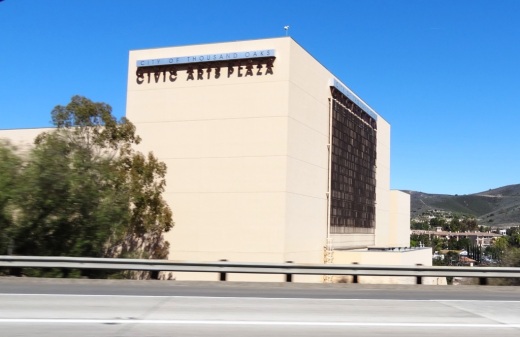
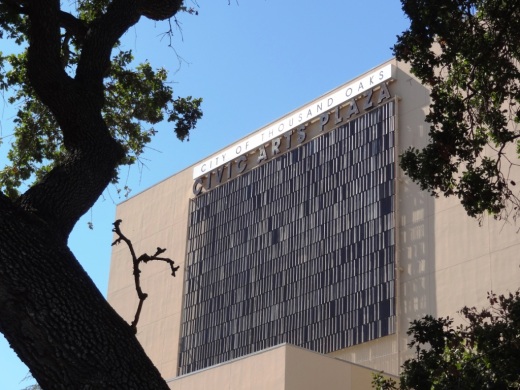
The Bank of America Performing Arts Center (BAPAC) Thousand Oaks (formerly the Thousand Oaks Civic Arts Plaza) is one of the largest performing arts centers between Los Angeles and San Francisco at over 200,000 square feet.

CivicArtsPlaza.JPG

The City of Thousand Oaks Cultural Affairs Department oversees theatre productions for the BAPAC, which encompasses two theatres – the 1,800-seat Fred Kavli Theatre and the 394-seat Janet and Ray Scherr Forum Theatre.

The performing arts center combines outstanding arts and entertainment with state-of-the-art technology and acoustics. Over 300,000 patrons and 50,000 children attend more than 400 performances annually. The BAPAC Thousand Oaks is funded through a unique public/private partnership between the City of Thousand Oaks and the Alliance for the Arts. It opened in 1994.

Thousand Oaks Civic Arts Plaza

Thousand Oaks Civic Arts Plaza

There is something for everyone at this venue....musicals, cabaret, Broadway musicals, dance, concerts, big bands, the New West Symphony, ballet, plays, well known speakers and events for the kids. In front of the plaza is the Mary and Richard Carpenter plaza park.

Next door to the Plaza is The Lakes of Thousand Oaks, a great place to grab a bite to eat, do some shopping and enjoy the lakes and playground on the property.

Between 1926 and 1968 this location housed the 170 acre Goebel's Lion Farm (later called Jungleland), where many of the famous wild animals in Hollywood pictures lived.  There were elephants, lions, tigers, hippos, you name it.  Leo, the MGM lion, Mr. Ed the Talking Horse, and Getta, Tarzan's chimpanzee all lived there at some point.  Jungleland was a major draw in its day that played a large role in making Thousand Oaks what it is today.

A photo of Jungleland after it closed in 1969 (Image courtesy of Conejo Through the Lens, Thousand Oaks Library).

A photo of Jungleland after it closed in 1969 (Image courtesy of Conejo Through the Lens, Thousand Oaks Library).

The BAPAC is located at 2100 E. Thousand Oaks Boulevard (take the 101 East, left on Rancho exit, right on T.O. Blvd, and turn right into parking structure at Dallas Drive).  Visit bapacthousandoaks.com for more information or call 805.449.2787.

It takes good luck and timing for a novice photographer like me to capture the Thousand Oaks Civic Arts Plaza while driving south on the 101 freeway.

It takes good luck and timing for a novice photographer like me to capture the Thousand Oaks Civic Arts Plaza while driving south on the 101 freeway.

TOCivicArtsPlaza_wall.JPG

Corriganville Park in Simi Valley

Corriganville3.JPG

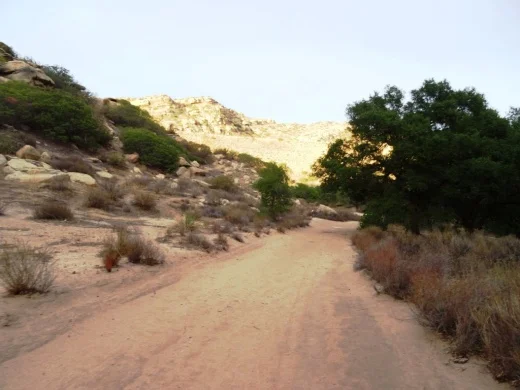
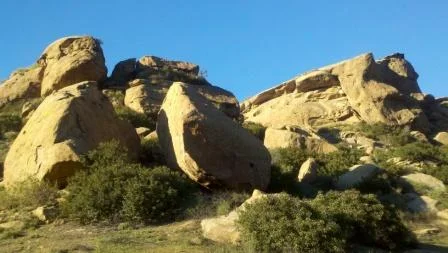
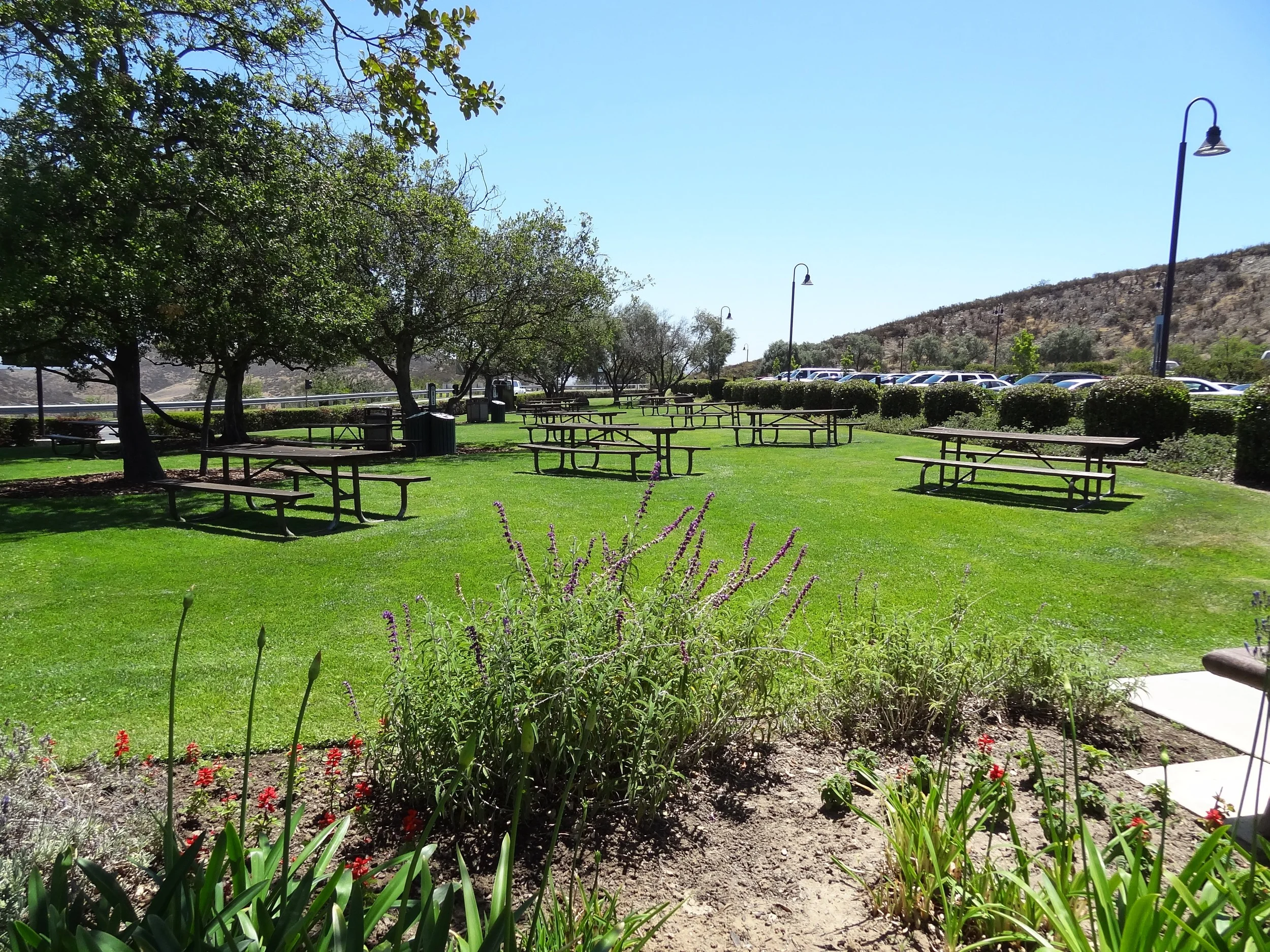
Corriganville Park is a historical 206 acre park located at 7001 Smith Road in Simi Valley that is owned and operated by the Rancho Simi Recreation and Park District. The park has over four miles of hiking, biking and equestrian trails, sandstone cliffs, an oak forest, seasonal stream, shaded picnic areas, Camp Rotary Youth Campground, picnic shelter and more.

The park is named after Ray "Crash" Corrigan, a stuntman/actor who owned the park from 1937 to 1965, when over 3,500 movies, TV shows and commercials were filmed there. In 1949, the Corrigan Movie Ranch opened as a Western-style amusement park with a train ride and stagecoach ride that in the late 1950s had greater weekend attendance than Disneyland and Knott's Berry Farm.

Corriganville4.JPG

Bob Hope bought the property in 1965 and renamed it Hopetown, but filming stopped after a year. The ranch burned down in the 1970s and all that is left are the cement slabs and exterior rock walls of the barn. You've got to visit the Santa Susana Depot Museum around the corner from Corriganville and see the model of what Corriganville looked like in 1960, then visit the park to see the slabs and imagine what it was like back then.

There is an interpretative trail at Corriganville with 20 markers that provide information about the vegetation and surroundings as well as some of the history. Visit www.rsrpd.org/business_detail_T9_R53.php for a link to pdf brochures with information about the history and trails of the park. Or call 805.584.4400.

Corriganville1.jpg
Corriganville2.jpg

Ronald Reagan Presidential Library and Museum

A local must see is the Ronald Reagan Presidential Library and Museum, located at 40 Presidential Drive, Simi Valley.  With sweeping hilltop views of the surrounding valleys, this 153,000 sq ft museum on 100 acres is educational and interesting for all ages.  A wealth of memorabilia and artifacts from throughout Reagan's life is on display.

ReaganStatue.JPG

In February 2011, over 26,000 sq ft of new exhibits and dozens of interactive displays spanning Reagan's life were introduced.  There are 24 galleries that pay tribute to our 40th President's life. You can act in a movie with Reagan, deliver his inaugural address with a teleprompter, set the table for a state dinner, learn about his economic policies in interactive games, read his handwritten diary, ride a horse alongside Reagan at Rancho del Cielo, and much more. There is also a full-scale Oval Office replica and a 9 1/2 foot, 6,300 lb section of the Berlin Wall on display.

Volunteer docents are very friendly, helpful and extremely knowledgeable. They are there to help guide you through your visit and answer your questions.

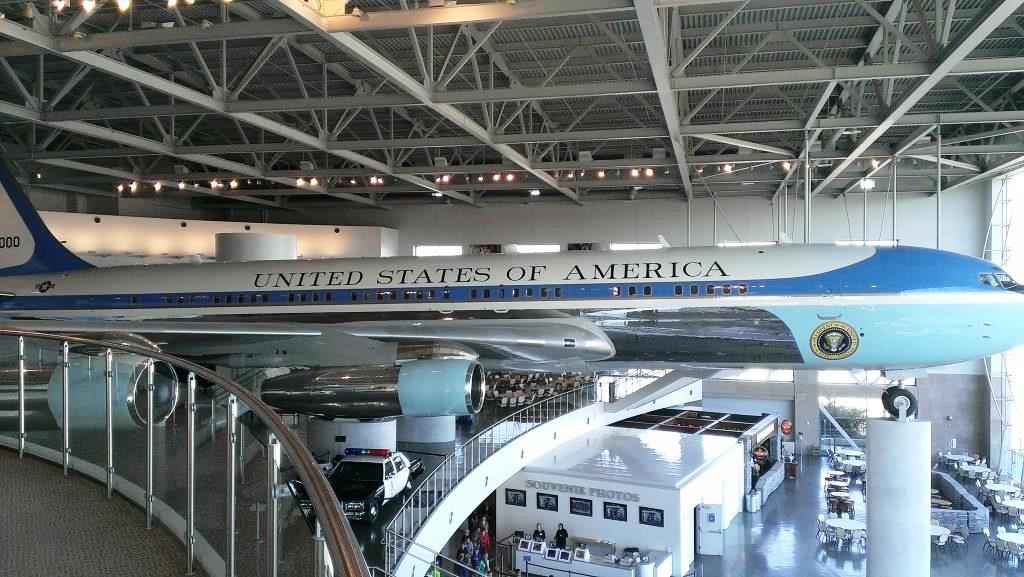
Exhibits include the Air Force One Pavilion, sections of the Berlin Wall, F-117 Nighthawk Stealth Fighter, F-14 Tomcat aircraft, Reagan Memorial Site, M-1 Abrams Tank, Marine One helicopter, Oval Office and more.

In addition to the permanent exhibits discussed above, there are usually temporary exhibits on display. Check out the museum's website for details.

Dine at the Reagan Library! The Gipper’s Bar + Bistro offers panoramic views and is open and is open from 10:30am to 3pm seven days a week. You can access this eatery without entering the Library. The Ronald Reagan Pub is located inside the Air Force One Pavilion and offers drinks and prepackaged sandwiches and other items.

The museum is open daily from 10 a.m. to 5 p.m. except Thanksgiving, Christmas and New Year's Day. Parking is free of charge. Admission costs vary based on the special exhibit on hand.

More information at www.reaganfoundation.org.

Rancho Camulos Museum in Fillmore

Rancho Camulos is a National Historic Landmark situated within an 1,800 acre working ranch, a great example of a Spanish-Mexican rancho in its original rural environment.  Rancho Camulos is noted for its literary significance as the setting for Helen Hunt Jackson's novel, Ramona.

Tours detail the lives of the native Tataviam Indians, the del Valle family that established Rancho Camulos in 1853, and the Rubel family, current owners, who purchased the ranch in 1924.  Visitors can see the main adobe, cocina, winery, chapel, schoolhouse and beautiful gardens featuring over 50 varieties of roses and the magnificent black walnut tree, covering 1/2 acre. 

Additional features of the museum are a fish pond (built by the Rubel children as a school project in the 1930s), "Ramona's bedroom" popularized through thousands of postcards and the fountain built in 1853.  Learn about the Ramona connection and view the silent movie Ramona starring Mary Pickford, filmed at Rancho Camulos in 1910.

Tours on Sunday from 1 to 4 p.m. and by appointment.  Suggested donation currently $5 for adults and $3 for children 12 and under.  School tours available.  The venue is also available for weddings and events.

Rancho Camulos is located at 5164 E. Telegraph Road, Fillmore, 2 miles east of Piru on Hwy. 126.  Visit www.ranchocamulos.org or call 805.521.1501 for more information.

Anthony C. Beilenson Interagency Visitor Center in Calabasas

BeilensonCenter1.JPG

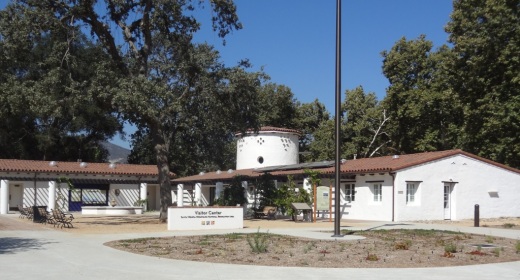
The Anthony C. Beilenson Interagency Visitor Center is located at King Gillette Ranch, 26800 Mulholland Highway, Calabasas. It opened to the public in June 2012.

BeilensonCenter2.JPG

The Visitor Center is jointly operated by the National Park Service, California State Parks, the Santa Monica Mountains Conservancy and the Mountains Recreation and Conservation Authority.

It features exhibits and interactive displays, the work of local artists, tours of sustainable features and a native plant garden. There is a tremendously comprehensive exhibit covering things to see and do within the Santa Monica Mountains.

The Visitor Center was formerly the horse stable for the Gillette Mansion. It retains some of its original design while achieving LEED Platinum certification as the first "net zero" visitor center in the National Park Service. Cool! (literally and figuratively)

Visitor Center staff and volunteers are very friendly and helpful.

There's also gift shop in the center with a variety of items including books, handmade items, kids' items and more.

Call 805-370-2301 or visit www.nps.gov/samo/planyourvisit/visitor-center.htm.

Open Wed though Sun, noon to 4pm. Closed Mon/Tues.

Nearby hiking is plentiful, including the Inspiration Point hike at King Gillette Ranch and across the street at Malibu Creek State Park.

BeilensonCenter4.JPG

Scandinavian Center at California Lutheran University in Thousand Oaks

The public is invited to share in the many activities and services of the Scandinavian American Cultural & Historical Foundation (SACHF) that take place at Cal Lutheran University, including many functions at the Scandinavian Center. The Center is open to the public for scheduled events and special functions.

The Aina Abrahamson Library at the Center includes thousands of Scandinavian-related books, publications, documents and audio/visual materials. Visitors can review books while at the Center, but only SACHF may check out the books from the library.

As a museum, the Center offers a wide assortment of artifacts, costumes, early and contemporary art, musical instruments, a Norwegian ship model and a ship plaque from Sweden, and examples depicting industry of yesterday and today.

Other offerings and events include genealogy research, classes, brown-bag lunch series, the annual Scandinavian Festival in April, the annual Nordic Spirit Symposium and Scandinavian Lecture Series.

The Center is located at 60 W. Olsen Road at CLU. The Center is located at the southeastern corner of the campus, at Faculty Road and Mountclef Boulevard.

Visit www.ScandinavianCenter.org or call (805) 241-0391 for more information.

Mission Historical Park and A.C. Postel Garden in Santa Barbara

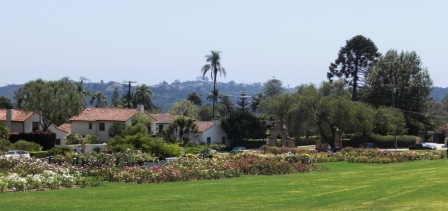
Directly across the street from the Old Santa Barbara Mission is the 8 acre Mission Historical Park (at the corner of Los Olivos and Laguna Street). The centerpiece of this park is the A.C. Postel Mission Rose Garden which has a stunning All American Rose Garden with over 1,500 rose plants. It is appealing to both your sense of sight and sense of smell.

MissionParkPic1.JPG
MissionParkPic2.JPG
MissionParkPic3.jpg
MissionParkPic4.JPG
MissionParkPic6.jpg

Albinger Archaeological Museum in Ventura

The Albinger Archaeological Museum, located at 113 E. Main Street in Ventura, is open to the public Saturdays from 11am to 5pm (as of May 2022 - but check with the Museum at 805-658-4726 for any updates. Admission to the museum is free.

Named after Ventura Mayor from 1969 to 1973, Albert R. Albinger, the museum is built on the home site of saloonkeeper and early mayor Angel Escondon and displays artifacts spanning 3,500 years of Ventura history, encompassing five different cultures (Chumash, Spanish, Mexican, Chinese and circa 1850 U.S.) from a single archaeological site next to the San Buenaventura Mission.

In 1973 the buildings which stood at the museum's location were demolished as part of the Mission Plaza Urban Redevelopment Project. Archaeological testing suggested the existence of rich cultural remains beneath the soil. The Redevelopment Agency of the City of San Buenaventura authorized intensive archaeological investigations and during the summers of 1974 and 1975 archaeological excavations uncovered more than 30,000 artifacts. Each artifact was carefully cleaned, numbered, cataloged and studied. In order to protect and preserve this part of the City’s heritage, the property was withdrawn from the redevelopment project. In 1975 it was placed on the National Register of Historic Places as the Ventura Mission Historic District. In January 1980 the City of San Buenaventura opened the Albinger Archaeological Museum. 

Displays of stone bowls, a tomol (plank canoe reproduction), shell beads, arrowheads, bone whistles, crucifixes, bottles, buttons and pottery inside the exhibit building are complemented outside by excavations of the foundations of the lost Mission church, Native American barracks, well and the oldest standing structure in Ventura, the mission water filtration building.

More information at www.cityofventura.net/albinger.

Simi Valley Cultural Arts Center

simi valley cultural arts.JPG

The Simi Valley Cultural Arts Center is a 220 seat theater at 3050 Los Angeles Avenue that hosts musicals, concerts, exhibits, children's theater and other events year-round.  The theater is a landmark Gothic structure built in the 1920s that was named as Ventura County Historical Landmark #67 in July 1981.  The building has served numerous purposes since inception and became the Cultural Arts Center in November 1995. 

For more information visit www.simi-arts.org or call 805.583.7905 (administrative office) or the box office at 805.583.7900.

Getty Center in Brentwood

Getty_front.JPG

Atop a 900 foot hill in the Santa Monica Mountains adjacent to the 405 freeway, Getty Center is a 24 acre complex that is one of the most visited museums in the United States. Getty Center opened in December 1997 and is part of the J. Paul Getty Museum, which has another location called The Getty Villa.

This is one of those "must absolutely see" places for every local resident and visitor to the Los Angeles area. It is a spectacular and pristine, inside and out.

Getty_bust.JPG

There are five main pavilions in the complex. The North Pavilion (on the immediate left after you walk through the Entrance Hall) contains pre-1700 art, including paintings on the upper level and sculptures and decorative arts, illuminated manuscripts and changing exhibitions on the main level. Adjacent to the North Pavilion is the East Pavilion, which contains paintings and sculptures and decorative arts from the 1600 to 1800 time frame.

The South Pavilion also contains art from 1600 to 1800. The West Pavilion contains art post-1800 as well as the Center for Photographs. Finally, the Exhibitions Pavilion contains rotating exhibitions.

Getty_View.jpg

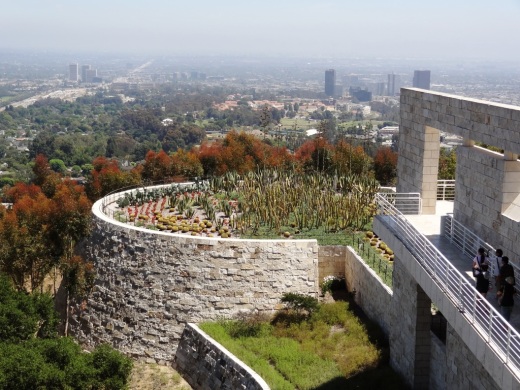
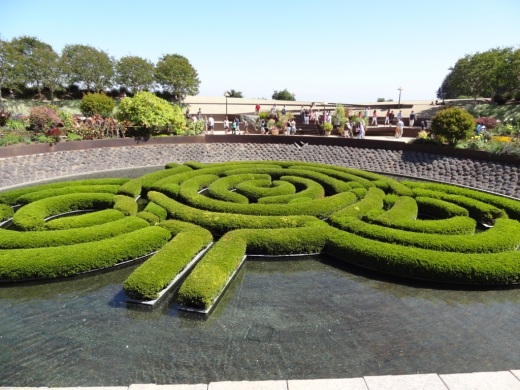
Stroll to the terraces on the south side of the complex and you'll be treated to panoramic views stretching to the San Bernadino Mountains, Century City, and the Pacific Ocean. You'll also be treated to a view of the Cactus Garden desert landscape in the South Promontory. The 134,000 sq ft Central Garden, large grassy area and stream leading into a pool with an azalea maze. You've got to see it to appreciate the beauty.

Getty_CactusGarden.JPG
Getty_Gardens.JPG
Getty_Azaleas.JPG

There are also outdoor sculptures throughout the complex, starting in the area where you wait for the tram that takes you up to the Center, in the Arrival Area in front of the Entrance Hall and in and around the restaurant and garden areas.

The Center displays some of the most recognizable pieces in the world from artists like Rembrandt, Van Gogh, Manet, Monet, Renoir, Gaugin, and so many others. The photography display is also outstanding.

Irises by Dutch artist Vincent Van Gogh

Irises by Dutch artist Vincent Van Gogh

There are several restaurants on the complex. I've eaten at the Garden Terrace Cafe located between the Exhibitions Pavilion and the Central Garden and it was good. Packaged, fresh sandwiches, salads, soups and other items are available.

To learn more, visit www.getty.edu/museum. Admission is free. Parking in the seven story underground lot near the bottom of Getty Center Drive is $15 ($10 after 3pm). Hours are 10am to 5:30pm Tuesday through Sunday.

There is a free tram that takes you to the top of the hill, or you can walk up the hill (it actually is not that bad, a 15 to 20 minute walk for most). Located at 1200 Getty Center Drive, Los Angeles.

I could go on and on...if you are not an art fan, don't worry. The views alone are worth the visit. But once you step foot in this amazing place you will be awestruck.