
Panhandlers Are Usually Not Homeless

Guest writer was homeless in the Conejo Valley at the time he wrote this (February 2011). He has regained his footing since then and is doing great.

Panhandlers are Usually Not Homeless
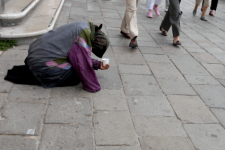
iStock_panhandler.jpg

Every day that passes, I again wish I was not a member of a growing group of Americans, known as the invisible homeless.  Today, as usual, I am presented with a unique, but not totally unexpected set of challenges, which are aggravated by my homelessness.  Beginning with my stress level, which is higher than usual today, sometimes resulting in heat flashes.  Then continuing on, I’ve been sneezing occasionally, with a frequent runny nose.  Those symptoms appear in conjunction with some nagging muscle aches, coupled with a feeling of weakness, both physically and mentally. Does that describe anything that you’ve dealt with?

Living homeless, I’ve also experienced a wide range of weather conditions, specifically wide temperature changes, relentless winds, seasonal circumstances and of course moisture.  On those days when I don’t have any work scheduled, “the silence”, which is simply a measure of the mental fatigue and depression, that I live with, is also an unfriendly complaint, exacerbated by my inconsistent sleeping habits.  The lack in either physical or mental activity greatly contributes to my depression.  Living through these never-ending and ultimately exhausting conditions, day in and day out, I’ve learned that these circumstances continue to have an adverse effect on my overall health.

I’ve concluded that I have a mild cold at the moment, but understanding my homeless living conditions, it’s reasonable to assume my ill health could easily turn into something more serious.  I will pay a visit the local drug store, where I may purchase some inexpensive vitamins, and likely a decongestant, which I pray will provide some relief of my more annoying symptoms.

When I’m fortunate to have a commitment during the day, I’m often relieved mentally because these activities stimulate both refreshing thought and often conversation regarding the task at hand.  Frankly, any exertion seems to act as a healing agent that relieves the frequent mental fatigue that regularly extinguishes my mind.  When I have activities scheduled, I’m also happy to enjoy the feeling of being needed, perhaps wanted, and reminded that there is a so much life outside of my own homelessness, and declining state of health.

Occasionally I’m asked my opinion on whether I would give money directly to the increasing number of homeless on the streets.  Perhaps there’s an individual you see regularly, panhandling in your community, presenting a typical card-board sign, asking for food or a donation.  Sadly, I answer, “Unless you know the individual personally, you should not give money directly to any homeless person panhandling on the street”.  If you’re ever approached by a homeless person and asked for money, I would respond with something like “Sorry, not today”. While I believe everyone deserves respect, my response is based on what I’ve seen most homeless repeatedly do with the money they manage to collect from panhandling.  Your donation would be better utilized by a community church or rescue mission, who will likely try and serve all of the poor in your area, who truly need it.

Any homeless person who is panhandling regularly, has in my opinion already accepted their homelessness, likely with little or no plans to turn their life around.  “Statistics show that most panhandlers are not homeless, and most homeless do not panhandle.  For some, panhandling has become a career, and a lucrative one”, which has been reported from the U.S Department of Justice, Office of Community Oriented Policing Services.  In fact, a few savvy panhandlers I’ve seen, boast of making $15 an hour or more during daylight hours on a busy corner, and that money in turn, is typically used to support their destructive habits or dependencies.

I work for the day when I’m no longer a member of the invisible homeless, and have a place to truly rest my head.  Perhaps then, I will not resent so much the physical and mental fatigue I often carry around with me.
VENTURA COUNTY HOMELESS SHELTERS AND HOT MEAL PROVIDERS

CONEJO VALLEY WINTER SHELTER AND YEAR-ROUND MEAL PROVIDERS

Sick With the Flu? Here's What to Do!

sick-with-the-flu-large.jpg

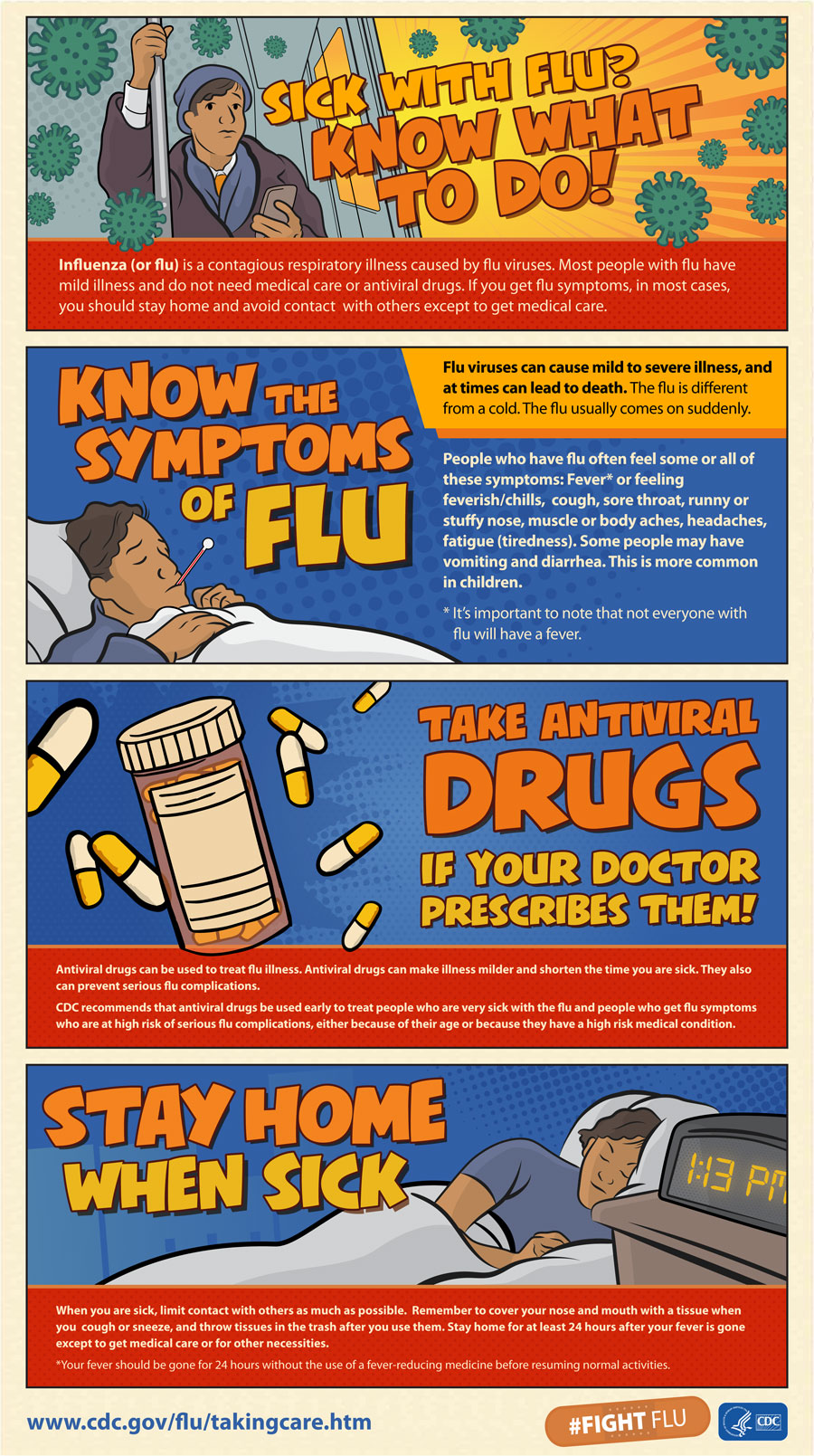
Sick With Flu? Know What to Do! (courtesy of the Centers for Disease Control and Prevention)

Influenza (or flu) is a contagious respiratory illness caused by flu viruses. Most people with flu have mild illness and do not need medical care or antiviral drugs. If you get flu symptoms, in most cases, you should stay home and avoid contact with others except to get medical care.

Know the symptoms of Flu

Flu viruses can cause mild to severe illness, and at times can lead to death. The flu is different from a cold. The flu usually comes on suddenly. People who have flu often feel some or all of these symptoms: Fever* or feeling feverish/chills, cough, sore throat, runny or stuffy nose, muscle or body aches, headaches, fatigue (tiredness). Some people may have vomiting and diarrhea. This is more common in children.

* It’s important to note that not everyone with flu will have a fever.

Take Antiviral Drugs if your doctor prescribes them!

Antiviral drugs can be used to treat flu illness. Antiviral drugs can make illness milder and shorten the time you are sick. They also can prevent serious flu complications.

CDC recommends that antiviral drugs be used early to treat people who are very sick with the flu and people who get flu symptoms who are at high risk of serious flu complications, either because of their age or because they have a high risk medical condition.

Stay Home When Sick

When you are sick, limit contact with others as much as possible. Remember to cover your nose and mouth with a tissue when you cough or sneeze, and throw tissues in the trash after you use them. Stay home for at least 24 hours after your fever is gone except to get medical care or for other necessities.

*Your fever should be gone for 24 hours without the use of a fever-reducing medicine before resuming normal activities.

Learn more at www.cdc.gov/flu/takingcare.htm.

Multiple Myeloma Awareness Month at Amgen "Spotlight Myeloma" Skylight in Thousand Oaks

On Monday night I noticed a skylight in Newbury Park and assumed it must have related to a business. I tried to track it down but decided it was too late, so I went home.

Tuesday night, March 6th, I noticed the same skylight, a bright blue line that could be seen from the 101 in Thousand Oaks. At first I thought it was coming from Brendan's Irish Pub off of Ventu Park Road, but to no avail. But I followed Ventu Park up towards Amgen and, wallah, I managed to track down the light. It was coming from the roof of a parking structure.

I learned from an Amgen friend that this was part of a month-long multiple myeloma awareness initiative at Amgen in March. 

According to Amgen's BloodCounts.com website, "Blood Counts is a national effort to raise awareness about multiple myeloma through the sharing of personal stories. Through real-life accounts of persistence and hope, Blood Counts aims to shed a light on what matters most when it comes to treating blood cancer."

Multiple myeloma, also known as plasma cell myeloma, is a cancer of plasma cells. There are no cures for this cancer that affects about .7% of the U.S. population. Without treatment survival rate is typically seven months. With current treatments, survival can be four to five years.

SpotlightMyeloma.jpg

CASA (Court Appointed Special Advocates) of Ventura County Serves Local Foster Kids

CASA_VC.jpg

CASA (Court Appointed Special Advocates) of Ventura County is a non profit, volunteer driven organization that recruits, trains and supports volunteers from the community to become sworn-in officers of the court who provide a consistent, caring adult in a foster child's life. Children helped by CASAs include those for whom home placement is being determined in juvenile court.  Most of the children are victims of abuse and neglect.

CASA organizations have been around for over 30 years in just about every every county and state across the nation with over 70,000 volunteers serving court dependent children. CASA has been serving children in Ventura County since 1985.  We currently have a team of 130 volunteers and serve over 200 court dependent foster children.

Each hour of our CASA program staff time generates 22 volunteer hours of direct support to a child.   The CASA formula is simple: additional funding means the capacity to recruit, train and support more volunteers to be matched with a foster child.

We have 80 children on a waiting list for a CASA right now.  For those 80 kids the CASA advocate may be the one, consistent, concerned adult by their side during a tumultuous phase of  their life.

To learn how to donate time or funds to this worthy 501(c)(3) organization, visit www.casaofventuracounty.org.

County of Ventura Provides Proposition 64 Marijuana FAQs

Note that the following excerpts come from information published by the County of Ventura at ventura.org with regard to the passing of Proposition 64, the California Marijuana Legalization Initiative.

This proposition was passed in the recent Presidential General Election by a margin of 57..1% (7,929,915 yes votes) to 42.9% (5,945,764 no votes). In Ventura County, the margin was slightly closer, with 55.56% for the measure and 44.44% against the measure.

Immediate Changes with Passing of Prop 64:

Personal recreational use: Adults 21+ may use and grow recreational marijuana for personal use. Marijuana use is not allowed in public places. Personal growing of marijuana is limited to six plants per residence/property.  You may possess, transport or purchase up to one (1) ounce of marijuana and up to eight (8) grams of marijuana concentrates under Prop 64.

Prop 64 allows the County to establish additional restrictions in unincorporated areas, but has not done so at this point in time.

Commercial marijuana cultivation, manufacturing or sales operations: There are no
immediate impacts upon commercial marijuana activities; such activities continue to be
prohibited in the unincorporated areas of Ventura County. Commercial cultivation,
manufacturing, sales and distribution require a license from the County of Ventura and
the State of California.

Can I Sell Home Grown Marijuana?

No. Prop 64 does not allow for selling any product derived from a marijuana plant.

Can I Smoke Marijuana While Driving?

No. Prop 64 prohibits driving under the influence of marijuana. It also prohibits smoking or ingesting marijuana, or even possessing an open container or package of marijuana while driving or riding in a motor vehicle.

Can I Smoke Marijuana in Public Places?

No.

Where Can I Buy Marijuana for Recreational Use in Ventura County?

At this time, no retail or manufacturing businesses have been approved for selling recreational marijuana in Ventura County.

California Minimum Wages Increase Again on January 1, 2018

minimumwage.jpg

Pursuant to California Senate Bill No. 3 signed by Governor Jerry Brown in April 2016, on January 1, 2018, the California minimum wage increases from $10.50 to $11 per hour for employers with 26+ employees and from $10 to $10.50 for employers with 25 or less employees (with the exception of California sheepherders...which you can read about more HERE).

The overall target of the legislation is $15 per hour for all employees by January 1, 2023 (companies with 26+ will get there by January 1, 2022; one year earlier than smaller companies).

Future Minimum Wage Increases for Employers with 26+ Employees:

  • 1/1/19: $12/hour
  • 1/1/20: $13/hour
  • 1/1/21: $14/hour
  • 1/1/22 until adjusted again: $15/hour

If your employer has 25 or fewer employees, there will be a year lag in the increases highlighted above.

  • 1/1/19: $11/hour
  • 1/1/20: $12/hour
  • 1/1/21: $13/hour
  • 1/1/22: $14/hour
  • 1/1/23: $15/hour

So, if you are a minimum wage employee at a smaller company, you will be making slightly less than your "larger" company counterparts in California until 1/1/23.

After 2022, the minimum wage will generally be increased by the lesser of 3.5% or the annual inflation rate.

More on California minimum wages at www.dir.ca.gov/dlse/faq_minimumwage.htm.

But WAIT!

If you are a minimum wage employee in the City of Los Angeles, different rules apply:

Employers with 26+ Employees in City of Los Angeles:

  • 7/1/17 to 6/30/18: $12/hour
  • 7/1/18 to 6/30/19: $13.25/hour
  • 7/1/19 to 6/30/20: $14.25/hour
  • 7/1/20: $15/hour

Employers with 25 or Fewer Employees in City of Los Angeles (or 26+ Employees with approval to pay a deferred rate):

  • 7/1/17 to 6/30/18: $10.50/hour
  • 7/1/18 to 6/30/19: $12/hour
  • 7/1/19 to 6/30/20: $13.25/hour
  • 7/1/20 to 6/30/21: $14.25/hour
  • 7/1/21: $15/hour

More on L.A. City minimum wage laws at wagesla.lacity.org.

And of course, there's the irrelevant (at least to the majority of, but not all, states) Federal Fair Minimum Wage Act of 2007, which established the now current Federal minimum wage at $7.25/hour as of July 24, 2009.

Thomas Fire Grows to 2nd Largest Fire in California History and is 55% Contained

UPDATE: Since this post, the fire grew to burn a total of 281,893 acres (440 square miles), making it the largest wildfire in modern California history (which was subsequently surpassed by the Mendocino Complex Fire of 2018, which burned a total of 459,123 acres).

The Thomas Fire has now burned 272,000 acres, making it the 2nd largest wildfire in California since accurate records of fires were maintained in 1932. Only the 2003 Cedar Fire in San Diego County was larger, at least as of tonight, at 273,246 acres. 

Cal Fire anticipates the Thomas Fire to continue burning until full containment is achieved by January 7th. That would mean the fire is expected to burn continuously for 34 days. As of tonight the Thomas Fire was 55% contained.

Areas of particular focus by firefighters are Montecito, Rose Valley and Fillmore. The area between Fillmore and Ventura along Highway 126 will remain in patrol status.

The Thomas Fire originated in Santa Paula the night of December 4th near county-managed Steckel Park, the Ventura Ranch KOA and Thomas Aquinas College (which the fire was named after).

The main store and cabins at the KOA were destroyed but much of the campgrounds is intact. Management indicates they will be rebuilding, with a goal of re-opening in the Spring.

The college did not sustain serious damage thanks to the efforts of firefighters, though there will still be extensive recovery costs. President McLean provides more information in the video below. Donations to help the school in its recovery efforts are accepted at thomasaquinas.edu/news/help-us-recover.