Scandinavian Center at California Lutheran University in Thousand Oaks

The public is invited to share in the many activities and services of the Scandinavian American Cultural & Historical Foundation (SACHF) that take place at Cal Lutheran University, including many functions at the Scandinavian Center. The Center is open to the public for scheduled events and special functions.

The Aina Abrahamson Library at the Center includes thousands of Scandinavian-related books, publications, documents and audio/visual materials. Visitors can review books while at the Center, but only SACHF may check out the books from the library.

As a museum, the Center offers a wide assortment of artifacts, costumes, early and contemporary art, musical instruments, a Norwegian ship model and a ship plaque from Sweden, and examples depicting industry of yesterday and today.

Other offerings and events include genealogy research, classes, brown-bag lunch series, the annual Scandinavian Festival in April, the annual Nordic Spirit Symposium and Scandinavian Lecture Series.

The Center is located at 60 W. Olsen Road at CLU. The Center is located at the southeastern corner of the campus, at Faculty Road and Mountclef Boulevard.

Visit www.ScandinavianCenter.org or call (805) 241-0391 for more information.

Albinger Archaeological Museum in Ventura

The Albinger Archaeological Museum, located at 113 E. Main Street in Ventura, is open to the public Saturdays from 11am to 5pm (as of May 2022 - but check with the Museum at 805-658-4726 for any updates. Admission to the museum is free.

Named after Ventura Mayor from 1969 to 1973, Albert R. Albinger, the museum is built on the home site of saloonkeeper and early mayor Angel Escondon and displays artifacts spanning 3,500 years of Ventura history, encompassing five different cultures (Chumash, Spanish, Mexican, Chinese and circa 1850 U.S.) from a single archaeological site next to the San Buenaventura Mission.

In 1973 the buildings which stood at the museum's location were demolished as part of the Mission Plaza Urban Redevelopment Project. Archaeological testing suggested the existence of rich cultural remains beneath the soil. The Redevelopment Agency of the City of San Buenaventura authorized intensive archaeological investigations and during the summers of 1974 and 1975 archaeological excavations uncovered more than 30,000 artifacts. Each artifact was carefully cleaned, numbered, cataloged and studied. In order to protect and preserve this part of the City’s heritage, the property was withdrawn from the redevelopment project. In 1975 it was placed on the National Register of Historic Places as the Ventura Mission Historic District. In January 1980 the City of San Buenaventura opened the Albinger Archaeological Museum. 

Displays of stone bowls, a tomol (plank canoe reproduction), shell beads, arrowheads, bone whistles, crucifixes, bottles, buttons and pottery inside the exhibit building are complemented outside by excavations of the foundations of the lost Mission church, Native American barracks, well and the oldest standing structure in Ventura, the mission water filtration building.

More information at www.cityofventura.net/albinger.

Getty Center in Brentwood

Getty_front.JPG

Atop a 900 foot hill in the Santa Monica Mountains adjacent to the 405 freeway, Getty Center is a 24 acre complex that is one of the most visited museums in the United States. Getty Center opened in December 1997 and is part of the J. Paul Getty Museum, which has another location called The Getty Villa.

This is one of those "must absolutely see" places for every local resident and visitor to the Los Angeles area. It is a spectacular and pristine, inside and out.

Getty_bust.JPG

There are five main pavilions in the complex. The North Pavilion (on the immediate left after you walk through the Entrance Hall) contains pre-1700 art, including paintings on the upper level and sculptures and decorative arts, illuminated manuscripts and changing exhibitions on the main level. Adjacent to the North Pavilion is the East Pavilion, which contains paintings and sculptures and decorative arts from the 1600 to 1800 time frame.

The South Pavilion also contains art from 1600 to 1800. The West Pavilion contains art post-1800 as well as the Center for Photographs. Finally, the Exhibitions Pavilion contains rotating exhibitions.

Getty_View.jpg

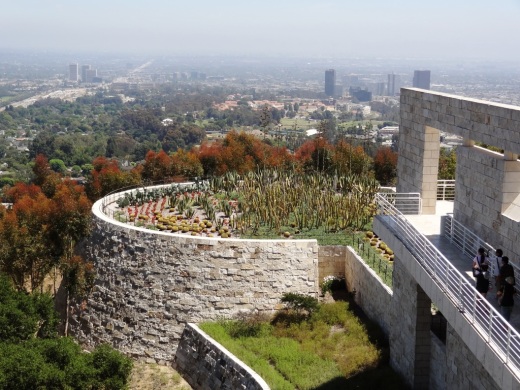
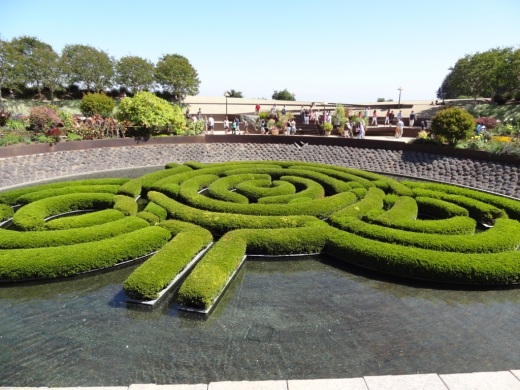
Stroll to the terraces on the south side of the complex and you'll be treated to panoramic views stretching to the San Bernadino Mountains, Century City, and the Pacific Ocean. You'll also be treated to a view of the Cactus Garden desert landscape in the South Promontory. The 134,000 sq ft Central Garden, large grassy area and stream leading into a pool with an azalea maze. You've got to see it to appreciate the beauty.

Getty_CactusGarden.JPG
Getty_Gardens.JPG
Getty_Azaleas.JPG

There are also outdoor sculptures throughout the complex, starting in the area where you wait for the tram that takes you up to the Center, in the Arrival Area in front of the Entrance Hall and in and around the restaurant and garden areas.

The Center displays some of the most recognizable pieces in the world from artists like Rembrandt, Van Gogh, Manet, Monet, Renoir, Gaugin, and so many others. The photography display is also outstanding.

Irises by Dutch artist Vincent Van Gogh

Irises by Dutch artist Vincent Van Gogh

There are several restaurants on the complex. I've eaten at the Garden Terrace Cafe located between the Exhibitions Pavilion and the Central Garden and it was good. Packaged, fresh sandwiches, salads, soups and other items are available.

To learn more, visit www.getty.edu/museum. Admission is free. Parking in the seven story underground lot near the bottom of Getty Center Drive is $15 ($10 after 3pm). Hours are 10am to 5:30pm Tuesday through Sunday.

There is a free tram that takes you to the top of the hill, or you can walk up the hill (it actually is not that bad, a 15 to 20 minute walk for most). Located at 1200 Getty Center Drive, Los Angeles.

I could go on and on...if you are not an art fan, don't worry. The views alone are worth the visit. But once you step foot in this amazing place you will be awestruck.

Murphy Auto Museum - Oxnard (CLOSED IN JULY 2024)

NOTE: The Murphy Auto Museum shut its doors on July 7, 2024.

MurphyAutoMuseum_logo.png

See a collection of dozens of vintage and classic cars at the Murphy Auto Museum, 1930 Eastman Avenue in Oxnard .

The suggested donation to the museum is $10 for adults. Children 12 and under are free. Active military with ID or in uniform are also free.  Open year-round on Saturdays/Sundays from 10am to 4pm. April through December, the museum is also open on Fridays from 10am to 4pm.

Murphy1.jpg
Murphy2.jpg

Autry Museum of the American West in Griffith Park

The Autry Museum of the American West is located in Griffith Park, directly across the parking lot from the Los Angeles Zoo, at 4700 Western Heritage Way.

The Autry features exhibits of Native American art and artifacts, film memorabilia, historic firearms, paintings and more with its collection of over 500,000 pieces. This collection includes art and artifacts of the Southwest Museum of the American Indian Collection, one of the largest collections of Native American materials in the country.

In addition to a wide range of exhibitions, the museum hosts lectures, film, theater, family events and more. 

Open Tuesday to Sunday from 10am to 4pm. Closed Mondays. Admission (as of December 2021) is $14 for adults, $10 for students/60+ seniors (with ID), and $6 for kids 3-12.

Free admission on the 2nd Tuesday of the month.

Visit theautry.org for more information.

Leonis Adobe Museum - Calabasas

Leonis1.JPG

The Leonis Adobe Museum in Calabasas was the first designated Los Angeles historic monument on August 6, 1962.  The Leonis Adobe was the home of Miguel Leonis, known as the King of Calabasas, who owned over 10,000 acres of land. The museum features his authentically furnished two-story Monterey-style adobe with original buildings, period livestock, gardens and a vineyard. The house was originally built in 1844, six years before Los Angeles was incorporated and California became a state.

Leonis2.JPG
LeonisFamily.JPG
Leonis4.JPG
Leonis5.JPG
Leonis6.JPG

Also on the property is the Plummer House, the oldest house in Hollywood and in 1935 was named California Historical Landmark No. 160.  The house fell into disrepair and became dilapidated before the salvageable front portion of the house was moved to the Leonis Adobe site in 1983 and subsequently  repaired, restored and refurbished.  It now serves as the onsite Visitor Center and gift shop.

Plummer House Visitor Center

Plummer House Visitor Center

The Leonis Adobe, located at 23537 Calabasas Road in Calabasas (near the Sagebrush Cantina) is currently (October 2021) open 10am to 4pm on Saturdays and 1-4pm on Sundays. Visit www.leonisadobemuseum.org or call 818.222.6511 for more information. Suggested donations are $5 for adults, $4 for seniors/students and $2 for children under age 12.

On a personal note, I've been to the Leonis Adobe and it is an amazingly large piece of property in the heart of old town Calabasas, paralleling, yet nearly invisible to, the 101 freeway.  In addition to the historic buildings, the site has an impressive assortment of vintage wagons and farm equipment. There's also a well manicured garden area and lots of farm animals to see and feed, including some longhorn bulls, sheep, goats, chickens and a horse. Bring quarters to buy food. Plus they have many activities for the kids year-round.

Stagecoach Inn Museum - Newbury Park

StagecoachInnSign.JPG

The Stagecoach Inn Museum is a replica of a Monterey style inn, the 1876 Grand Union Hotel. The complex also includes a Chumash Indian village, an early California adobe, a pioneer house and a few other buildings. There is a nice park adjoining the property along with nature trails and a stream that make this a nice place to bring the entire family.

Spanish Adobe structure at Stagecoach Inn is a replica of housing that would be seen in the Conejo Valley in the early 1800s.

Spanish Adobe structure at Stagecoach Inn is a replica of housing that would be seen in the Conejo Valley in the early 1800s.

The Stagecoach Inn Museum is State Historical Landmark No. 659.  The original structure was destroyed by fire in April 1970 but has been rebuilt and relocated.  It was originally located at the corner of what is now Ventu Park Road and the Highway 101, where a historical marker has been placed.

The Stagecoach Inn is located at 51 South Ventu Park Road, Newbury Park.  Call 805.498.9441 or visit www.stagecoachinnmuseum.com for more information. As of September 2021, the museum is open from 1 pm to 4 pm on Wednesdays and Saturdays. Admission is $7 per adult and $5 per child. Special event pricing and hours may vary.

Stagecoach Inn front web.jpg
StagecoachInnNP_Landmark.JPG

Santa Barbara Maritime Museum

SBMMwaterfront-small.jpg

The Santa Barbara Maritime Museum is located at the Santa Barbara Waterfront Center and is a beautiful, high tech facility. The mission of the Santa Barbara Maritime Museum is to preserve and celebrate the maritime heritage of the California Coast and present it to the public in an interesting and exciting way.

Exhibits include boat models, surfing artifacts, historic Goleta cannons, interactive environmental displays, rescue and emergency equipment, fishing and diving technology, shipwreck displays, a children's gallery and more. 

My young boys particularly enjoyed 3 things at the museum - the interactive fishing game (combines a video game with an actual fishing pole as you attempt to catch a variety of virtual fish), the kids computer area and the U.S. Navy periscope exhibit. The periscope is interesting for all ages because it is an actual, working example from a submarine that they've set up so that you can check out 360 degree scenes around Santa Barbara.

The museum is bright, packed with numerous items and has a large video viewing room upstairs. Go check it out!

The museum is located at 113 Harbor Way Suite 190, Santa Barbara. Open 10:30 am to 4:30 pm daily.

Admission (as of September 2021) is $8 for adults (18 to 64), $5 for seniors 65+, kids 6 to 17 and students (with ID). Under age 6 is free of charge. Active military is free. 

More information at www.sbmm.org or call 805.962.8404.

Pleasant Valley Historical Society Museum and Botanical Garden in Camarillo

NOTE: MUSEUM CURRENTLY (AS OF MAY 2025) CLOSED FOR AN EXPANSION PROJECTION PROJECT. GARDEN IS CURRENTLY OPEN ON SATURDAYS FROM NOON TO 4PM CHECK THE MUSEUM WEBSITE FOR UPDATES.

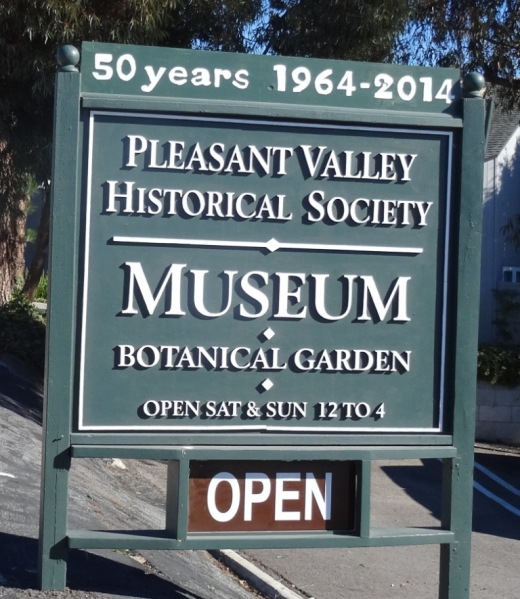
The Pleasant Valley Historical Society Museum and Botanical Garden at 720 Las Posas Road in Camarillo is dedicated to the preservation of the history of Pleasant Valley, the Oxnard Plain and adjacent areas where many of Camarillo’s pioneers settled before there was a City of Camarillo. Admission is free. Donations are accepted. The Museum and Garden are open from noon to 4:00 p.m. on Saturday and Sunday, except holidays. More information at www.pvhsonline.org.

PVHSMuseum_sign.JPG

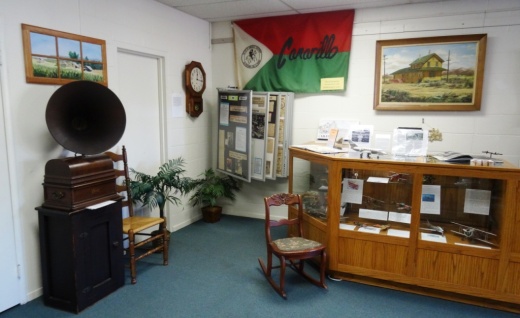
The museum is located in a small building on the property which contains a variety of antiques and items of local historical interest. Resident docents are genuinely interested in sharing stories about local history in the facility. I can almost guarantee you will learn something new every time you visit!

Old items and newspaper clippings from years past on display.

Old items and newspaper clippings from years past on display.

The Charles L. Honn Botanical Garden, associated with the Historical Museum and located behind it, is a beautiful park-like area that features plants and trees indigenous to the Pleasant Valley and the surrounding region. The garden includes a large gazebo that is available as a breathtaking setting for weddings, anniversaries and similar functions. Kitchen facilities are available. Donations are accepted for use of the garden/gazebo.

PVHS_BotanicGarden.JPG
PVHS_Gazebo.JPG

Call 805.482.3660 or visit www.pvhsonline.org for more information.

The Charles L. Honn Botanic Garden starts to brighten up after the winter rains.

The Charles L. Honn Botanic Garden starts to brighten up after the winter rains.

California ScienCenter - Exposition Park

CalScienceCenterFront.JPG

My kids and I visit California ScienCenter in Exposition Park from time to time, roughly a 1 hour drive from Thousand Oaks. It is worth the drive. The ScienCenter is built in the location where the first State Exposition Building that opened in 1912.  The redeveloped building is modern and beautiful, with several floors of scientific exhibits of interest to all ages, including Ecosystems, Creative World, World of Life, Air and Space and Science Court. Entrance to the museum is FREE, although donations are greatly appreciated.  Parking is $12 (as of December 2017).

The "World of Life" exhibit on the third floor is a perennial favorite in our family, where we get to see everything from brains and lungs to live cockroaches, termites and animals. There's also a kids' "Discovery Room" with additional fun activities for the younger one.

CalScienceCenter_Aircraft.JPG

If you have more time and energy on your trip to Exposition Park, visit the adjacent Natural History Museum of Los Angeles County and the California African American Museum as well as the Exposition Park Rose Garden (where they have 16,000 or so rose plants).

California ScienCenter is located at 700 State Drive at the corner of S. Figueroa and 39th Street in Exposition Park.  Visit www.californiasciencenter.org or call 323.SCIENCE (724.3623) for more information.

NOTE: AS OF APRIL 2021, TIMED-ENTRY RESERVATIONS ARE REQUIRED. THERE IS A $3 SERVICE FEE. SEE californiasciencecenter.org/visit/get-reservations-tickets.

The Space Shuttle Endeavor went on a flyover trip to the West Coast atop a Boeing 747 on Friday, September 21, 2012. The Endeavor completed 25 successful space missions between its first mission on May 7, 1992 and its final mission in May 2012 to the International Space Station, now resides at the ScienCenter in the Samuel Oschin Pavilion.

SpaceShuttleEndeavor.jpg

NASA named California ScienCenter one of only three museums in the U.S. to permanently exhibit a retired space shuttle.  We have visited the Endeavor and the exhibit is extraordinarily impressive. Learn more about the Endeavor at californiasciencecenter.org/exhibits/endeavour-experience/space-shuttle-endeavour.

EndeavorCSC.JPG

Casa de la Guerra in Santa Barbara

CasaDeLaGuerra.jpg

Casa de la Guerra is one of the most important remnants of Santa Barbara's Spanish-Mexican heritage, along with El Presidio de Santa Bárbara (1782) and Mission Santa Barbara (1786). This adobe residence was constructed between 1818 and 1828 by Josè de la Guerra, the fifth comandante of the Presidio. In addition to his military post, de la Guerra ran an active commercial trade enterprise and served as a patriarch for the community.

His home was the social, political, and cultural center of Santa Barbara during the Mexican period. Descendants of Josè continued to occupy the building until 1943, when the Casa was fully incorporated into the El Paseo complex. In the 1990s, the Santa Barbara Trust for Historic Preservation restored the building to its appearance between 1828 and 1858.

The adobe is now a museum, containing exhibits on the history of the de la Guerra family and the building, furnished period rooms, and rotating exhibits on Santa Barbara and Early California history.

Casa de la Guerra is a City Landmark, a California Landmark, and is listed on the National Register of Historic Places.

Museum hours are Saturday/Sunday noon to 4 p.m. Located at 13-15 East De la Guerra Street, Santa Barbara (just half a block off of State Street. Admission is Adult: $5, Senior (62+): $4, Children (under 16): Free (Note: Free admission to SB Presidio with purchase of admission to Casa de la Guerra).

Visit www.sbthp.org or call 805.965.0093 for more information.

El Presidio de Santa Barbara State Historic Park (123 East Canon Perdido Street, Santa Barbara)

El Presidio de Santa Barbara State Historic Park (123 East Canon Perdido Street, Santa Barbara)

Old Mission Santa Barbara

SantaBarbaraMission.jpg

The Santa Barbara Mission was established on the Feast of Saint Barbara, December 4, 1786 and was the 10th of 21 California Missions to be founded by the Spanish Franciscans.

More than 200 years later, the Mission continues to be the chief cultural and historic landmark in the city of Santa Barbara. Home to a community of Franciscan friars, the Mission also has a retreat center with guest rooms, conference rooms, a fully equipped commercial kitchen and dining room, a beautiful church with a large and active parish, a museum and gift shop, a cemetery and mausoleum and ten acres of beautifully landscaped gardens.

MissionPic1.JPG

Self-guided tours are available through the main entrance. Tour tickets may be purchased in the main entry, and each visitor will be provided with a museum guide available in 8 different languages. The Mission is open daily from 9am to 5:30pm from July 4th through Labor Day and until 4:15pm the rest of the year. Tour admission (as of March 2020) is $12 for adults (ages 18-64), $10 for seniors 65+, $7 youth 5-17 and free to 4 and under. Parking is free.

MissionPic2.JPG
MissionPic3.JPG

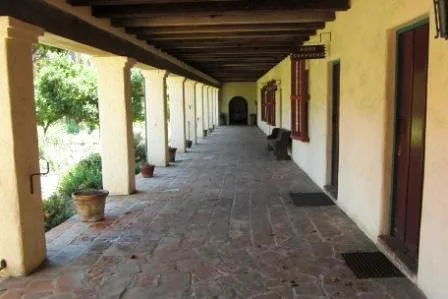
Points of interest within the Museum and garden tour include a Sacred Garden, Video Room (watch a 18 minute video), Cemetery (1789 to present; contains burial sites of early Santa Barbara settlers and Native Americans), Church, Museum (originally used as living quarters for missionaries and their guests), The Serra Shop (souvenirs and gifts), Fountain (built in 1808) and Aqueduct (ruins of the Mission's early water system visible next to cemetery outside walls).

MissionPic5.JPG

The Mission Museum also offers docent guided public tours Thursday and Friday at 11:00am and Saturday at 10:30am. Admission for docent guided public tours are $16 for ages 18-64, $14 age 65+ and $11 for youth 5 to 17. Children age 4 and under free. Roughly an hour in duration. Private tours are also available.
Visit www.santabarbaramission.org for more information or call 805.682.4713. It is located at 2201 Laguna Street, just around the corner from the Santa Barbara Museum of Natural History, which we LOVE to visit.

A.J. Comstock Fire Museum in Ventura

NOTE: WE WALKED BY IN MID-JULY 2022 AND IT APPEARS THE MUSEUM IS EITHER BEING REFURBISHED OR HAS MOVED.

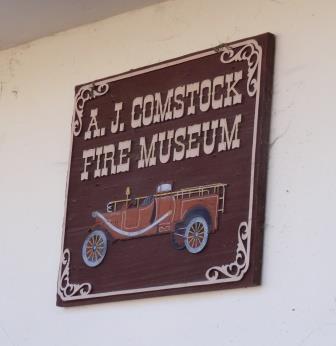
The A.J. Comstock Fire Museum is located in the Figueroa Street Mall, a one block pedestrian section between E. Main Street and E. Santa Clara Street in Downtown Ventura.

You don't actually walk through this museum; you look through the windows and are treated to a display of vintage items, including equipment and photographs that document the history of the Ventura County Fire Department.

The museum was dedicated to retired fire chief A.J. Comstock, who served the community for 33 years, from 1940 to 1973. 

The Figueroa Street Mall is located on the west end of the Downtown Ventura area, adjacent to Mission Park and the Museum of Ventura County directly west of it and the San Buenaventura Mission directly across from it on Main Street.

This block is also home to the San Buenaventura China Alley Memorial. A Chinese community was established on this block in the 1870s. Chinese merchants, laborers, farmers, cooks, laundrymen, gardeners and servants did business here and lived in small homes. These early settlers maintained their language and customs and rituals in this small enclave. The acclaimed Chinese Fire Brigade was formed here, often the first line of defense at local fires. 

Other contributions of the Chinese immigrants to the community included a water flume above the San Buenaventura Aqueduct along Ventura Avenue and the Chinese Fire Brigade that served China Alley and the surrounding neighborhood. The Chinese Brigade was often the first fire company at the site of a fire and was instrumental in saving many structures in the downtown area. During the early days of immigration, the people of San Buenaventura welcomed their new Chinese neighbors as an inexpensive source of labor. However, with the incorporation of strict national immigration laws in the early 20th century, a hostile environment forced the residents of China Alley to relocate to other areas.

The immigrants dispersed from the area in the early 20th century when immigration laws became more exclusionary and settlers moved away, either back to China or to neighboring areas. The City of San Buenaventura and the Ventura County Chinese American Historical Society dedicated a memorial to these settlers in August 2004.

The Figueroa Street Mall

The Figueroa Street Mall